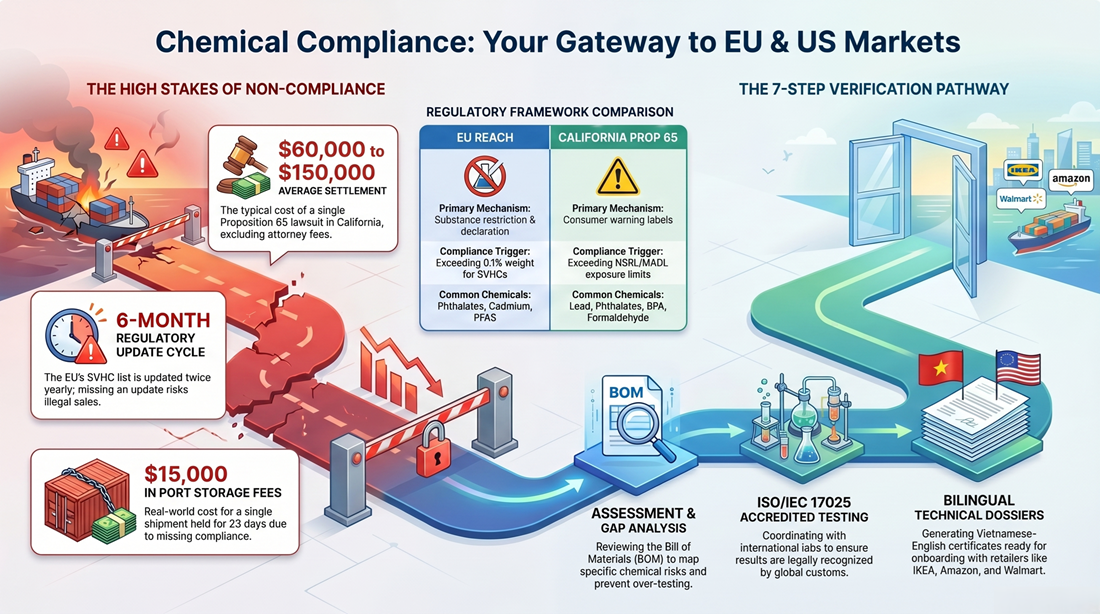
Năm 2024, một doanh nghiệp sản xuất sản phẩm polyurethane tại miền Bắc Việt Nam ký được đơn hàng trị giá 180.000 USD với một nhà phân phối tại Đức. Lô hàng đầu tiên — 02 container 40 feet — rời cảng Hải Phòng vào tháng 7. Khi đến cảng Hamburg, hải quan Đức yêu cầu xuất trình báo cáo kiểm nghiệm SVHC theo Điều 33 REACH và chứng từ tuân thủ Annex XVII Entry 72.
Doanh nghiệp không có những hồ sơ này.
Lô hàng bị giữ 23 ngày. Phí lưu container và lưu kho lên đến 14.500 EUR. Cuối cùng, một phần hàng phải tái xuất về Việt Nam, phần còn lại được giải phóng sau khi kiểm nghiệm khẩn cấp tại phòng thí nghiệm Đức với chi phí gấp 3 lần thông thường. Đơn hàng tiếp theo bị hủy.
Câu chuyện này không hiếm. Trong giai đoạn 2024–2025, theo thống kê từ các hiệp hội xuất khẩu, Việt Nam ghi nhận hơn 200 vụ tương tự liên quan đến vật liệu nhựa, dệt may, da giày, đồ chơi và đồ nội thất xuất sang EU và Hoa Kỳ.
Bài học rút ra: Trong môi trường thương mại quốc tế ngày nay, chứng nhận tuân thủ hóa chất không phải là tùy chọn — đó là tấm vé thông hành. Và tấm vé này phải được chuẩn bị trước khi đóng container, không phải sau khi hàng đã đến cảng.
Hai quy định doanh nghiệp xuất khẩu Việt Nam không thể bỏ qua
REACH (EU) — Quy định của Liên minh Châu Âu kiểm soát hơn 23.000 hóa chất thông qua ba cơ chế: hạn chế các chất nguy hại trong Annex XVII (hiện có hơn 70 mục), yêu cầu khai báo các chất gây quan ngại cao trong danh mục SVHC (hiện có 253+2 chất), và quy định cấm các chất ô nhiễm hữu cơ khó phân hủy (POPs) bao gồm cả nhóm PFAS đang được mở rộng.
California Proposition 65 (Hoa Kỳ) — Quy định của bang California yêu cầu mọi sản phẩm bán tại California chứa các chất gây ung thư hoặc dị tật sinh sản vượt ngưỡng cho phép phải gắn nhãn cảnh báo. Danh mục Prop 65 hiện chứa khoảng 900 chất, trong đó các chất phổ biến với doanh nghiệp Việt là Chì, Phthalates, Cadmium, BPA và Formaldehyde.
Điểm chung của cả hai quy định: không có “đặc cách” cho nhà sản xuất nước ngoài. Doanh nghiệp Việt Nam phải chứng minh tuân thủ theo cùng chuẩn mực với nhà sản xuất EU và Hoa Kỳ.
Tác động kinh doanh: Tuân thủ REACH/Prop 65 mang lại điều gì?
Lợi ích 1: Mở khóa thị trường xuất khẩu giá trị cao
EU và Hoa Kỳ chiếm hơn 45% kim ngạch xuất khẩu của Việt Nam. Riêng EU, theo Hiệp định Thương mại Tự do Việt Nam – EU (EVFTA), thuế quan đã giảm về 0% cho phần lớn các mặt hàng — nhưng rào cản kỹ thuật (TBT) đã thay thế rào cản thuế quan. Doanh nghiệp không có chứng nhận tuân thủ hóa chất gần như bị loại khỏi các đơn hàng giá trị cao của IKEA, Decathlon, Carrefour, Auchan, Lidl, Aldi.
Lợi ích 2: Đáp ứng yêu cầu vendor onboarding
Các sàn thương mại điện tử lớn (Amazon, Walmart Marketplace, Target+) đều yêu cầu báo cáo kiểm nghiệm Prop 65 trong hồ sơ vendor onboarding. Không có hồ sơ này, sản phẩm không được niêm yết, hoặc bị gỡ khỏi danh mục sau lần kiểm tra ngẫu nhiên.
Lợi ích 3: Giảm rủi ro pháp lý và chi phí ẩn
Một vụ kiện Prop 65 trung bình tốn 60.000–150.000 USD. Một container bị từ chối tại EU tốn 10.000–30.000 EUR phí xử lý. Một lần thu hồi sản phẩm có thể gây thiệt hại hàng triệu USD và phá hủy quan hệ với khách hàng dài hạn. Chi phí tuân thủ chủ động (50–70 triệu VNĐ cho gói đầy đủ) chỉ bằng 0,1–0,5% tổng giá trị một đơn hàng container — một mức bảo hiểm rất rẻ.
Lợi ích 4: Tăng giá trị thương hiệu và sức cạnh tranh
Trên cùng một sản phẩm, doanh nghiệp có Certificate of Verification REACH và Prop 65 có thể chào giá cao hơn 8–15% so với đối thủ không có, vì khách hàng đánh giá đây là yếu tố giảm rủi ro chuỗi cung ứng. Trong các đấu thầu cung ứng cho chuỗi bán lẻ, đây thường là tiêu chí “must-have” — không có không vào.
Lợi ích 5: Chuẩn bị sẵn sàng cho các quy định mới
EU đang triển khai Cơ chế Điều chỉnh Biên giới Carbon (CBAM), Quy định về Sản phẩm Bền vững (ESPR), và mở rộng phạm vi PFAS. Doanh nghiệp đã có nền tảng tuân thủ REACH/Prop 65 sẽ chuyển đổi nhanh hơn nhiều so với doanh nghiệp bắt đầu từ con số 0 vào năm 2027.
Dịch vụ tư vấn xác minh REACH & California Proposition 65 tại Đức Lương Services
Đức Lương Services, cùng với đối tác chiến lược ISC Global, cung cấp dịch vụ tư vấn trọn gói giúp doanh nghiệp Việt Nam đạt được tuân thủ REACH và California Proposition 65 một cách hiệu quả về thời gian và chi phí.
Chúng tôi không chỉ “gửi mẫu đi test”. Vai trò của chúng tôi là cầu nối kỹ thuật giữa doanh nghiệp và Đối tác phòng kiểm nghiệm quốc tế được công nhận theo ISO/IEC 17025, giúp doanh nghiệp:
Tiết kiệm 30–40% chi phí so với tự liên hệ phòng kiểm nghiệm, nhờ tối ưu danh mục chỉ tiêu cần test (không test thừa);
Rút ngắn 50% thời gian so với tự xử lý, nhờ chuẩn hóa quy trình lấy mẫu, chuẩn bị TRF và làm việc trực tiếp với phòng kiểm nghiệm;
Giảm rủi ro mẫu bị từ chối, vốn xảy ra với khoảng 30% mẫu gửi đến phòng kiểm nghiệm tại Việt Nam khi doanh nghiệp tự chuẩn bị.
Quy trình 7 bước của chúng tôi
Đánh giá sơ bộ và phân tích khoảng cách — rà soát sản phẩm, BOM, báo cáo có sẵn.
Hướng dẫn chuẩn bị mẫu — đảm bảo mẫu được chấp nhận ngay lần đầu.
Lập Phiếu yêu cầu kiểm nghiệm (TRF) — chính xác về kỹ thuật và quy định.
Phối hợp với Đối tác phòng kiểm nghiệm — gửi mẫu, theo dõi tiến độ.
Diễn giải kết quả — đối chiếu với ngưỡng, đề xuất hành động khắc phục.
Lập hồ sơ tuân thủ và phát hành Certificate of Verification — song ngữ Việt – Anh, sẵn sàng cho onboarding quốc tế.
Tư vấn duy trì tuân thủ — cập nhật khi ECHA bổ sung chất SVHC mới (6 tháng/lần).
Hai phương án dịch vụ phù hợp ngân sách và nhu cầu
Phương án 1 – Test đầy đủ REACH (SVHC + Annex XVII) + California Proposition 65: 10 chỉ tiêu, phù hợp khi xuất khẩu lần đầu hoặc onboarding nhà bán lẻ lớn.
Phương án 2 – Test Phthalates theo REACH + Prop 65: 3 chỉ tiêu trọng điểm, phù hợp khi khách hàng cuối chỉ yêu cầu Phthalates hoặc đã có sẵn báo cáo cho các chỉ tiêu khác.
Thời gian triển khai trung bình: 4–6 tuần kể từ ký hợp đồng đến phát hành Certificate of Verification.
Câu chuyện thành công: Từ thị trường nội địa đến đơn hàng IKEA
Một khách hàng của chúng tôi — doanh nghiệp sản xuất đồ nội thất tại Bình Dương — đã sử dụng dịch vụ tư vấn tuân thủ REACH + Prop 65 vào quý 2/2025 cho dòng sản phẩm bàn ghế gỗ công nghiệp phủ sơn melamine.
Trước khi có Certificate of Verification, doanh nghiệp này chỉ bán nội địa và xuất khẩu nhỏ lẻ cho thị trường ASEAN. Sau khi hoàn tất hồ sơ tuân thủ (mất 5 tuần, chi phí khoảng 65 triệu VNĐ cho 02 mẫu sản phẩm đại diện), doanh nghiệp đã:
Vượt qua audit của một nhà nhập khẩu Đức trong vòng 2 tuần;
Ký được hợp đồng nguyên tắc trị giá 420.000 EUR/năm;
Sử dụng Certificate of Verification cho 3 lô hàng đi Hoa Kỳ qua Amazon Vendor Central.
ROI của khoản đầu tư 65 triệu VNĐ vào tuân thủ: trên 200 lần trong năm đầu tiên.
Vì sao chọn Đức Lương Services?
Đức Lương Services là đối tác tư vấn chuyên nghiệp trong lĩnh vực tiêu chuẩn quốc tế tại Việt Nam, đồng hành cùng doanh nghiệp Việt trong hành trình quốc tế hóa. Với triết lý “Change yourself, change the world”, chúng tôi tin rằng mỗi doanh nghiệp Việt Nam đều xứng đáng có cơ hội tiếp cận thị trường toàn cầu — và việc của chúng tôi là gỡ bỏ các rào cản kỹ thuật giúp Quý doanh nghiệp tự tin bước ra biển lớn.
Năng lực cốt lõi:
✓ Đội ngũ chuyên gia tư vấn ESG, ISO và tuân thủ hóa chất có kinh nghiệm dự án thực tế tại Việt Nam;
✓ Hợp tác chiến lược với ISC Global – đơn vị có quan hệ trực tiếp với phòng kiểm nghiệm quốc tế ISO/IEC 17025;
✓ Hồ sơ giao dịch song ngữ Việt – Anh, sẵn sàng cho làm việc với khách hàng EU, Hoa Kỳ và các thị trường quốc tế;
✓ Minh bạch về chi phí, tiến độ, không phát sinh chi phí ẩn;
✓ Cam kết đồng hành dài hạn — không chỉ lấy giấy chứng nhận xong rồi thôi.
Bước tiếp theo: Đánh giá miễn phí sản phẩm của Quý doanh nghiệp
Nếu Quý doanh nghiệp đang:
Chuẩn bị cho lô hàng xuất khẩu đầu tiên vào EU hoặc Hoa Kỳ;
Được khách hàng quốc tế yêu cầu báo cáo REACH hoặc Prop 65;
Chuẩn bị onboarding với nhà bán lẻ lớn (IKEA, Walmart, Target, Amazon);
Đối mặt với khiếu nại Prop 65 từ luật sư bên Hoa Kỳ;
Muốn rà soát danh mục sản phẩm hiện có để tránh rủi ro tương lai;
… hãy liên hệ với Đức Lương Services. Buổi đánh giá ban đầu hoàn toàn miễn phí và không ràng buộc.
Đức Lương Services – Change yourself, change the world. Đồng hành cùng doanh nghiệp Việt vươn ra thị trường toàn cầu.
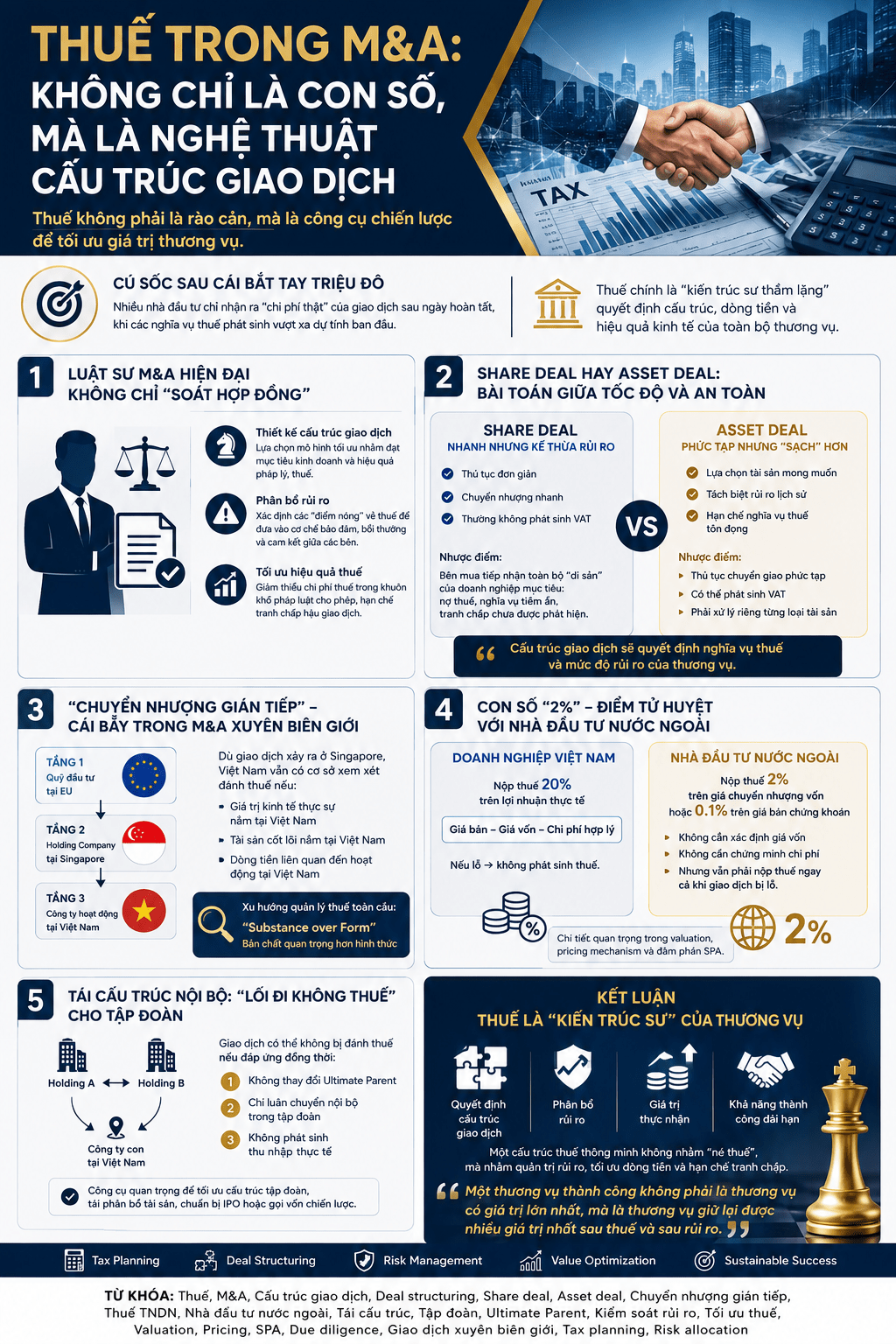
Trong thế giới của những thương vụ M&A, một cái bắt tay rực rỡ trên mặt báo chưa chắc đã đảm bảo cho một chiến thắng về tài chính. Đã có không ít nhà đầu tư phải đối mặt với “cú sốc” hậu giao dịch khi các nghĩa vụ thuế phát sinh vượt xa dự tính ban đầu. Sai lầm phổ biến nhất là lầm tưởng rằng chỉ cần rà soát hợp đồng (contract review) kỹ lưỡng về mặt pháp lý là đủ an toàn.
Thực tế, thuế không phải là yếu tố đi sau cùng mà là “kiến trúc sư” thầm lặng định hình nên toàn bộ cấu trúc giao dịch. Dưới đây là những bài học chiến lược được đúc kết từ kinh nghiệm của những luật sư, chuyên gia dày dặn kinh nghiệm trong lĩnh vực Thuế và M&A. Những bài học này sẽ giúp bạn nhìn thấu bản chất của các giao dịch triệu đô đằng sau những con số thuế khô khan.
Bài học 1: Vai trò của Luật sư – Không chỉ là người soát lỗi chính tả
Trong các giao dịch M&A hiện đại, vai trò của luật sư đã có một bước dịch chuyển quan trọng từ “người soát lỗi” sang “người thiết kế”. Tư duy tư vấn pháp lý chuyên nghiệp hiện nay đòi hỏi luật sư phải có khả năng nhìn ra bức tranh tài chính tổng thể. Họ không chỉ chỉnh sửa câu chữ mà phải là người trực tiếp nhào nặn nên hình hài của thương vụ.
Theo chuyên gia, luật sư cần thực hiện 3 nhiệm vụ chiến lược để bảo vệ lợi ích của thân chủ:
Thiết kế cấu trúc giao dịch (Deal structuring): Lựa chọn phương thức tối ưu để đạt được mục tiêu kinh doanh mà vẫn đảm bảo tính bền vững pháp lý.
Phân bổ rủi ro (Risk allocation): Xác định các “tử huyệt” thuế trọng yếu trong từng cấu trúc để đưa vào các điều khoản cam kết bồi thường.
Tối ưu hiệu quả thuế (Tax efficiency): Đảm bảo giao dịch được thực hiện với mức chi phí thuế hợp lý nhất trong khuôn khổ pháp luật cho phép.
Bài học 2: “Share Deal” hay “Asset Deal” – Sự đánh đổi giữa tốc độ và sự an toàn
Khi bắt đầu một thương vụ, câu hỏi đầu tiên luôn là: Mua cổ phần hay mua tài sản? Mỗi lựa chọn là một sự đánh đổi khôn ngoan giữa sự tiện lợi và rủi ro pháp lý. Việc lựa chọn sai cấu trúc ngay từ đầu có thể dẫn đến những hệ lụy tài chính không thể cứu vãn.
Share Deal (Mua bán vốn): Đây là con đường ngắn và đơn giản hơn với thủ tục chuyển nhượng gọn gàng, nhanh chóng và không phát sinh thuế GTGT (VAT). Tuy nhiên, bên mua phải đối mặt với “bóng ma” kế thừa rủi ro: bạn sẽ chịu trách nhiệm toàn bộ nghĩa vụ thuế và nợ nần tồn đọng của công ty mục tiêu.
Asset Deal (Mua bán tài sản): Cách tiếp cận này phức tạp hơn, thường phát sinh thuế VAT và yêu cầu thủ tục chuyển giao từng loại tài sản riêng biệt. Đổi lại, bên mua có quyền “chọn hoa lọc nhị” – chỉ mua những tài sản sạch và tách biệt hoàn toàn khỏi rủi ro quá khứ của bên bán.
Một lưu ý kỹ thuật quan trọng: Trong các giao dịch sáp nhập, doanh nghiệp phải thực hiện báo cáo quyết toán và nộp cho cơ quan hải quan chậm nhất là 90 ngày kể từ ngày sáp nhập. Việc chậm trễ trong các thủ tục hành chính này có thể dẫn đến những khoản phạt không đáng có.
“Cấu trúc giao dịch quyết định nghĩa vụ thuế và mức độ rủi ro.”
Bài học 3: Cái bẫy “Chuyển nhượng gián tiếp” trong M&A xuyên biên giới
Một sai lầm kinh điển là tin rằng việc giao dịch diễn ra hoàn toàn ở nước ngoài sẽ giúp “né” được thuế tại Việt Nam. Cơ quan thuế hiện nay không chỉ nhìn vào bề nổi của hồ sơ mà tập trung vào bản chất kinh tế của giao dịch. Cấu trúc nhiều tầng nấc không còn là tấm lá chắn vạn năng để loại bỏ nghĩa vụ thuế.
Hãy nhìn vào ví dụ về một cấu trúc ba tầng thường gặp:
Tầng 1: Quỹ đầu tư tại EU.
Tầng 2: Công ty Holding tại Singapore (sở hữu 100% vốn tại Việt Nam).
Tầng 3: Công ty mục tiêu tại Việt Nam (nơi chứa tài sản và hoạt động thực tế).
Dù Quỹ đầu tư EU bán cổ phần của Holding Singapore ngay tại đảo quốc sư tử, Việt Nam vẫn có cơ sở để đánh thuế. Nguyên lý cốt lõi là: “Trọng tâm: tài sản và giá trị kinh tế nằm ở đâu”. Sự tinh vi của cấu trúc không nên nằm ở việc trốn thuế, mà là quản trị dòng tiền và giảm thiểu rủi ro tranh chấp với cơ quan thuế tại nhiều quốc gia cùng lúc.
Bài học 4: Con số 2% đầy quyền năng đối với nhà đầu tư nước ngoài
Cách tính thuế Thu nhập doanh nghiệp (CIT) trong chuyển nhượng vốn có sự phân biệt đối xử rất rõ ràng mà các nhà đàm phán cần nắm vững. Đây là điểm “tử huyệt” mà nhiều nhà đầu tư ngoại thường bỏ qua khi đặt bút ký vào biên bản thỏa thuận giá (Valuation).
Sự khác biệt nằm ở đối tượng chịu thuế và phương pháp tính:
Doanh nghiệp Việt Nam: Luôn nộp thuế 20% trên lợi nhuận (Giá bán trừ Giá vốn và Chi phí). Nếu thương vụ lỗ, doanh nghiệp không phải nộp thuế.
Nhà đầu tư nước ngoài: Nộp 2% trên giá chuyển nhượng (đối với vốn góp) hoặc 0.1% trên giá bán (đối với chứng khoán).
Điểm nguy hiểm nhất là với mức thuế 2%, nhà đầu tư ngoại không cần xác định giá vốn hay chi phí. Điều này đơn giản hóa thủ tục nhưng lại cực kỳ khắt khe về dòng tiền: dù bạn bán cắt lỗ, bạn vẫn phải nộp 2% trên tổng giá trị giao dịch cho ngân sách.
Bài học 5: Tái cơ cấu nội bộ – Lối đi “không thuế” cho các tập đoàn
Không phải mọi hoạt động dịch chuyển vốn đều phải chịu thuế nếu bạn biết cách vận dụng đúng các quy định về tái cơ cấu. Luật pháp mở ra một hành lang thông thoáng cho các tập đoàn muốn tối ưu hóa bộ máy quản lý. Một giao dịch có thể được xem xét không phát sinh thuế tại Việt Nam nếu đáp ứng đồng thời ba điều kiện “vàng”.
Các điều kiện bao gồm:
Không làm thay đổi công ty mẹ tối cao (Ultimate Parent).
Chỉ thực hiện điều chuyển nội bộ giữa các công ty trong cùng tập đoàn.
Không phát sinh thu nhập thực tế từ giao dịch này.
Ví dụ: Một tập đoàn đa quốc gia chuyển quyền sở hữu công ty con tại Việt Nam từ Holding A sang Holding B. Nếu cả A và B đều dưới quyền kiểm soát tuyệt đối của một “Ultimate Parent” và không có dòng tiền thanh toán phát sinh lợi nhuận, giao dịch này sẽ không bị đánh thuế. Đây là công cụ đắc lực để các tập đoàn sắp xếp lại “vương quốc” của mình một cách hiệu quả nhất.
Lời kết: Thuế – “Kiến trúc sư” thầm lặng của mọi giao dịch thành công
Thuế không nên được xem là rào cản hay gánh nặng, mà phải là một công cụ chiến lược để tối ưu hóa giá trị thương vụ. Một cấu trúc thuế thông minh, được hoạch định sớm bởi những chuyên gia có tầm nhìn, sẽ là bệ phóng vững chắc cho sự thành công dài hạn.
Trong giao dịch tiếp theo của bạn, bạn sẽ chọn sự đơn giản nhưng rủi ro của Share Deal hay sự phức tạp nhưng an toàn của Asset Deal? Câu trả lời không nằm ở sự may mắn, mà nằm ở cách bạn thấu hiểu và vận dụng nghệ thuật cấu trúc giao dịch.
1. Lời mở đầu: Tình huống oái oăm và câu hỏi triệu đô
Hãy tưởng tượng một kịch bản: Bạn dồn hết vốn liếng mua một ngôi nhà bằng giấy viết tay từ năm 1996, trả đủ tiền bằng vàng, nhận nhà và sinh sống, sửa sang ổn định suốt 10 năm. Lý do duy nhất khiến giao dịch chưa được sang tên chính thức là vì lúc đó bạn chưa có hộ khẩu thường trú tại Hà Nội – một rào cản hành chính phổ biến thời bấy giờ.
Thế rồi, khi giá đất tăng phi mã và bạn vừa mới nhập được hộ khẩu để làm thủ tục cấp sổ đỏ, người vợ của bên bán bỗng nhiên đâm đơn kiện đòi lại nhà với lý do: “Hợp đồng chỉ có chữ ký của chồng tôi, tôi không hề ký tên nên giao dịch này vô hiệu.”
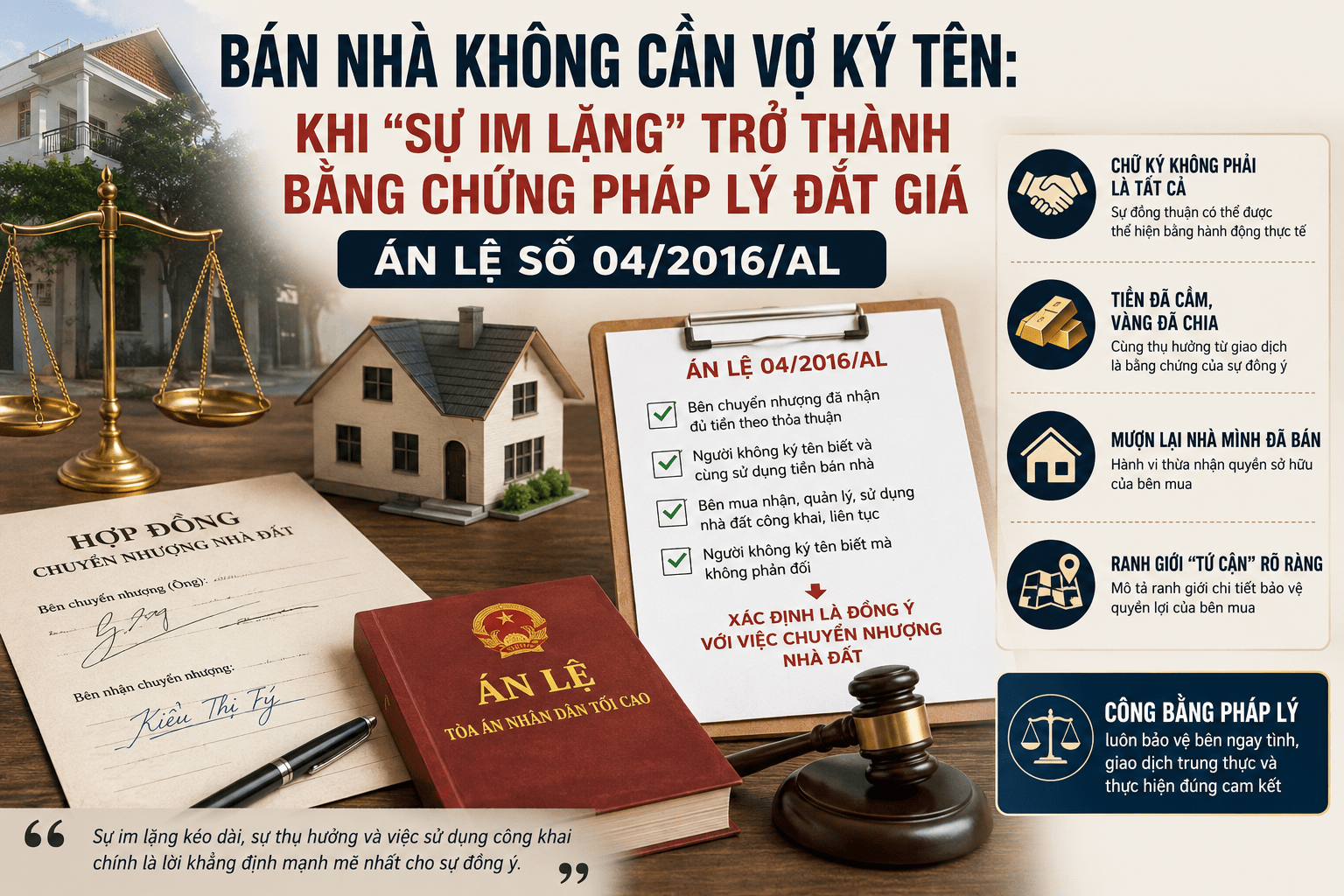
Đây chính là hoàn cảnh thực tế của bà Kiều Thị Tý trong vụ tranh chấp kéo dài với gia đình ông Lê Văn Ngự. Trong thế trận tưởng chừng như bất lợi vì thiếu chữ ký của người vợ (bà Phấn), Án lệ số 04/2016/AL đã xuất hiện như một “cứu cánh” pháp lý sắc sảo, khẳng định một nguyên tắc công bằng: Sự im lặng và hành động thực tế trong nhiều trường hợp có giá trị pháp lý cao hơn cả một chữ ký trên mặt giấy.
2. Điểm nhấn số 1: Chữ ký không phải là tất cả – Sự đồng ý ngầm định
Luận điểm cốt lõi của Án lệ số 04/2016/AL đã thay đổi hoàn toàn “luật chơi” trong các tranh chấp tài sản chung vợ chồng. Tòa án tối cao xác định rằng, sự đồng thuận của vợ hoặc chồng không nhất thiết phải thể hiện bằng văn bản nếu các tình tiết thực tế chứng minh họ đã biết và chấp nhận giao dịch đó.
Khái niệm “biết mà không có ý kiến phản đối” được xác lập dựa trên các điều kiện:
Bên chuyển nhượng đã nhận đủ số tiền/vàng theo thỏa thuận.
Người không ký tên (người vợ/chồng) biết về giao dịch và thực tế đã cùng sử dụng số tiền bán tài sản đó.
Bên mua đã nhận nhà, quản lý và sử dụng công khai (như trường hợp bà Tý đã tôn nền, sửa lại nhà, cho cháu chắt đến ở).
Người không ký tên chứng kiến toàn bộ quá trình sử dụng, sửa chữa này trong thời gian dài mà không hề có hành động ngăn cản.
Khái quát nội dung án lệ: “Trường hợp nhà đất là tài sản chung của vợ chồng mà chỉ có một người đứng tên ký hợp đồng chuyển nhượng nhà đất đó cho người khác, người còn lại không ký tên trong hợp đồng; nếu có đủ căn cứ xác định bên chuyển nhượng đã nhận đủ số tiền theo thỏa thuận, người không ký tên trong hợp đồng biết và cùng sử dụng tiền chuyển nhượng nhà đất; bên nhận chuyển nhượng nhà đất đã nhận và quản lý, sử dụng nhà đất đó công khai; người không ký tên trong hợp đồng biết mà không có ý kiến phản đối gì thì phải xác định là người đó đồng ý với việc chuyển nhượng nhà đất.”
3. Điểm nhấn số 2: “Tiền đã cầm, vàng đã chia” – Hành động thay lời nói
Trong vụ án này, bị đơn là ông Lê Văn Ngự đã cố gắng xoay chuyển tình thế bằng cách tuyên bố hợp đồng vô hiệu do bà Phấn (vợ ông) không ký tên. Ông còn lập luận rằng giá bán thực tế là 113,4 cây vàng và bà Tý vẫn còn nợ 3,4 cây.
Tuy nhiên, “giấy trắng mực đen” đã bác bỏ sự lắt léo này. Tòa án đã căn cứ vào tờ giấy thanh toán ngày 09-5-2000, trong đó chính ông Ngự ký xác nhận: “Tôi đã nhận đủ số tiền còn lại do bán nhà, đất cho anh Tiến và chị Tý… tổng số vàng tôi đã nhận trước và hiện nay là 110 cây”. Đây chính là bằng chứng đanh thép chốt lại giá trị giao dịch.
Quan trọng hơn, để làm rõ sự đồng thuận của bà Phấn, Tòa án đã dựa vào lời khai của chính các con ông bà là anh Lê Đức Lợi và anh Lê Văn Tám. Những người con này thừa nhận rằng sau khi bán nhà đất cho bà Tý, ông Ngự và bà Phấn đã đem số vàng này chia cho các con. Khi bà Phấn đã cùng chồng thụ hưởng và phân chia thành quả từ giao dịch, mọi lời bào chữa về việc “không biết” hay “không đồng ý” đều trở nên vô giá trị trước công lý.
4. Điểm nhấn số 3: Tình tiết “ngược đời” – Khi người bán mượn lại chính nhà mình đã bán
Một chi tiết đầy tính mỉa mai được hồ sơ vụ án ghi lại: Ngay sau khi ký hợp đồng ngày 26-4-1996, ông Ngự đã viết một “giấy cam kết” để mượn lại chính phần nhà đất đã bán cho bà Tý. Mục đích là để gia đình ông có chỗ ở tạm và chứa nguyên vật liệu trong lúc xây nhà mới trên phần diện tích đất còn lại liền kề.
Thực tế, bà Phấn và ông Ngự đã sống và sinh hoạt trên phần diện tích “mượn” này. Ở góc độ pháp lý, đây là một bằng chứng không thể chối cãi về sự thừa nhận quyền sở hữu của bên mua. Thật phi lý khi bà Phấn cho rằng mình không biết việc bán nhà, trong khi chính bà đang sử dụng phần nhà đất đó dưới danh nghĩa là “người mượn” từ bà Tý. Hành vi “mượn nhà” này đã tự tố cáo rằng bà Phấn hoàn toàn nhận thức được quyền sở hữu đã được chuyển giao.
5. Điểm nhấn số 4: Ranh giới “tứ cận” và bài học về sự rõ ràng trong giao dịch
Một điểm gây tranh cãi khác là diện tích 23,4m2 giáp mặt đường Xuân La. Ông Ngự tìm cách “đòi lại” phần diện tích đắc địa này với lý do nó vướng quy hoạch và ông chỉ bán phần đất phía trong.
Tuy nhiên, sự cẩn trọng trong việc mô tả ranh giới của bà Tý lúc mua đã phát huy tác dụng. Dù hợp đồng viết tay không ghi số mét vuông cụ thể, nhưng ranh giới “tứ cận” lại cực kỳ rõ nét:
Phía Đông Bắc: Giáp đường Xuân La – Xuân Đỉnh.
Các phía còn lại: Giáp nhà ông Tay, bà Soát và phần đất còn lại của ông Ngự.
Việc ghi rõ ranh giới phía Đông Bắc giáp đường lớn đã chứng minh rằng giao dịch bao gồm toàn bộ khổ đất từ mép đường vào trong. Tòa án đã bác bỏ lập luận của ông Ngự, khẳng định phần diện tích mặt đường 23,4m2 thuộc về bà Tý. Bài học rút ra cho mọi giao dịch là: Khi con số diện tích chưa được đo đạc chính thức, việc mô tả ranh giới tiếp giáp chi tiết chính là “lá bùa hộ mệnh” bảo vệ quyền lợi của bạn.
6. Tổng kết và Suy ngẫm: Công bằng pháp lý không chỉ nằm trên mặt chữ
Án lệ số 04/2016/AL là một minh chứng cho thấy pháp luật luôn bảo vệ bên “ngay tình” – những người giao dịch trung thực và thực hiện đúng cam kết. Án lệ này ngăn chặn triệt để hành vi lợi dụng kẽ hở thiếu chữ ký vợ/chồng để “lật kèo” khi giá đất tăng cao, gây mất ổn định trật tự xã hội.
Câu chuyện của bà Tý và ông Ngự nhắc nhở chúng ta rằng: Chữ ký trên giấy tờ là quan trọng, nhưng hành động thực tế và sự trung thực mới là nền tảng bền vững nhất của mọi giao dịch. Pháp luật không chỉ đọc các dòng chữ, pháp luật còn nhìn thấu các hành vi.
Trong một giao dịch dân sự, sự trung thực trong hành động hay một nét ký mang tính kỹ thuật sẽ bảo vệ bạn tốt hơn trước tòa? Án lệ 04 đã khẳng định: Công lý sẽ luôn đứng về phía sự thật khách quan và tinh thần thượng tôn sự ngay tình.
Được Hội đồng Thẩm phán Tòa án nhân dân tối cao thông qua ngày 06 tháng 4 năm 2016 và được công bố theo Quyết định số 220/QĐ-CA ngày 06 tháng 4 năm 2016 của Chánh án Tòa án nhân dân tối cao.
Nguồn án lệ:
Quyết định giám đốc thẩm số 04/2010/QĐ-HĐTP ngày 03-3-2010 của Hội đồng Thẩm phán Tòa án nhân dân tối cao về vụ án “Tranh chấp hợp đồng chuyển nhượng quyền sử dụng đất” tại thành phố Hà Nội giữa nguyên đơn là bà Kiều Thị Tý, ông Chu Văn Tiến với bị đơn là ông Lê Văn Ngự; người có quyền lợi, nghĩa vụ liên quan là bà Lê Thị Quý, bà Trần Thị Phấn, anh Lê Văn Tám, chị Lê Thị Tưởng, anh Lê Đức Lợi, chị Lê Thị Đường, anh Lê Mạnh Hải, chị Lê Thị Nhâm.
Khái quát nội dung của án lệ:
Trường hợp nhà đất là tài sản chung của vợ chồng mà chỉ có một người đứng tên ký hợp đồng chuyển nhượng nhà đất đó cho người khác, người còn lại không ký tên trong hợp đồng; nếu có đủ căn cứ xác định bên chuyển nhượng đã nhận đủ số tiền theo thỏa thuận, người không ký tên trong hợp đồng biết và cùng sử dụng tiền chuyển nhượng nhà đất; bên nhận chuyển nhượng nhà đất đã nhận và quản lý, sử dụng nhà đất đó công khai; người không ký tên trong hợp đồng biết mà không có ý kiến phản đối gì thì phải xác định là người đó đồng ý với việc chuyển nhượng nhà đất.
Quy định của pháp luật liên quan đến án lệ:
– Khoản 2 Điều 176 của Bộ luật Dân sự năm 1995;
– Điều 15 của Luật Hôn nhân và gia đình năm 1986.
Từ khóa của án lệ:
“Tranh chấp hợp đồng chuyển nhượng quyền sử dụng đất”; “Định đoạt tài sản chung của vợ chồng”; “Xác lập quyền sở hữu theo thỏa thuận”.
NỘI DUNG VỤ ÁN
Tại đơn khởi kiện đề ngày 05-11-2007 và quá trình giải quyết vụ án, nguyên đơn là bà Kiều Thị Tý trình bày:
Năm 1996, vợ chồng bà có mua 02 căn nhà cấp 4 trên diện tích đất thổ cư khoảng 160m2 của gia đình ông Lê Văn Ngự tại xã Xuân La, huyện Từ Liêm, thành phố Hà Nội (nay là Tổ 11, Cụm 2, phường Xuân La, quận Tây Hồ, thành phố Hà Nội). Việc mua bán hai bên có lập hợp đồng, có ghi rõ những tài sản, nhà trên đất và các mặt tiếp giáp của thửa đất. Do vợ chồng bà chưa có hộ khẩu thường trú tại Hà Nội, nên chính quyền địa phương không xác nhận việc mua bán giữa gia đình bà và gia đình ông Ngự. Giá mua là 110 cây vàng, bà đã trả đủ cho vợ chồng ông Ngự và gia đình ông Ngự đã giao nhà, đất cho bà quản lý, sử dụng.
Sau khi mua bán nhà đất, gia đình ông Ngự xây nhà mới có mượn vợ chồng bà ngôi nhà (phía trong) để sử dụng và chứa nguyên vật liệu, còn diện tích nhà giáp mặt đường Xuân La bà đã cho cháu họ của bà ở nhờ để đi học. Khi gia đình ông Ngự làm nhà xong đã trả lại nhà, đất cho bà. Bà đã phá dỡ nhà cũ, tôn nền và xây nhà mới như hiện nay để các cháu ở nhờ; năm 2001, bà cho thuê làm xưởng mộc, sau đó bà không cho thuê nữa, đóng cửa không sử dụng.
Năm 2006 (sau khi bà nhập khẩu về Hà Nội), khi bà làm thủ tục xin cấp giấy tờ về quyền sở hữu nhà và quyền sử dụng đất ở thì vợ chồng ông Ngự đã gây khó khăn, vì cho rằng bà còn thiếu hơn 03 cây vàng và vợ chồng ông chỉ bán nhà, đất phía trong, còn nhà, đất giáp mặt đường Xuân La vẫn là nhà, đất của gia đình ông. Cuối năm 2006, ông Ngự đã tự ý phá cửa vào ở và xây một bức tường ngăn giữa phần mái hiên của căn nhà cấp 4 giáp mặt đường Xuân La (hiện nay đang cho người khác thuê làm cửa hàng cắt tóc). Bà đề nghị Tòa án buộc gia đình ông Ngự phải thực hiện đúng như hợp đồng đã ký kết và buộc gia đình ông Ngự trả nhà đất (phần diện tích mặt đường Xuân La).
Bị đơn là ông Lê Văn Ngự trình bày:
Năm 1996, gia đình ông có nhượng bán một phần nhà, đất cho vợ chồng ông Tiến, bà Tý. Hai bên thỏa thuận, gia đình ông bán cho vợ chồng ông Tiến, bà Tý phần nhà, đất có vị trí giáp đường Xuân La, chiều ngang 07m, chiều dài hết khổ đất của gia đình ông. Hai bên thống nhất trừ 21m2 mặt đường do Nhà nước đã cắm mốc chỉ giới mở đường, nên chỉ bán nhà cấp 4 trên phần diện tích đất là 140m2.
Giá mua nhà, đất là 6 chỉ vàng/m2 đối với 42m2 đất mặt đường là 25 cây 02 chỉ; 9 chỉ/m2 đối với 98m2 đất phía trong là 88,2 cây vàng. Tổng cộng là 113,4 cây vàng, phía ông Tiến, bà Tý mới trả cho gia đình ông 110 cây vàng, còn nợ lại 3,4 cây vàng.
Gia đình ông đã giao nhà, đất cho bà Tý nhưng còn 21m2 giáp mặt đường, trong chỉ giới mở đường, gia đình ông vẫn quản lý, sử dụng. Hiện nay, Nhà nước đã thay đổi quy hoạch, không mở đường về phía nhà, đất của gia đình ông, nên phần diện tích này thuộc quyền quản lý, sử dụng của gia đình ông, diện tích nhà, đất của ông Tiến, bà Tý mua không có lối đi vào.
Nay bà Tý kiện đòi 21m2 mặt đường Xuân La, ông không chấp nhận. Nếu ông Tiến, bà Tý muốn quản lý, sử dụng phần diện tích mặt đường và có lối đi vào nhà, đất bên trong thì phải cắt trả cho gia đình ông 2m chiều ngang mặt đường và chiều dài hết khổ đất, đồng thời phải thanh toán trả cho gia đình ông 160 triệu đồng nữa.
Người có quyền lợi, nghĩa vụ liên quan:
Bà Trần Thị Phấn thống nhất với lời khai của ông Ngự.
Anh Lê Đức Lợi, anh Lê Văn Tám, anh Lê Mạnh Hải, chị Lê Thị Đường, chị Lê Thị Tưởng và chị Lê Thị Nhâm có lời khai thống nhất với lời khai của ông Ngự.
Tại Bản án dân sự sơ thẩm số 27/2008/DS-ST ngày 25-4-2008, Tòa án nhân dân thành phố Hà Nội đã quyết định:
Chấp nhận yêu cầu khởi kiện đòi lại nhà đất 23,4m2 tại 39 đường Xuân La của vợ chồng bà Kiều Thị Tý, ông Chu Văn Tiến đối với gia đình ông Lê Văn Ngự, bà Trần Thị Phấn.
Buộc gia đình ông Lê Văn Ngự, bà Trần Thị Phấn, bà Lê Thị Quý (người thuê nhà) và các con ông Lê Văn Ngự phải trả lại toàn bộ diện tích nhà đất 23,4m2 tại số 39, đường Xuân La, phường Xuân La, quận Tây Hồ cho gia đình bà Tý, ông Tiến (do bà Tý đại diện).
Buộc bà Tý phải thanh toán cho gia đình ông Ngự số tiền là 13.759.000 đồng giá trị xây dựng, cải tạo tại diện tích 23,4m2; bà Tý được sở hữu vật liệu công sức ở diện tích này.
Bà Tý được chủ động mở lối ra vào diện tích nhà đất phía trong và được xây bịt lối đi phía sau sang đất nhà ông Ngự, bà Phấn.
Ông Ngự, bà Phấn cùng với bà Tý có trách nhiệm đến cơ quan nhà nước có thẩm quyền để hoàn tất thủ tục sang tên phần nhà đất đã nhượng bán. Nếu phía gia đình ông Ngự gây khó khăn thì bà Tý được chủ động đến cơ quan nhà nước có thẩm quyền kê khai để làm thủ tục để sang tên, đăng ký quyền sở hữu nhà và sử dụng đất.
Ngoài ra, Tòa án cấp sơ thẩm còn quyết định về án phí và tuyên quyền kháng cáo của các đương sự.
Ngày 08-5-2008, ông Lê Văn Ngự, bà Trần Thị Phấn có đơn kháng cáo yêu cầu Tòa án cấp phúc thẩm tuyên hủy hợp đồng chuyển nhượng nhà, đất ký với vợ chồng bà Kiều Thị Tý và ông Chu Văn Tiến với lý do việc ký hợp đồng, nhận tiền mua bán nhà, đất chỉ do ông Ngự thực hiện, bà Phấn là vợ không biết.
Tại Quyết định số 02/QĐ-VKSNDTC-VPT1 ngày 28-5-2008, Viện trưởng Viện kiểm sát nhân dân tối cao kháng nghị đề nghị Hội đồng xét xử Tòa Phúc thẩm Tòa án nhân dân tối cao tại Hà Nội xét xử phúc thẩm buộc ông Ngự phải tháo dỡ phần xây dựng trái phép trên diện tích nhà đất của bà Tý trả lại nguyên trạng ban đầu. Bà Tý không phải bồi thường cho ông Ngự số tiền 13.759.000 đồng; đồng thời đề nghị xem xét lại án phí dân sự sơ thẩm cho ông Ngự, bà Tý.
Tại Bản án dân sự phúc thẩm số 162/2008/DS-PT ngày 04-9-2008, Tòa Phúc thẩm Tòa án nhân dân tối cao tại Hà Nội đã quyết định không chấp nhận kháng cáo của ông Lê Văn Ngự và bà Trần Thị Phấn, chấp nhận Quyết định kháng nghị số 02/QĐ-VKSNDTC-VPT1 ngày 28-5-2008 của Viện kiểm sát nhân dân tối cao, sửa một phần Bản án sơ thẩm như sau:
Chấp nhận yêu cầu đòi lại nhà, đất có diện tích 23,4m2 tại số 39 đường Xuân La của vợ chồng bà Kiều Thị Tý và ông Chu Văn Tiến đối với vợ chồng ông Lê Văn Ngự, bà Trần Thị Phấn.
Buộc ông Ngự, bà Phấn cùng các con của ông Ngự và bà Phấn gồm các anh: Lê Đức Lợi, Lê Văn Tám, Lê Mạnh Hải và các chị: Lê Thị Đường, Lê Thị Tưởng, Lê Thị Nhâm và bà Lê Thị Quý (người thuê nhà của ông Ngự) phải trả lại toàn bộ diện tích nhà, đất là 23,4m2 tại số 39 đường Xuân La, phường Xuân La, quận Tây Hồ, thành phố Hà Nội cho vợ chồng bà Kiều Thị Tý, ông Chu Văn Tiến (do bà Tý làm đại diện).
Về giá trị xây dựng, cải tạo tại diện tích 23,4m2 là 13.759.000 đồng, vợ chồng ông Lê Văn Ngự, bà Trần Thị Phấn phải tự chịu. Vợ chồng ông Ngự, bà Phấn phải phá dỡ phần xây dựng, cải tạo tại diện tích trên để trả lại nguyên trạng cho vợ chồng bà Tý, ông Tiến. Chi phí phá dỡ do vợ chồng ông Ngự, bà Phấn phải chịu.
Bà Tý được quyền chủ động mở lối ra vào diện tích nhà, đất phía trong và được xây bịt lối đi phía sau sang nhà, đất của vợ chồng ông Ngự, bà Phấn.
Ông Ngự, bà Phấn cùng với bà Tý có trách nhiệm đến cơ quan nhà nước có thẩm quyền để hoàn tất thủ tục sang tên phần diện tích nhà, đất đã nhượng bán cho vợ chồng bà Tý, ông Tiến. Nếu gia đình ông Ngự gây khó khăn thì bà Tý được chủ động đến cơ quan nhà nước có thẩm quyền để kê khai, làm các thủ tục sang tên đăng ký quyền sử dụng đất ở và quyền sở hữu nhà ở.
Ngoài ra, Tòa án cấp phúc thẩm còn quyết định về án phí.
Sau khi xét xử phúc thẩm tại các đơn khiếu nại đề ngày 21-10-2008 và ngày 22-10-2008 của ông Ngự, bà Phấn đều cho rằng nhà, đất tại số 39 đường Xuân La là tài sản chung của gia đình ông, bà; ông Ngự đã tự ý đứng ra bán cho vợ chồng bà Tý, ông Tiến mà không được sự đồng ý của bà Phấn là không đúng; đề nghị tuyên bố hợp đồng này là vô hiệu.
Tại Quyết định số 63/QĐ-KNGĐT-V5 ngày 14-5-2009, Viện trưởng Viện kiểm sát nhân dân tối cao đã kháng nghị Bản án phúc thẩm nêu trên và đề nghị Hội đồng Thẩm phán Tòa án nhân dân tối cao xét xử theo thủ tục giám đốc thẩm hủy Bản án dân sự phúc thẩm nêu trên và hủy Bản án dân sự sơ thẩm số 27/2008/DS-ST ngày 25-4-2008 của Tòa án nhân dân thành phố Hà Nội; giao hồ sơ vụ án cho Tòa án nhân dân thành phố Hà Nội xét xử sơ thẩm lại. Với nhận định:
Năm 1996, vợ chồng ông Chu Văn Tiến và bà Kiều Thị Tý có mua 02 căn nhà cấp 4 trên diện tích đất thổ cư giáp mặt đường Xuân La có chiều ngang 7m, chiều dài hết khổ đất của gia đình ông Lê Văn Ngự tại xã Xuân La, huyện Từ Liêm (nay là phường Xuân La, quận Tây Hồ). Hai bên có làm giấy viết tay mua bán chuyển nhượng nhà đất, nhưng sau đó không thực hiện các thủ tục theo quy định của pháp luật. Sau khi mua, bà Tý đã phá cả hai căn nhà trên để làm lại, tôn nền, xây lại móng, tường lợp ngói như hiện nay. Cuối năm 2005, khi bà Tý đề nghị làm thủ tục xin cấp giấy tờ về quyền sở hữu nhà ở và quyền sử dụng đất ở thì gia đình ông Ngự tranh chấp cho rằng bà Tý còn nợ 3,4 cây vàng và chỉ bán diện tích nhà đất phía trong, còn diện tích nhà đất giáp mặt đường Xuân La vẫn là nhà đất của gia đình ông.
Cuối năm 2006, hai bên có xảy ra xô sát tranh chấp diện tích nhà đất 21m2 phía mặt đường Xuân La, quận Tây Hồ, thành phố Hà Nội.
Ngày 29-10-2007, bà Kiều Thị Tý và ông Chu Văn Tiến khởi kiện
đòi quyền sở hữu nhà đất thông qua hợp đồng mua bán nhà đất được xác lập ngày 26-4-1996 giữa vợ chồng ông Lê Văn Ngự, bà Trần Thị Phấn với vợ chồng bà Kiều Thị Tý, ông Chu Văn Tiến. Hợp đồng mua bán nhà đất giữa
bà Tý, ông Tiến với vợ chồng ông Ngự, bà Phấn chưa tuân thủ theo quy định của pháp luật cả về hình thức và nội dung của hợp đồng; trong khi gia đình ông Ngự cho rằng vợ chồng ông Tiến, bà Tý còn nợ 3,4 cây vàng và không bán diện tích nhà đất giáp mặt đường Xuân La; cho nên vợ chồng ông Ngự, bà Phấn không đồng ý cho vợ chồng ông Tiến, bà Tý làm thủ tục sang tên đăng ký quyền sở hữu nhà và quyền sử dụng đất theo quy định của pháp luật. Hiện nay toàn bộ diện tích nhà đất theo hợp đồng mua bán chuyển nhượng trên vẫn đứng tên vợ chồng ông Ngự, bà Phấn.
Tòa án hai cấp sơ thẩm và phúc thẩm xác định quan hệ pháp luật tranh chấp trong vụ án này là “Tranh chấp quyền sở hữu nhà đất” và áp dụng các Điều 255 và Điều 256 của Bộ luật Dân sự để chấp nhận yêu cầu đòi lại nhà đất của vợ chồng bà Kiều Thị Tý, ông Chu Văn Tiến đối với vợ chồng ông Lê Văn Ngự, bà Trần Thị Phấn là không đúng, như vậy là đương nhiên công nhận quyền sở hữu nhà ở và quyền sử dụng đất ở đối với toàn bộ diện tích nhà đất chuyển nhượng trên cho vợ chồng bà Tý, ông Tiến; trong khi hợp đồng chuyển nhượng nhà đất trên vẫn còn tranh chấp chưa thể làm thủ tục sang tên, đăng ký quyền sở hữu nhà ở và quyền sử dụng đất ở cho vợ chồng bà Tý, ông Tiến được. Do vậy, cần phải hủy cả hai bản án dân sự sơ thẩm, phúc thẩm nêu trên; giao về xét xử sơ thẩm lại để xác định đúng quan hệ pháp luật tranh chấp, đảm bảo quyền lợi của các bên đương sự và lợi ích của Nhà nước.
Tại phiên tòa giám đốc thẩm, đại diện Viện kiểm sát nhân dân tối cao đề nghị Hội đồng Thẩm phán Tòa án nhân dân tối cao chấp nhận kháng nghị của Viện trưởng Viện kiểm sát nhân dân tối cao.
Hội đồng Thẩm phán Tòa án nhân dân tối cao nhận định:
Căn cứ vào đơn khởi kiện đề ngày 05-11-2007 và các lời khai của bà Tý, ông Tiến trong quá trình giải quyết vụ án thì bà Tý, ông Tiến yêu cầu ông Ngự, bà Phấn trả lại toàn bộ nhà, đất mà ông bà đã nhận chuyển nhượng của ông Ngự, bà Phấn đang do vợ chồng ông Ngự chiếm giữ, đồng thời yêu cầu ông Ngự, bà Phấn dỡ bỏ phần xây dựng trái phép trên diện tích đất trên. Như vậy, nguyên đơn có yêu cầu đòi quyền sở hữu nhà, đất mà ông Ngự, bà Phấn đã sang nhượng theo hợp đồng chuyển nhượng nhà, đất lập ngày 26-4-1996. Trong khi đó, ông Ngự, bà Phấn cho rằng phần đất có tranh chấp vẫn là của ông bà, vì ông bà chưa chuyển nhượng cho bà Tý, ông Tiến. Do đó, có cơ sở xác định các đương sự tranh chấp về quyền sở hữu tài sản và tranh chấp hợp đồng chuyển nhượng nhà, đất, nhưng Tòa án cấp sơ thẩm và phúc thẩm chỉ xác định quan hệ pháp luật cần giải quyết là vụ án tranh chấp quyền sở hữu nhà, đất là chưa đầy đủ. Tuy nhiên, trong thực tế Tòa án cấp sơ thẩm và Tòa án cấp phúc thẩm đã xem xét giải quyết về hai quan hệ tranh chấp này. Do vậy, Kháng nghị số 63/QĐ-KNGĐT-V5 ngày 14-5-2009 của Viện trưởng Viện kiểm sát nhân dân tối cao cho rằng, Tòa án cấp sơ thẩm và Tòa án cấp phúc thẩm xác định sai quan hệ pháp luật có tranh chấp và cần phải hủy cả hai bản án nêu trên để xét xử lại theo thủ tục sơ thẩm là chưa chính xác và không cần thiết.
Về hợp đồng mua bán nhà, đất ngày 26-4-1996: Việc chuyển nhượng nhà, đất diễn ra từ năm 1996, sau khi mua nhà, đất, ông Tiến, bà Tý đã trả đủ tiền, nhận nhà đất, tôn nền đất, sửa lại nhà và cho các cháu đến ở. Trong khi đó gia đình ông Ngự, bà Phấn vẫn ở trên diện tích đất còn lại, liền kề với nhà ông Tiến, bà Tý. Theo lời khai của các người con ông Ngự, bà Phấn thì sau khi bán nhà, đất cho vợ chồng bà Tý, ông Ngự, bà Phấn đã phân chia vàng cho các người con. Mặt khác, sau khi chuyển nhượng và giao nhà đất cho ông Tiến, bà Tý thì ngày 26-4-1996, ông Ngự còn viết “giấy cam kết” có nội dung mượn lại phần nhà đất đã sang nhượng để ở khi xây dựng lại nhà trên phần đất còn lại và trong thực tế vợ chồng bà Phấn, ông Ngự đã sử dụng phần nhà đất của bà Tý, ông Tiến khi xây dựng nhà. Như vậy, có cơ sở xác định bà Phấn biết có việc chuyển nhượng nhà, đất giữa ông Ngự với vợ chồng ông Tiến và bà Tý, bà Phấn đã đồng ý, cùng thực hiện nên việc bà Phấn khiếu nại cho rằng ông Ngự chuyển nhượng nhà đất cho vợ chồng bà Tý bà không biết là không có căn cứ.
Trong quá trình giải quyết vụ án, ông Ngự, bà Phấn còn cho rằng giá mua bán nhà, đất là 113,4 cây vàng. Tuy nhiên, ông bà không đưa ra được tài liệu chứng cứ chứng minh cho vấn đề này. Theo nội dung bản hợp đồng mua bán nhà, đất ngày 26-4-1996 thì số tiền hai bên thỏa thuận là 110 cây vàng và trong giấy thanh toán ngày 09-5-2000, ông Ngự ký xác nhận “tôi đã nhận đủ số tiền còn lại do bán nhà, đất cho anh Tiến và chị Tý…”. Phần ghi chú có ghi thêm, tổng số vàng tôi đã nhận trước và hiện nay là 110 cây. Như vậy, có đủ cơ sở để khẳng định giá mua bán nhà đất là 110 cây vàng và vợ chồng ông Ngự, bà Phấn đã nhận đủ số tiền.
Tuy tại hợp đồng mua bán nhà đất nêu trên hai bên không thể hiện cụ thể diện tích đất chuyển nhượng, nhưng hai bên thỏa thuận rõ ranh giới tứ cận “chiều ngang mảnh đất là 07m kể từ mép tường phân cách với nhà ông Tay; phía Đông Bắc giáp đường Xuân La – Xuân Đỉnh; Đông Nam giáp đất của ông Lê Văn Tay; Tây Nam giáp đất của bà Lê Thị Soát, ông Vinh; Tây Bắc giáp phần đất còn lại của gia đình ông Ngự. Chiều dài mảnh đất giáp đường Xuân La – Xuân Đỉnh đến hết khổ đất…”.
Ngoài ra, các bên còn thỏa thuận, phần đất phía trước khi nào Nhà nước sử dụng làm đường, thì ông Tiến được hưởng toàn bộ chế độ đền bù của Nhà nước. Như vậy, thửa đất mà hai bên thỏa thuận chuyển nhượng là từ mép đường Xuân La – Xuân Đỉnh vào hết khổ đất bao gồm cả diện tích đất có tranh chấp.
Do vậy, Tòa án các cấp xác định, diện tích 23,4m2 giáp đường Xuân La – Xuân Đỉnh nằm trong diện tích đất mà ông Ngự đã thỏa thuận chuyển nhượng cho vợ chồng bà Tý, đồng thời xác định vợ chồng bà Tý đã thanh toán đủ 110 cây vàng theo hợp đồng và đã nhận nhà đất, từ đó, buộc gia đình ông Ngự phải trả lại toàn bộ diện tích nhà, đất 23,4m2 tại số 39 đường Xuân La, phường Xuân La, quận Tây Hồ, thành phố Hà Nội cho vợ chồng bà Kiều Thị Tý và ông Chu Văn Tiến là có căn cứ.
Bởi các lẽ trên, căn cứ vào khoản 3 Điều 291, khoản 1 Điều 297 Bộ luật Tố tụng dân sự,
QUYẾT ĐỊNH
Không chấp nhận Kháng nghị số 63/QĐ-KNGĐT-V5 ngày 14-5-2009 của Viện trưởng Viện kiểm sát nhân dân tối cao; giữ nguyên Bản án phúc thẩm số 162/2008/DS-PT ngày 04-9-2008 của Tòa Phúc thẩm Tòa án nhân dân tối cao tại Hà Nội.
NỘI DUNG ÁN LỆ
“Về hợp đồng mua bán nhà, đất ngày 26-4-1996: Việc chuyển nhượng nhà, đất diễn ra từ năm 1996, sau khi mua nhà, đất, ông Tiến, bà Tý đã trả đủ tiền, nhận nhà đất, tôn nền đất, sửa lại nhà và cho các cháu đến ở. Trong khi đó gia đình ông Ngự, bà Phấn vẫn ở trên diện tích đất còn lại, liền kề với nhà ông Tiến, bà Tý. Theo lời khai của các người con ông Ngự, bà Phấn thì sau khi bán nhà, đất cho vợ chồng bà Tý, ông Ngự, bà Phấn đã phân chia vàng cho các người con. Mặt khác, sau khi chuyển nhượng và giao nhà đất cho ông Tiến, bà Tý thì ngày 26-4-1996, ông Ngự còn viết “giấy cam kết” có nội dung mượn lại phần nhà đất đã sang nhượng để ở khi xây dựng lại nhà trên phần đất còn lại và trong thực tế vợ chồng bà Phấn, ông Ngự đã sử dụng phần nhà đất của bà Tý, ông Tiến khi xây dựng nhà. Như vậy, có cơ sở xác định bà Phấn biết có việc chuyển nhượng nhà, đất giữa ông Ngự với vợ chồng ông Tiến và bà Tý, bà Phấn đã đồng ý, cùng thực hiện nên việc bà Phấn khiếu nại cho rằng ông Ngự chuyển nhượng nhà đất cho vợ chồng bà Tý bà không biết là không có căn cứ.”
Ngành du lịch toàn cầu đang bước vào giai đoạn chuyển mình mạnh mẽ theo hướng phát triển bền vững. Du khách ngày càng ưu tiên những điểm đến và dịch vụ có trách nhiệm với môi trường; các thị trường quốc tế siết chặt yêu cầu về phát thải và tiêu chuẩn xanh; còn Việt Nam đặt phát triển bền vững làm trọng tâm trong chiến lược du lịch quốc gia. Giữa làn sóng chuyển đổi này, năng lực về du lịch xanh – du lịch bền vững trở thành tài sản cạnh tranh thiết yếu của mọi doanh nghiệp và cá nhân trong ngành.
Chương trình đào tạo du lịch bền vững được thiết kế nhằm trang bị cho học viên tư duy nền tảng, kiến thức cốt lõi và khả năng ứng dụng các bộ tiêu chí quốc tế vào thực tiễn vận hành. Đây không chỉ là một khóa học, mà là bước khởi đầu cho hành trình chuyển đổi xanh bền vững của doanh nghiệp và tổ chức.
Vì sao đào tạo du lịch bền vững trở nên cấp thiết?
Nhiều doanh nghiệp hiểu rằng họ cần “chuyển đổi xanh” nhưng lại lúng túng không biết bắt đầu từ đâu. Gốc rễ của vấn đề thường nằm ở khoảng trống về nhận thức và năng lực của đội ngũ. Đào tạo bài bản chính là lời giải cho khoảng trống đó, vì những lý do sau.
Áp lực từ thị trường và chính sách
Du khách quốc tế, đặc biệt từ châu Âu và Bắc Mỹ, ngày càng lựa chọn dịch vụ dựa trên cam kết bền vững. Song song đó, các quy định về báo cáo phát thải và tiêu chuẩn môi trường đang dần trở thành điều kiện bắt buộc để tiếp cận các thị trường cao cấp. Doanh nghiệp không chuẩn bị kịp sẽ đánh mất lợi thế cạnh tranh ngay trên sân nhà lẫn thị trường xuất khẩu dịch vụ.
Rủi ro từ “tẩy xanh” (greenwashing)
Không ít doanh nghiệp truyền thông “xanh” mà không có thực hành tương xứng – một rủi ro nghiêm trọng cho uy tín thương hiệu. Đào tạo giúp đội ngũ hiểu đúng bản chất, triển khai thực chất và truyền thông trung thực, từ đó xây dựng niềm tin lâu dài với khách hàng và đối tác.
Nâng cao năng lực cạnh tranh nghề nghiệp
Với sinh viên và nhân sự ngành du lịch – khách sạn, hiểu biết về du lịch bền vững và các tiêu chuẩn quốc tế là một lợi thế rõ rệt trên thị trường lao động. Đây là kỹ năng mà ngày càng nhiều nhà tuyển dụng tìm kiếm khi tuyển chọn nhân sự chất lượng cao.
Nền tảng tiếp cận chứng nhận quốc tế
Các chứng nhận như GSTC, Travelife, Green Key hay EarthCheck mở ra cánh cửa đến những kênh phân phối và đối tác quốc tế cao cấp. Để đạt được chúng, doanh nghiệp cần một đội ngũ am hiểu tiêu chí ngay từ những bước đầu tiên.
Du lịch bền vững là gì? Phân biệt các khái niệm quan trọng
Du lịch bền vững (sustainable tourism) là mô hình phát triển du lịch đáp ứng nhu cầu hiện tại của du khách và ngành dịch vụ, đồng thời bảo vệ và nâng cao cơ hội cho tương lai. Mô hình này dựa trên ba trụ cột cân bằng:
Môi trường: giảm phát thải khí nhà kính, tiết kiệm năng lượng – nước – tài nguyên, quản lý rác thải và bảo vệ đa dạng sinh học.
Xã hội – văn hóa: tôn trọng và bảo tồn bản sắc văn hóa địa phương, hỗ trợ sinh kế cộng đồng và phát triển du lịch có trách nhiệm.
Kinh tế: tạo ra giá trị kinh tế ổn định, lâu dài cho doanh nghiệp và điểm đến.
Cần phân biệt du lịch bền vững với một số khái niệm thường bị nhầm lẫn. Du lịch sinh thái (eco-tourism) tập trung vào trải nghiệm thiên nhiên và chỉ là một phần trong bức tranh lớn hơn. Du lịch bền vững bao trùm toàn bộ chuỗi giá trị – từ lữ hành, lưu trú, vận chuyển đến truyền thông – và gắn chặt với tư duy ESG (Môi trường – Xã hội – Quản trị) đang định hình mọi ngành dịch vụ hiện nay.
Mục tiêu của chương trình đào tạo
Chương trình đào tạo nhận thức du lịch xanh – bền vững được xây dựng để sau khi hoàn thành, học viên có thể:
Hiểu đúng và phân biệt các khái niệm du lịch xanh, du lịch sinh thái và du lịch bền vững.
Nắm bắt xu hướng quốc tế cùng áp lực thị trường – chính sách thúc đẩy chuyển đổi xanh.
Hiểu tư duy ESG và các tiêu chí cơ bản của mô hình du lịch bền vững.
Áp dụng các thực hành xanh trong vận hành du lịch – khách sạn.
Nâng cao nhận thức về bảo vệ môi trường, bảo tồn văn hóa và hỗ trợ cộng đồng địa phương.
Có nền tảng tiếp cận các bộ tiêu chuẩn và chứng nhận quốc tế: GSTC, Travelife, Green Key, EarthCheck.
Xây dựng được tư duy và kế hoạch hành động du lịch xanh cụ thể cho cá nhân hoặc đơn vị mình.
Nội dung chương trình đào tạo
Một chương trình hiệu quả cần đi từ tư duy nền tảng đến thực hành ứng dụng, thay vì chỉ dừng ở lý thuyết. Dựa trên các khung tham chiếu uy tín như GSTC, Travelife và xu hướng ESG, lộ trình đào tạo tiêu biểu bao gồm các nhóm nội dung sau.
Tổng quan du lịch xanh và tư duy ESG
Học viên nắm được các khái niệm cốt lõi, hiểu vì sao chuyển đổi xanh là tất yếu, đồng thời tiếp cận tư duy ESG trong ngành du lịch và vai trò của từng bên liên quan: du khách, doanh nghiệp và cộng đồng.
Tác động môi trường và bộ tiêu chí quốc tế
Nhận diện các nguồn phát thải, tiêu thụ tài nguyên và rác thải trong hoạt động du lịch; làm quen với khung tiêu chuẩn GSTC, các nhãn sinh thái phổ biến (Green Key, EarthCheck, Bông Sen Xanh) và phương pháp kiểm toán xanh quy mô nhỏ.
Thực hành xanh trong vận hành doanh nghiệp
Áp dụng tiết kiệm năng lượng, giảm nhựa dùng một lần, mua sắm xanh, quản lý nhà cung cấp bền vững và xây dựng văn hóa xanh trong tổ chức – thông qua các case study thực tế về resort xanh, khách sạn tiết kiệm năng lượng và tour cộng đồng bền vững.
Thiết kế sản phẩm du lịch bền vững
Phương pháp xây dựng tour giảm phát thải (low-carbon tour), tích hợp yếu tố văn hóa bản địa và bảo tồn đa dạng sinh học vào sản phẩm du lịch.
Truyền thông xanh và kế hoạch hành động
Chiến lược marketing trung thực, tránh greenwashing, cùng kỹ năng lập kế hoạch hành động xanh (action plan) cụ thể, khả thi cho đơn vị của học viên.
Phương pháp đào tạo
Chương trình ưu tiên tính tương tác và thực tiễn nhằm tối đa hóa khả năng tiếp thu và ứng dụng. Các phương pháp được kết hợp linh hoạt bao gồm thuyết trình chuyên đề với hình ảnh – video minh họa, thảo luận nhóm, phân tích case study thực tế trong và ngoài nước, workshop thực hành, mini quiz đánh giá nhận thức và chia sẻ kinh nghiệm triển khai từ chuyên gia. Cách tiếp cận này giúp học viên không chỉ “biết” mà còn “làm được” sau khóa học.
Hình thức học linh hoạt – online qua nền tảng trực tuyến, offline tại cơ sở của đối tác, hoặc kết hợp hybrid – phù hợp với điều kiện và quy mô của từng nhóm học viên.
Đối tượng phù hợp
Chương trình hướng tới nhiều nhóm trong hệ sinh thái du lịch:
Quản lý và nhân sự tại doanh nghiệp lữ hành, khách sạn, resort, homestay đang định hướng chuyển đổi xanh.
Hướng dẫn viên và nhân sự vận hành tuyến điểm.
Sinh viên ngành Du lịch, Lữ hành, Quản trị Nhà hàng – Khách sạn muốn nâng cao năng lực cạnh tranh nghề nghiệp.
Cán bộ quản lý nhà nước về du lịch tại các địa phương.
Cá nhân quan tâm đến phát triển du lịch có trách nhiệm.
Quyền lợi học viên và chứng nhận
Học viên hoàn thành khóa học được cung cấp bộ tài liệu đào tạo, checklist thực hành du lịch xanh, bộ tài liệu tham khảo ESG du lịch, mẫu kế hoạch hành động xanh và chứng nhận hoàn thành khóa học (Certificate of Completion). Chứng nhận này là minh chứng cho năng lực của học viên, đồng thời là nền tảng để tiếp tục tiếp cận các hệ thống chứng nhận quốc tế chuyên sâu hơn.
Vì sao nên chọn chương trình đào tạo của chúng tôi?
Chương trình được xây dựng dựa trên các bộ tiêu chí và xu hướng tham chiếu hàng đầu thế giới, kết hợp cùng kinh nghiệm thực tế trong lĩnh vực ESG và chứng nhận quốc tế. Đội ngũ giảng viên là các chuyên gia giàu kinh nghiệm về du lịch bền vững, cam kết mang đến nội dung cập nhật, thực tiễn và có giá trị ứng dụng cao.
Bên cạnh chương trình nhận thức cơ bản, chúng tôi còn đồng hành cùng doanh nghiệp và tổ chức trong các lộ trình dài hạn: đào tạo chuyên sâu về ESG trong du lịch, triển khai bộ tiêu chí GSTC/Travelife, quản lý khách sạn xanh, kiểm kê khí nhà kính, xây dựng báo cáo ESG, cũng như chương trình đào tạo giảng viên nội bộ (Train The Trainer).
Đầu tư cho bền vững là đầu tư cho tương lai
Chuyển đổi xanh trong du lịch là một hành trình dài, và mọi hành trình bền vững đều bắt đầu từ nhận thức đúng. Một đội ngũ được đào tạo bài bản chính là tài sản giúp doanh nghiệp giảm chi phí vận hành, nâng cao uy tín thương hiệu, đáp ứng yêu cầu của thị trường quốc tế và sẵn sàng cho các chứng nhận toàn cầu.
Dù bạn là một doanh nghiệp đang tìm hướng chuyển đổi, một cơ sở đào tạo muốn bổ sung chương trình giá trị cho học viên, hay một cá nhân muốn phát triển sự nghiệp trong ngành du lịch xanh, đây là thời điểm thích hợp để bắt đầu.
Liên hệ ngay để được tư vấn lộ trình đào tạo du lịch bền vững phù hợp với nhu cầu của doanh nghiệp, nhà trường hoặc cá nhân của bạn. Đội ngũ chuyên gia của chúng tôi sẵn sàng đồng hành cùng bạn trên hành trình phát triển du lịch xanh theo tiêu chuẩn quốc tế.
Trong kỷ nguyên thương mại quốc tế mới, các rào cản thương mại không còn dừng lại ở chất lượng sản phẩm hay an ninh chuỗi cung ứng, mà đang chuyển dịch mạnh mẽ sang an ninh môi trường và dấu chân carbon. Với sự ra đời của các cơ chế như Rào cản điều chỉnh biên giới carbon của EU hay các tiêu chuẩn khắt khe về ESG từ các nhà đầu tư toàn cầu , giảm phát thải và sở hữu tín chỉ carbon không còn là việc “nên làm” mà đã trở thành yêu cầu bắt buộc để sống còn.
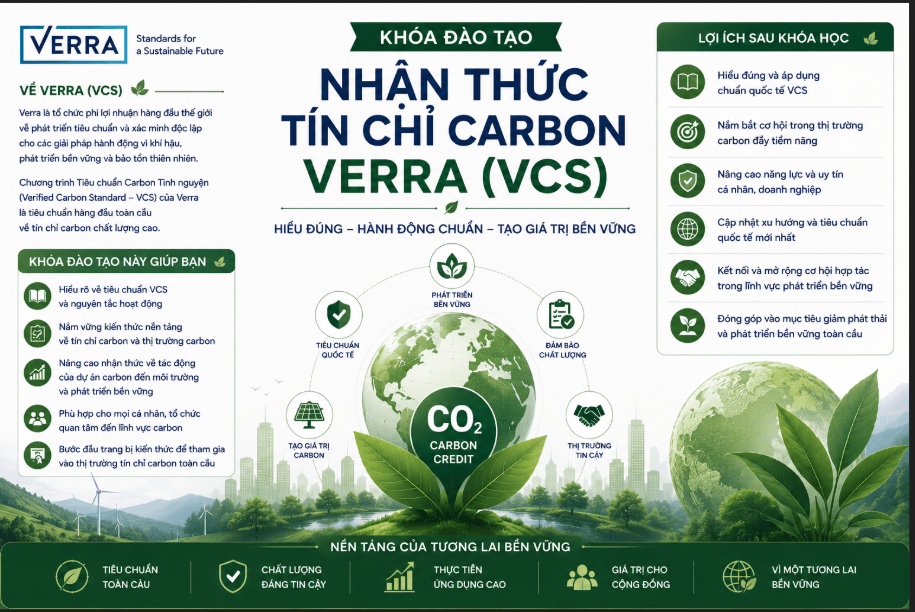
Để giúp doanh nghiệp không bị bỏ lại phía sau, khóa đào tạo “Nhận thức về tín chỉ carbon theo tiêu chuẩn và phương pháp của Verra (VCS)“ được thiết kế như một chương trình cốt lõi, cung cấp tư duy quản trị và năng lực thực thi toàn diện về thị trường carbon cho doanh nghiệp.
1. Tín chỉ carbon và Tiêu chuẩn Verra (VCS) là gì?
Tín chỉ carbon (Carbon Credit): Là một chứng chỉ có thể giao dịch thương mại, đại diện cho quyền phát thải một tấn khí nhà kính đã được giảm thiểu hoặc hấp thụ.
Tiêu chuẩn Verra VCS: Được quản lý bởi tổ chức Verra , đây hiện là chương trình quản lý tiêu chuẩn tín chỉ carbon tự nguyện lớn nhất và phổ biến nhất trên thế giới. Tín chỉ được phát hành dưới hệ thống này được gọi làVCUs .
Khóa đào tạo của chúng tôi là chương trình chuyên sâu trong giúp doanh nghiệp thấu hiểu toàn bộ cơ chế vận hành, thiết lập và quản lý dự án tạo tín chỉ đạt chuẩn quốc tế này.
2. Các nguyên tắc kỹ thuật đặc thù và nghiêm ngặt của Verra VCS
Để một dự án giảm phát thải được công nhận và phát hành tín chỉ carbon thương mại (VCUs), doanh nghiệp phải vượt qua các bộ lọc nguyên tắc cực kỳ khắt khe của Verra:
2.1. Tính bổ sung
Dự án phải chứng minh được rằng các hoạt động giảm phát thải sẽ không thể xảy ranếu không có nguồn thu tài chính từ việc bán tín chỉ carbon. Nếu hoạt động đó là bắt buộc theo luật pháp hiện hành, nó không có tính bổ sung.
2.2. Kịch bản tham chiếu
Doanh nghiệp phải thiết lập được một kịch bản tham chiếu minh bạch để xác định lượng phát thải khí nhà kính sẽ xảy ra nếu như dự án không được triển khai. Số lượng tín chỉ carbon tạo ra chính là khoảng chênh lệch giảm được so với kịch bản này.
2.3. Rò rỉ phát thải
Dự án phải đảm bảo rằng việc cắt giảm phát thải trong phạm vi nhà máy hoặc khu vực của mình không vô tình làm tăng phát thải ở một nơi khác ngoài ranh giới dự án.
2.4. Tính bền vững dài hạn & Tránh tính trùng
Permanence: Lượng carbon được hấp thụ (ví dụ: thông qua trồng rừng) phải được lưu trữ bền vững và không có nguy cơ bị tái phát thải ngược lại bầu khí quyển.
Double counting: Hệ thống Registry (đăng ký) của Verra kiểm soát nghiêm ngặt để đảm bảo một tín chỉ carbon chỉ được sở hữu, giao dịch hoặc hủy bỏ (retire) bởi một đối tượng duy nhất, hoàn toàn không có sự trùng lặp.
3. Lợi ích chiến lược khi doanh nghiệp làm chủ tiêu chuẩn Verra VCS
Việc trang bị nhận thức và vận hành doanh nghiệp theo chuẩn carbon Verra VCS mang lại những lợi thế cạnh tranh vượt trội:
Vượt qua các rào cản xanh quốc tế: Giúp doanh nghiệp xuất khẩu chủ động ứng phó với các yêu cầu giảm phát thải nghiêm ngặt như CBAM, EUDR của thị trường châu Âu và Mỹ.
Bảo vệ vị thế trong chuỗi cung ứng toàn cầu: Các tập đoàn đa quốc gia lớn hiện nay chỉ ưu tiên chọn các nhà cung ứng có lộ trình Net Zero rõ ràng và có năng lực kiểm kê, giảm phát thải minh bạch.
Tạo ra nguồn tài chính xanh mới: Giúp doanh nghiệp chuyển hóa các hoạt động đầu tư tiết kiệm năng lượng, năng lượng tái tạo hoặc xử lý chất thải thành tài sản tài chính có thể bán ra thị trường quốc tế dưới dạng VCUs.
Nâng cao uy tín thương hiệu và ESG: Chuẩn hóa dữ liệu phát triển bền vững, tạo hồ sơ đẹp để tiếp cận các quỹ đầu tư xanh và nguồn tín dụng ưu đãi.
4. Tổng quan 6 Module đào tạo chuyên sâu
Chương trình được thiết kế cô đọng, đi từ lý thuyết tổng quan đến thực chiến công cụ:
Module 1 – Biến đổi khí hậu & Net Zero: Phân loại Scope 1, 2, 3 theo GHG Protocol; phân biệt Net Zero và Carbon Neutral.
Module 2 – Carbon Credits & Thị trường carbon: Bản chất 1 $tCO_2e$, phân biệt giảm thiểu (avoidance) và hấp thụ (removal), cơ chế vận hành thị trường tự nguyện.
Module 3 – Giới thiệu tiêu chuẩn Verra VCS: Đi sâu vào cấu trúc tiêu chuẩn và 5 nguyên tắc cốt lõi (Additionality, Baseline, Leakage, Permanence, Double counting).
Module 4 – Methodology & Các loại dự án carbon: Cách chọn phương pháp luận áp dụng cho các nhóm dự án: Năng lượng tái tạo, Quản lý chất thải, AFOLU (Nông lâm nghiệp), và Dự án công nghiệp.
Module 5 – Quy trình phát triển dự án carbon: Thấu hiểu vòng đời 8 bước từ Nghiên cứu khả thi (Feasibility Study), lập hồ sơ PDD, Thẩm định (Validation), Giám sát (Monitoring), Thẩm tra (Verification) đến Phát hành tín chỉ.
Module 6 – MRV & Phát hành tín chỉ carbon: Kỹ thuật thu thập dữ liệu QA/QC, vận hành hệ thống Registry và các case study thực tế (Biomass, Thu hồi Methane…).
Workshop Thực hành: Học viên trực tiếp phân tích nguồn phát thải và phác thảo cơ hội phát triển dự án carbon khả thi ngay tại chính doanh nghiệp mình.
5. So sánh năng lực của Doanh nghiệp trước và sau khi đào tạo Verra VCS
Tiêu chí
Doanh nghiệp chưa được đào tạo
Doanh nghiệp sở hữu chứng nhận Verra VCS
Nhận thức về phát thải
Mơ hồ về các khái niệm Scope 1, 2, 3; lúng túng trước áp lực CBAM/ESG.
Hiểu rõ bản chất nguồn thải, chủ động định hình chiến lược Net Zero dài hạn.
Cơ hội từ giảm phát thải
Xem việc xử lý chất thải, tiết kiệm năng lượng chỉ là chi phí vận hành.
Nhận diện và chuyển hóa các hoạt động vận hành thành dự án tạo tín chỉ carbon (VCUs).
Năng lực làm việc quốc tế
Phụ thuộc hoàn toàn vào các đơn vị tư vấn bên ngoài, dễ gặp rủi ro pháp lý.
Tự tin làm việc trực tiếp với các Project Developer và Tổ chức thẩm tra quốc tế (VVB).
Lợi thế cạnh tranh
Rủi ro bị loại khỏi chuỗi cung ứng toàn cầu của các “ông lớn”.
Nâng cao vị thế đấu thầu, dễ dàng thâm nhập các thị trường khó tính nhất.
Kết luận: Đầu tư kiến thức xanh để dẫn dắt tương lai
Hành trình tiến tới Net Zero không còn là một khẩu hiệu xa vời, mà là một cuộc đua về mặt công nghệ và tư duy quản trị. Khóa đào tạo Nhận thức về Tín chỉ Carbon theo tiêu chuẩn Verra VCS của ISC Global chính là bước đệm vững chắc giúp doanh nghiệp chuyển mình từ vị thế “bị động đối phó” sang “chủ động tiên phong”, nắm bắt dòng tài chính xanh toàn cầu.
Doanh nghiệp của bạn hiện đang hoạt động trong lĩnh vực nào (Sản xuất, Năng lượng, hay Nông – Lâm nghiệp) và đang gặp những vướng mắc gì về rào cản giảm phát thải khi xuất khẩu? Hãy chia sẻ để chúng tôi có thể tư vấn giải pháp và lộ trình xây dựng năng lực carbon phù hợp nhất!
Trong hoạt động thương mại quốc tế, Hoa Kỳ là một trong những thị trường xuất khẩu lớn nhất nhưng cũng có hàng rào an ninh nghiêm ngặt nhất thế giới. Kể từ sau sự kiện ngày 11/9, kiểm soát biên giới không chỉ dừng lại ở chất lượng sản phẩm mà còn là an ninh chống khủng bố. Đó là lý do C-TPAT ra đời. Đây không phải là một tiêu chuẩn chất lượng thông thường mà là một hệ thống quản trị an ninh chuỗi cung ứng toàn diện, bảo vệ hàng hóa từ nhà máy sản xuất cho đến khi cập cảng nước Mỹ.
Bài viết này sẽ giúp bạn hiểu rõ chứng nhận C-TPAT là gì, các tiêu chí an ninh khắt khe, lợi ích chiến lược và quy trình cụ thể để doanh nghiệp đạt được chứng nhận này.
1. Chứng nhận C-TPAT là gì?
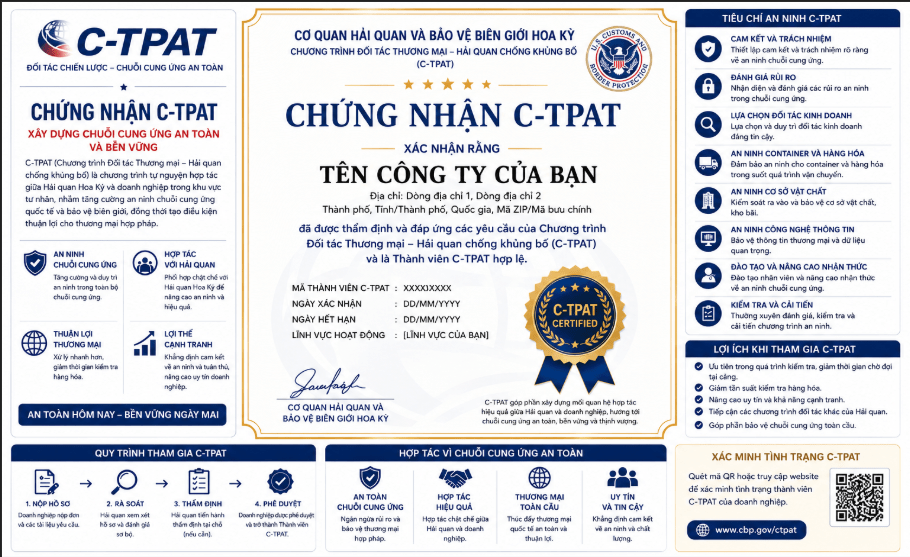
C-TPAT là chương trình Hiệp hội An ninh Thương mại Hải quan chống Khủng bố, được cơ quan Hải quan và Bảo vệ Biên giới Hoa Kỳ (CBP) thành lập vào năm 2001.
Đây là một cơ chế hợp tác tự nguyện giữa Chính phủ Mỹ và các thành viên trong chuỗi cung ứng toàn cầu (nhà sản xuất, nhà nhập khẩu, đơn vị logistics, hãng tàu). Chứng nhận C-TPAT xác nhận rằng doanh nghiệp đã xây dựng và thực thi một quy trình an ninh nghiêm ngặt, đảm bảo hàng hóa không bị tráo đổi, cài cắm vũ khí, chất nổ hoặc hàng lậu trong suốt quá trình vận chuyển.
2. Các yêu cầu kỹ thuật đặc thù và nghiêm ngặt của C-TPAT
So với các tiêu chuẩn quản lý thông thường (như ISO 9001), C-TPAT chuyển trọng tâm hoàn toàn sang An ninh vật lý và An ninh thông tin với các yêu cầu cực kỳ khắt khe:
2.1. An ninh container và rơ-moóc (17-Point Inspection)
Doanh nghiệp phải thực hiện quy trình kiểm tra nghiêm ngặt 17 điểm đối với tất cả các container và rơ-moóc trước khi đóng hàng. Mọi container xuất khẩu sang Mỹ bắt buộc phải sử dụngSeal an ninh đạt tiêu chuẩn ISO 17712 và phải có quy trình kiểm soát, lưu kho bãi niêm phong rõ ràng để tránh bị làm giả.
2.2. An ninh vật lý và Kiểm soát truy cập tại nhà máy
Hàng rào và Chiếu sáng: Khu vực sản xuất và kho bãi phải được bao bọc bằng hàng rào kiên cố, có hệ thống chiếu sáng đầy đủ vào ban đêm tại các góc khuất.
Hệ thống Giám sát (CCTV): Camera an ninh phải hoạt động liên tục 24/7 tại các điểm trọng yếu (cổng ra vào, khu vực đóng hàng, nhà kho) và dữ liệu hình ảnh phải được lưu trữ tối thiểu 30 đến 90 ngày để phục vụ điều tra khi có sự cố.
Kiểm soát ra vào: Áp dụng hệ thống thẻ từ hoặc nhận diện sinh trắc học cho nhân viên; khách bạt mạng và tài xế xe tải phải được cấp thẻ tạm thời và có người tháp tùng.
2.3. An ninh nhân sự
Doanh nghiệp phải thực hiện xác minh lý lịch (Background check) kỹ lưỡng đối với tất cả nhân viên trước khi tuyển dụng, đặc biệt là các vị trí làm việc tại bộ phận kho, đóng hàng và bảo vệ.
2.4. An ninh công nghệ thông tin
Trong các phiên bản cập nhật mới nhất, C-TPAT siết chặt quy trình an ninh mạng. Doanh nghiệp phải có hệ thống tường lửa (Firewall), định kỳ thay đổi mật khẩu, phân quyền truy cập dữ liệu chuỗi cung ứng và có quy trình chống lại các cuộc tấn công mã độc (Phishing/Malware).
3. Lợi ích chiến lược khi doanh nghiệp đạt chứng nhận C-TPAT
Sở hữu chứng nhận C-TPAT mang lại những đặc quyền thương mại khổng lồ mà tiền bạc không thể tự mua được:
3.1. Giảm tỷ lệ kiểm hóa tại cảng Mỹ xuống mức thấp nhất
Hàng hóa của doanh nghiệp đạt C-TPAT sẽ được xếp vào nhóm “Rủi ro thấp”. Điều này giúp giảm tỷ lệ bị Hải quan Mỹ giữ lại kiểm tra lên tới 4-6 lần so với doanh nghiệp thông thường, giúp tiết kiệm hàng nghìn USD chi phí lưu bãi (Demurrage) và chi phí bốc dỡ.
3.2. Ưu tiên thông quan nhanh
Khi xảy ra các tình huống khẩn cấp hoặc ùn tắc tại các cảng biển của Mỹ, các lô hàng của thành viên C-TPAT sẽ được ưu tiên xử lý và thông quan trước theo luồng xanh, đảm bảo tiến độ giao hàng cho đối tác.
3.3. Điều kiện tiên quyết để làm việc với các “ông lớn” bán lẻ Mỹ
Các tập đoàn bán lẻ và nhập khẩu hàng đầu tại Mỹ (như Walmart, Target, Costco, Amazon) đều đặt C-TPAT là tiêu chuẩn bắt buộc khi lựa chọn nhà cung ứng quốc tế. Nếu không có C-TPAT, bạn gần như không có cơ hội thắng thầu các hợp đồng lớn này.
3.4. Bảo vệ tối đa tài sản và thương hiệu
Việc vận hành theo chuẩn C-TPAT giúp doanh nghiệp giảm thiểu tối đa nguy cơ bị thất thoát hàng hóa, mất trộm trong kho, hoặc nghiêm trọng hơn là bị tội phạm lợi dụng để buôn lậu – điều có thể khiến doanh nghiệp bị phong tỏa tài khoản và cấm xuất khẩu vĩnh viễn.
4. Quy trình 5 bước đăng ký và duy trì chứng nhận C-TPAT
Bước 1: Khảo sát & Đánh giá rủi ro: Rà soát lại toàn bộ lỗ hổng an ninh từ tường rào, hệ thống camera, quy trình kiểm kho đến chuỗi vận chuyển nội địa.
Bước 2: Khắc phục và Chuẩn hóa: Lắp đặt bổ sung camera, gia cố nhà kho, thiết lập các biểu mẫu kiểm tra container 17 điểm, chèn điều khoản an ninh vào hợp đồng với công ty vận chuyển (Logistics).
Bước 3: Đào tạo nội bộ: Tổ chức các buổi huấn luyện bắt buộc cho nhân viên kho và bảo vệ về cách phát hiện dấu hiệu bất thường, cách kiểm tra Seal container giả mạo.
Bước 4: Nộp hồ sơ trực tuyến: Doanh nghiệp hoàn thiện Bản hồ sơ An ninh (Security Profile) và nộp lên hệ thống trực tuyến của Hải quan Mỹ (CBP Portal) thông qua mã số SVI (Status Verification Interface).
Bước 5: Thẩm định và Cấp chứng nhận: Đại diện CBP (hoặc đơn vị được ủy quyền) sẽ tiến hành kiểm tra thực tế tại nhà máy để xác minh tính trung thực của hồ sơ trước khi chính thức công nhận và cấp chứng chỉ.
5. So sánh Doanh nghiệp đạt C-TPAT và Doanh nghiệp thông thường
Tiêu chí
Doanh nghiệp thông thường
Doanh nghiệp đạt chuẩn C-TPAT
Tỷ lệ kiểm tra tại cảng Mỹ
Cao, ngẫu nhiên và tốn thời gian
Rất thấp, được tối ưu hóa luồng xanh
Thời gian thông quan
Phụ thuộc vào mật độ hàng hóa tại cảng
Luôn được xếp hàng ưu tiên xử lý trước
Kiểm soát container
Chỉ kiểm tra số lượng và niêm phong cơ bản
Kiểm tra nghiêm ngặt 17 điểm bằng camera/bằng chứng
Vị thế đấu thầu tại Mỹ
Bị động, thường chỉ làm nhà thầu phụ
Uy tín cao, trực tiếp làm việc với các nhà mua hàng lớn
Kết luận: Đầu tư cho an ninh là đầu tư cho tương lai
Chứng nhận C-TPAT không chỉ đơn thuần là một thủ tục giấy tờ để đối phó với Hải quan. Nó là một sự đầu tư chiến lược về mặt hạ tầng và tư duy quản trị an ninh. Trong một thế giới đầy biến động, một chuỗi cung ứng an toàn và không thể bị gián đoạn chính là vũ khí cạnh tranh mạnh mẽ nhất giúp doanh nghiệp đứng vững tại thị trường Mỹ.
Doanh nghiệp của bạn đang sản xuất mặt hàng gì để xuất khẩu sang Mỹ (ví dụ: dệt may, đồ gỗ nội thất, hay linh kiện điện tử) và đang sử dụng phương thức vận chuyển đường biển hay đường hàng không? Hãy chia sẻ thông tin để mình có thể tư vấn sâu hơn về các tiêu chuẩn an ninh cụ thể áp dụng riêng cho loại hình hàng hóa của bạn!
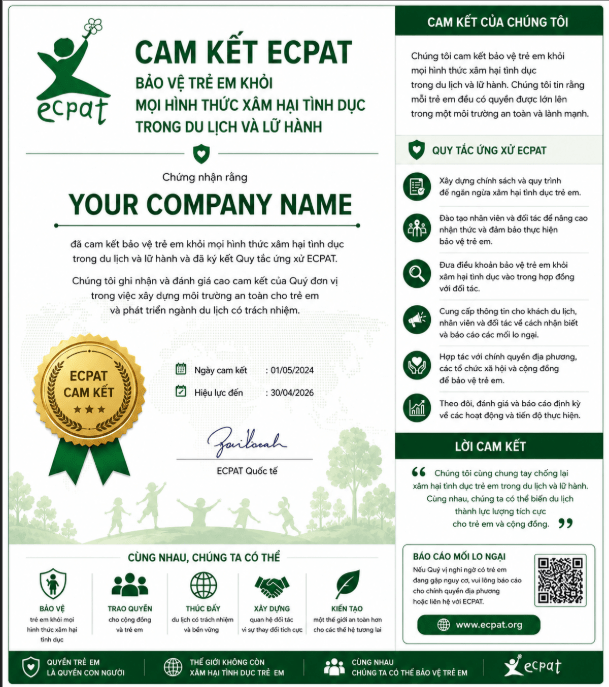
Trong ngành du lịch, lữ hành và khách sạn, rủi ro liên quan đến nạn xâm hại và bóc lột tình dục trẻ em luôn là một thách thức nhức nhối mang tính toàn cầu. Để ngăn chặn vấn nạn này, ECPAT International (Mạng lưới toàn cầu về chấm dứt nạn bóc lột tình dục trẻ em) đã phối hợp cùng các tổ chức quốc tế ban hành Bộ Quy tắc Ứng xử Bảo vệ Trẻ em.
Tại Việt Nam và quốc tế, việc đăng ký cam kết tuân thủ các quy định của ECPAT không còn dừng lại ở mức độ hoạt động thiện nguyện, mà đã trở thành một tiêu chuẩn đạo đức kinh doanh và trách nhiệm pháp lý bắt buộc. Sở hữu chứng nhận cam kết này là minh chứng đanh thép cho thấy doanh nghiệp của bạn là một điểm đến an toàn, nhân văn và có trách nhiệm.
Bài viết này sẽ làm rõ bản chất của cam kết ECPAT, các yêu cầu kỹ thuật đặc thù, lợi ích chiến lược và quy trình của dịch vụ đăng ký cam kết bảo vệ trẻ em cho doanh nghiệp.
1. Cam kết Bảo vệ Trẻ em theo quy định của ECPAT là gì?
ECPAT là mạng lưới các tổ chức phi chính phủ hàng đầu thế giới chuyên về bảo vệ trẻ em. Sự kết hợp giữa ECPAT và ngành du lịch được cụ thể hóa qua Bộ Quy tắc ứng xử. Một sáng kiến đa bên nhằm thúc đẩy trách nhiệm của doanh nghiệp trong việc ngăn ngừa nạn bóc lột trẻ em.
Dịch vụ đăng ký cam kết ECPAT là quy trình hỗ trợ doanh nghiệp rà soát, xây dựng hệ thống quản trị, đào tạo nhân sự và nộp hồ sơ lên tổ chức được ECPAT ủy quyền (hoặc Hiệp hội Du lịch quốc gia) để được chính thức công nhận là Thành viên ký kết của The Code. Sau khi hoàn thành, doanh nghiệp được quyền sử dụng logo của tổ chức để khẳng định uy tín thương hiệu.
2. 6 Tiêu chí kỹ thuật bắt buộc của ECPAT đối với doanh nghiệp
Để được công nhận cam kết, doanh nghiệp không thể chỉ ký một bản tuyên bố chung chung mà phải triển khai và duy trì 6 tiêu chí cốt lõi sau vào quy trình vận hành thực tế:
2.1. Xây dựng Chính sách Bảo vệ Trẻ em nghiêm ngặt
Doanh nghiệp phải ban hành một văn bản chính sách chính thức, ký bởi ban lãnh đạo cao nhất, tuyên bố rõ ràng lập trường “Không khoan nhượng” đối với bất kỳ hành vi xâm hại hoặc bóc lột trẻ em nào trong khuôn viên hoặc chuỗi dịch vụ của mình.
2.2. Đào tạo bắt buộc cho toàn bộ nhân sự
Tất cả nhân viên, từ quản lý cấp cao, nhân viên lễ tân, hướng dẫn viên đến nhân viên buồng phòng, bảo vệ đều phải được đào tạo định kỳ để:
Nhận biết các dấu hiệu nghi ngờ xâm hại trẻ em (ví dụ: khách người lớn đi cùng trẻ em có biểu hiện lo sợ, không cùng huyết thống nhưng có hành vi bất thường).
Nắm rõ quy trình ứng phó khẩn cấp và báo cáo sự cố bảo mật.
2.3. Đưa điều khoản bảo vệ trẻ em vào chuỗi cung ứng
Doanh nghiệp phải đưa các điều khoản bắt buộc về bảo vệ trẻ em vào hợp đồng ký kết với các đối tác, nhà cung cấp vệ tinh (đại lý xe du lịch, tàu vận chuyển, các đơn vị cung ứng dịch vụ tại địa phương).
2.4. Minh bạch thông tin cho khách hàng
Cung cấp thông tin, quy định và các số điện thoại đường dây nóng cứu hộ trẻ em (ví dụ: Tổng đài Quốc gia Bảo vệ Trẻ em 111 tại Việt Nam) tại các khu vực công cộng như quầy lễ tân, trên website đặt phòng, hoặc trong tờ rơi hướng dẫn cho khách du lịch.
2.5. Hỗ trợ và phối hợp với cơ quan chức năng
Xây dựng quy trình phối hợp chặt chẽ, cung cấp dữ liệu (như thông tin lưu trú, dữ liệu camera) cho cơ quan công an hoặc các tổ chức bảo vệ trẻ em địa phương khi có sự cố phát sinh.
2.6. Báo cáo tiến độ thường niên
Hàng năm, doanh nghiệp phải nộp báo cáo tiến độ thực hiện 6 tiêu chí trên lên Ban điều hành của liên minh The Code để duy trì trạng thái thành viên tích cực.
3. Lợi ích chiến lược khi doanh nghiệp đăng ký cam kết ECPAT
3.1. Đảm bảo an toàn pháp lý tuyệt đối
Sự cố liên quan đến xâm hại trẻ em tại cơ sở kinh doanh có thể ngay lập tức hủy hoại một thương hiệu lớn. Áp dụng quy chuẩn ECPAT giúp doanh nghiệp chủ động sàng lọc rủi ro, bảo vệ cơ sở vật chất và ban lãnh đạo trước các cáo buộc pháp lý nghiêm trọng.
3.2. Tiêu chí bắt buộc để hợp tác với các hãng lữ hành quốc tế lớn
Các tập đoàn lữ hành lớn của Châu Âu và Bắc Mỹ (như TUI Group, Kuoni) chỉ ký hợp đồng gửi khách với các khách sạn, đại lý bản địa đã ký cam kết bảo vệ trẻ em. Chứng nhận ECPAT chính là chiếc “chìa khóa” để bạn tiếp cận nguồn khách quốc tế cao cấp.
3.3. Gia tăng điểm số xếp hạng Sao Khách sạn và Giải thưởng Du lịch
Hiện nay, các hội đồng thẩm định định hạng sao (Hotel Rating) và các giải thưởng du lịch bền vững lớn trên thế giới đều tích hợp tiêu chí “Trách nhiệm bảo vệ trẻ em” vào thang điểm đánh giá tối cao.
4. Quy trình triển khai dịch vụ đăng ký cam kết ECPAT cho doanh nghiệp
Bước 1: Khảo sát: Chuyên gia dịch vụ tiến hành kiểm tra thực địa, đánh giá các kịch bản rủi ro có thể xảy ra tại cơ sở kinh doanh của doanh nghiệp.
Bước 2: Xây dựng tài liệu: Soạn thảo chính sách bảo vệ trẻ em, quy trình xử lý khủng hoảng của lễ tân/bảo vệ, và chèn điều khoản vào hợp đồng cung ứng.
Bước 3: Đào tạo chuyển giao: Tổ chức các lớp học thực chiến, giả lập tình huống để nhân viên biết cách ứng xử khéo léo nhưng kiên quyết khi phát hiện nghi vấn.
Bước 4: Nộp hồ sơ đăng ký: Hoàn thiện form mẫu, chuẩn bị bằng chứng thực tế và nộp lên tổ chức đại diện của ECPAT/The Code tại khu vực.
Bước 5: Phê duyệt và Giám sát: Doanh nghiệp nhận chứng nhận, được quyền gắn logo “The Code Member” và tham gia vào mạng lưới giám sát thường niên.
5. So sánh Doanh nghiệp áp dụng quy chuẩn ECPAT và Doanh nghiệp truyền thống
Tiêu chí
Doanh nghiệp truyền thống
Doanh nghiệp cam kết ECPAT
Nhận thức về rủi ro trẻ em
Thường thụ động, chỉ xử lý khi công an can thiệp
Chủ động phòng ngừa bằng hệ thống quy trình nghiêm ngặt
Năng lực của nhân viên
Hoang mang, lúng túng khi gặp tình huống nghi vấn
Biết rõ quy trình cô lập đối tượng và báo cáo khẩn cấp
Lợi thế đấu thầu quốc tế
Bị hạn chế, khó tiếp cận thị trường khách Âu – Mỹ
Được ưu tiên hàng đầu trong các chuỗi liên kết lữ hành lớn
Trách nhiệm chuỗi cung ứng
Chỉ quan tâm đến chất lượng dịch vụ của đối tác
Ràng buộc đối tác phải cùng bảo vệ trẻ em
Kết luận: Hành động nhỏ, giá trị lớn
Đăng ký cam kết bảo vệ trẻ em theo quy định của ECPAT không chỉ đơn thuần là việc hoàn thành một bộ hồ sơ thủ tục. Đó là lời khẳng định mạnh mẽ về đạo đức kinh doanh, là lá chắn bảo vệ những đối tượng dễ bị tổn thương nhất trong xã hội và đồng thời là nền tảng vững chắc để doanh nghiệp vươn tầm quốc tế bền vững.
Doanh nghiệp của bạn đang vận hành trong phân khúc nào (Khách sạn/Resort nghỉ dưỡng, Công ty lữ hành, hay Đơn vị vận chuyển du lịch) và quy mô nhân sự hiện tại ra sao? Hãy chia sẻ thông tin để chúng tôi thiết kế bộ quy trình nội bộ và lộ trình đào tạo nhân sự sát sườn nhất với thực tế vận hành của bạn!
Trong làn sóng dịch chuyển sang nền kinh tế xanh, “Phát triển bền vững” không còn là một cam kết trên giấy mà đã trở thành điều kiện tiên quyết để doanh nghiệp tồn tại. Tuy nhiên, rào cản lớn nhất của các doanh nghiệp hiện nay là làm sao chứng minh các hoạt động Môi trường, Xã hội và Quản trị (ESG) của mình một cách minh bạch, không bị gắn mác “Greenwashing” (tẩy xanh).
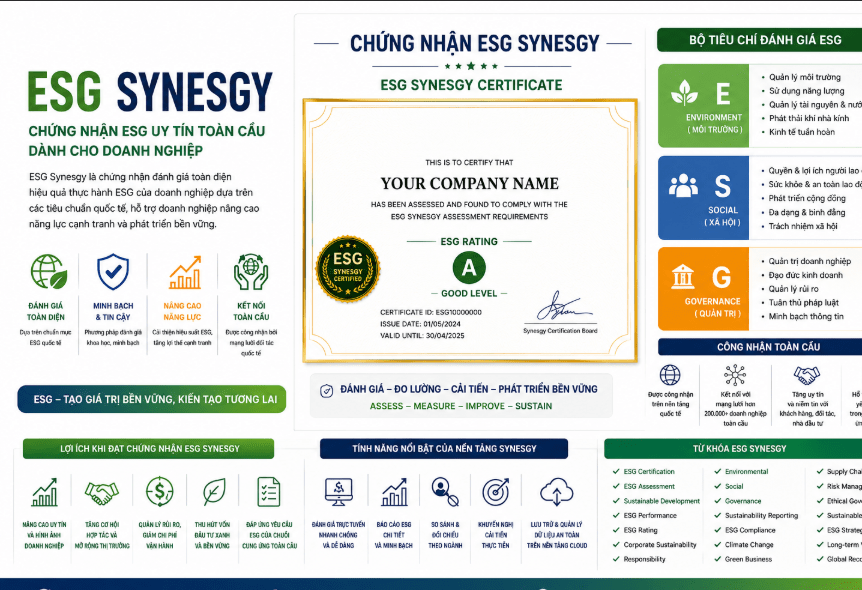
Chứng chỉ Phát triển bền vững Synesgy – nền tảng số hóa quản trị ESG toàn cầu do tập đoàn CRIF (Ý) phát triển – ra đời như một giải pháp công nghệ tối ưu. Đây là chứng chỉ điện tử xác thực năng lực bền vững của doanh nghiệp dựa trên dữ liệu lớn và các bộ tiêu chuẩn quốc tế khắt khe nhất hiện nay.
1. Chứng chỉ Phát triển bền vững Synesgy là gì?
Chứng chỉ Synesgy là kết quả của quá trình số hóa, tự đánh giá và kiểm định dữ liệu phi tài chính nghiêm ngặt của doanh nghiệp trên nền tảng đám mây Synesgy. Phương pháp luận của chứng chỉ này tuân thủ tuyệt đối các khung quy chuẩn toàn cầu như GRI (Global Reporting Initiative), SDG (Mục tiêu phát triển bền vững của LHQ) và EU Taxonomy (Phân loại xanh của Liên minh Châu Âu).
Khi hoàn thành quá trình thẩm định, doanh nghiệp sẽ được cấp một Chứng chỉ điện tử có thời hạn 12 tháng, bao gồm:
Hạng điểm ESG (ESG Grade): Được phân cấp từ A (Xuất sắc/Rủi ro thấp) đến E (Yếu kém/Rủi ro cao).
Mã định danh ESG: Giúp các đối tác, ngân hàng trên toàn cầu có thể tra cứu và đối soát trực tuyến kết quả của doanh nghiệp ngay lập tức.
2. 3 Trụ cột kiểm định kỹ thuật của Chứng chỉ Synesgy
Để được cấp chứng chỉ, doanh nghiệp phải vượt qua bộ câu hỏi được cá nhân hóa theo hơn 35 ngành nghề riêng biệt với 3 trụ cột cốt lõi:
2.1. Khía cạnh Môi trường
Dấu chân Carbon: Đo lường và báo cáo lượng phát thải khí nhà kính trực tiếp và gián tiếp (Scope 1, 2 và 3).
Hiệu quả Tài nguyên: Đánh giá tỷ lệ sử dụng năng lượng tái tạo, mức độ tiêu thụ nước và các giải pháp quản lý rác thải nguy hại.
Kinh tế tuần hoàn: Tỷ lệ nguyên vật liệu tái chế đầu vào và khả năng tái sử dụng sản phẩm cuối vòng đời.
2.2. Khía cạnh Xã hội
Quyền con người & Tiêu chuẩn Lao động: Kiểm tra việc tuân thủ an toàn lao động, chính sách lương thưởng công bằng theo chuẩn ILO, cam kết không sử dụng lao động cưỡng bức/trẻ em.
Đa dạng & Hòa nhập (DEI): Tỷ lệ bình đẳng giới trong ban lãnh đạo và cơ hội phát triển đồng đều cho nhân viên.
2.3. Khía cạnh Quản trị
Đạo đức Kinh doanh: Đánh giá các quy trình kiểm soát nội bộ về chống tham nhũng, hối lộ và bảo mật dữ liệu.
Quản trị Chuỗi cung ứng: Thẩm định xem doanh nghiệp có áp dụng các tiêu chí xanh khi lựa chọn nhà cung cấp vệ tinh hay không.
3. Lợi ích chiến lược khi sở hữu Chứng chỉ Synesgy
3.1. “Hộ chiếu” tham gia chuỗi cung ứng của các tập đoàn đa quốc gia
Các ông lớn toàn cầu (như Apple, Samsung, Unilever) hiện nay bắt buộc các nhà cung cấp trong chuỗi phải minh bạch dữ liệu ESG. Chứng chỉ Synesgy được công nhận rộng rãi trên thế giới, giúp doanh nghiệp Việt Nam giữ vững vị thế nhà thầu và không bị loại khỏi chuỗi cung ứng.
3.2. Mở khóa nguồn Vốn Xanh
Hệ thống các ngân hàng quốc tế và nội địa đang dùng điểm số Synesgy như một thước đo để giải ngân các khoản vay xanh. Đạt chứng chỉ Synesgy mức điểm tốt giúp doanh nghiệp tiếp cận nguồn vốn lớn với lãi suất ưu đãi hơn hẳn thông thường.
3.3. Tối ưu hóa chi phí vận hành
Thông qua bản Kế hoạch hành động (Action Plan) mà Synesgy cung cấp kèm theo chứng chỉ, doanh nghiệp sẽ nhìn rõ các điểm nghẽn gây lãng phí năng lượng, nguyên liệu trong nhà máy để từ đó cải tiến, giảm thiểu chi phí sản xuất.
4. Quy trình 5 bước đạt Chứng chỉ Synesgy
Bước 1: Khởi tạo: Doanh nghiệp đăng ký tài khoản, hệ thống tự động nhận diện mã ngành để xuất bộ câu hỏi đặc thù.
Bước 2: Nhập liệu: Điền số liệu thực tế (hóa đơn điện nước, báo cáo nhân sự, chứng nhận ISO hiện có) và đính kèm tài liệu minh chứng.
Bước 3: Kiểm soát chất lượng (Quality Check): Chuyên gia của CRIF và thuật toán AI tiến hành đối soát tính logic của dữ liệu, ngăn chặn khai báo gian lận.
Bước 4: Cấp chứng chỉ: Xuất hạng điểm ESG, cấp chứng chỉ điện tử công khai trên hệ thống Synesgy Marketplace toàn cầu.
Bước 5: Cải tiến & Gia hạn: Doanh nghiệp thực thi các khuyến nghị và tiến hành đánh giá lại sau 12 tháng để duy trì hoặc nâng hạng chứng chỉ.
5. So sánh Chứng chỉ Synesgy và Báo cáo ESG truyền thống
Tiêu chí
Báo cáo ESG tự lập
Chứng chỉ ESG trên nền tảng Synesgy
Tính xác thực
Dễ mắc lỗi “tẩy xanh” do tự định giá
Cao, được kiểm định độc lập bởi bên thứ ba (CRIF)
Chi phí & Thời gian
Đắt đỏ, mất nhiều tháng thuê đơn vị tư vấn
Tối ưu chi phí, hoàn thành nhanh trên nền tảng SaaS
Tính kết nối
Khó chia sẻ rộng rãi, định dạng không đồng nhất
Có mã tra cứu trực tuyến, liên thông với hệ thống ngân hàng toàn cầu
Tính liên tục
Chỉ có giá trị tại một thời điểm
Cập nhật động, theo dõi được tiến trình cải thiện qua từng năm
Kết luận: Số hóa sự bền vững để dẫn đầu thị trường
Chứng chỉ Phát triển bền vững trên nền tảng Synesgy không đơn thuần là một tấm bằng khen về môi trường; nó là một công cụ quản trị chiến lược bằng số liệu. Trong nền kinh tế hiện đại, doanh nghiệp nào minh bạch hóa và số hóa được năng lực ESG trước, doanh nghiệp đó sẽ chiếm trọn niềm tin của nhà đầu tư, ngân hàng và khách hàng quốc tế.
Doanh nghiệp của bạn đang cần chứng chỉ ESG này để phục vụ cho hoạt động xuất khẩu sang thị trường Châu Âu hay để bổ sung vào hồ sơ gọi vốn/vay ngân hàng? Hãy chia sẻ lĩnh vực hoạt động của bạn, mình sẽ tư vấn các nhóm dữ liệu cốt lõi nhất mà ngành của bạn cần chuẩn bị để đạt hạng điểm cao trên Synesgy!
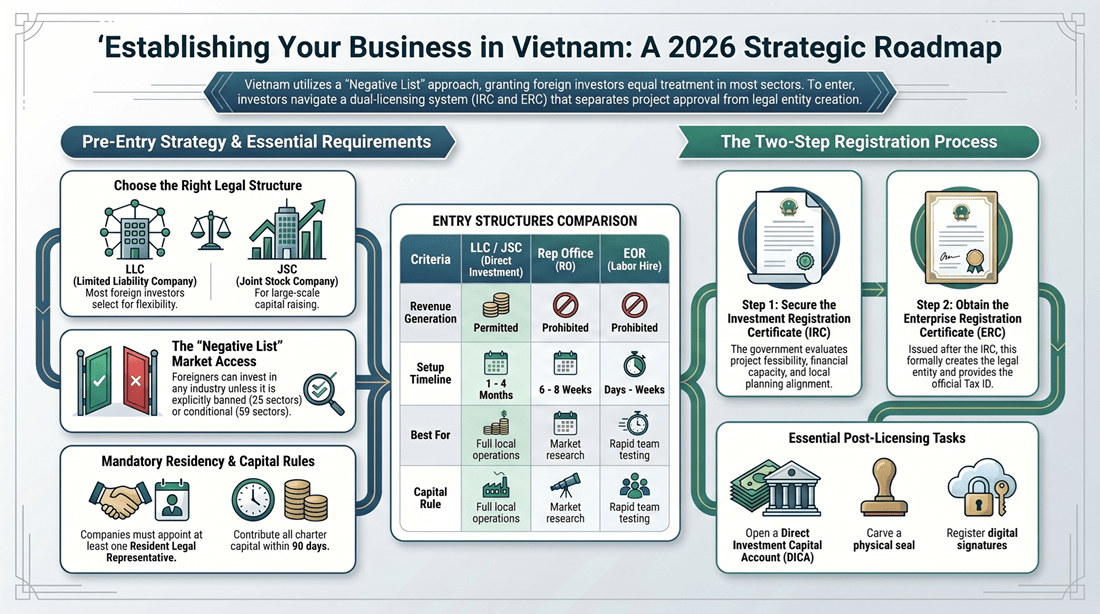
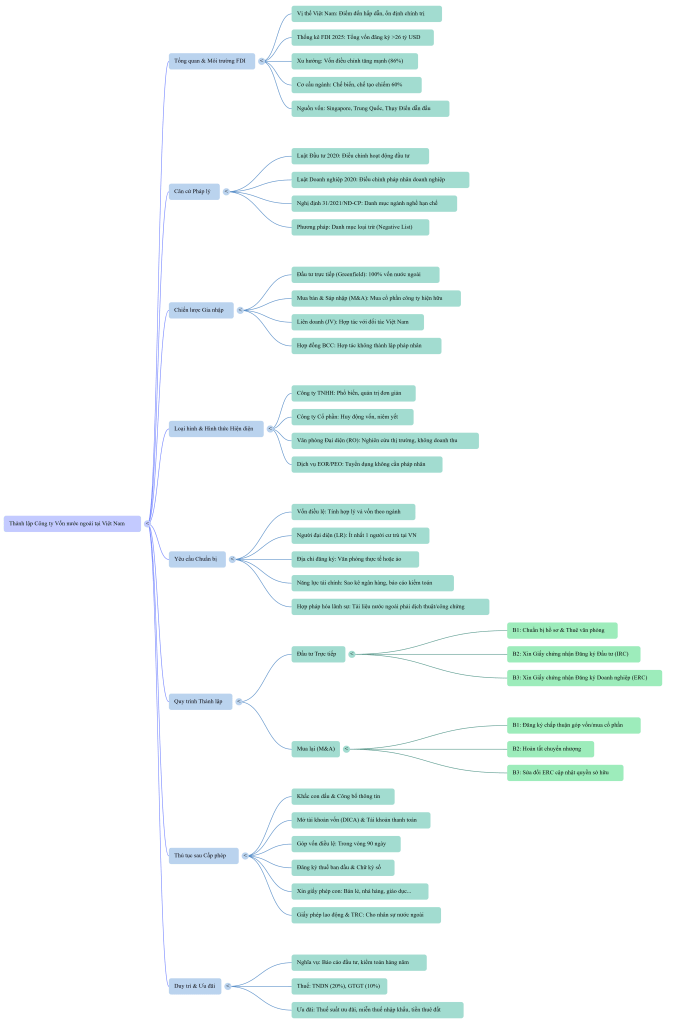
Trong bối cảnh địa chính trị toàn cầu đầy biến động, Việt Nam không chỉ đơn thuần là một điểm đến thay thế; quốc gia này đã trở thành một “bản doanh” chiến lược với những con số biết nói. Tính đến tháng 8 năm 2025, Việt Nam đã thu hút hơn 26 tỷ USD vốn đăng ký FDI (tăng 27% so với cùng kỳ). Tuy nhiên, mệnh lệnh chiến lược dành cho các nhà đầu tư năm 2026 không nằm ở lượng vốn cam kết, mà nằm ở con số 15,4 tỷ USD vốn thực hiện – mức cao nhất trong vòng 5 năm qua. Điều này khẳng định một thực tế: Các nhà đầu tư không còn chỉ “đặt chỗ”, họ đang thực sự triển khai dòng tiền với tốc độ kỷ lục. Thành lập doanh nghiệp tại Việt Nam năm 2026 không còn là một thủ tục hành chính, mà là một cuộc chơi trí tuệ về cấu trúc pháp lý và vốn.
1. Đừng nhìn vào dự án mới, hãy nhìn vào con số 86%
Một sai lầm phổ biến của các nhà đầu tư mới là lo ngại khi thấy số vốn đăng ký mới có dấu hiệu giảm nhẹ (khoảng 8%). Tuy nhiên, con số thực sự phản ánh bản chất thị trường chính là sự tăng trưởng thần tốc gần 86% của vốn điều chỉnh, đạt 10,65 tỷ USD.
Đây là minh chứng thép cho sự trưởng thành và sức chống chịu của thị trường. Các tập đoàn đa quốc gia đã hiện diện tại đây đang gặt hái thành công ngoài mong đợi, thúc đẩy họ tái đầu tư mạnh mẽ để mở rộng quy mô.
“Sự tăng trưởng mạnh mẽ của vốn điều chỉnh cho thấy các nhà đầu tư hiện tại đang hoạt động thành công và quyết định tái đầu tư, mở rộng quy mô. Đây là một tín hiệu còn mạnh mẽ hơn cả việc thu hút các dự án mới, vì nó phản ánh sự hài lòng và niềm tin vào môi trường kinh doanh thực tế tại Việt Nam. Đối với các nhà đầu tư mới, điều này giúp chuyển câu hỏi từ ‘Liệu Việt Nam có phải là nơi tốt để bắt đầu?’ thành ‘Làm thế nào để tái tạo thành công của những người đi trước?’.”
2. Phương pháp “Danh mục loại trừ” – Quyền năng của Nghị định 31/2021/NĐ-CP
Luật Đầu tư 2020 đã tạo ra một cuộc cách mạng về tư duy pháp lý thông qua phương pháp “Danh mục loại trừ” (Negative List). Thay vì phải chờ đợi được “cho phép”, giờ đây mặc định của hệ thống là “mở cửa”.
Các nhà đầu tư phải đặc biệt lưu ý Nghị định 31/2021/NĐ-CP. Đây là văn bản pháp lý tối thượng định nghĩa các rào cản:
Mục A (25 ngành): Cấm hoàn toàn tiếp cận thị trường.
Mục B (59 ngành): Tiếp cận có điều kiện (về tỷ lệ sở hữu nước ngoài, hình thức đầu tư).
Chiến lược này đặc biệt có lợi cho các lĩnh vực tiên phong như Fintech, AI và SaaS. Khi luật pháp chưa kịp định nghĩa rõ ràng, “Danh mục loại trừ” cho phép doanh nghiệp tự tin vận hành vì họ không nằm trong danh sách cấm. Ngoài ra, việc xác định tỷ lệ sở hữu nước ngoài sẽ dựa trên các điều ước quốc tế như WTO, tạo ra một hành lang bảo vệ vững chắc cho nhà đầu tư từ các quốc gia thành viên.
3. M&A vs. Greenfield – Tốc độ hay Quyền lợi dài hạn?
Việc lựa chọn phương thức gia nhập thị trường sẽ bộc lộ ý đồ chiến lược vốn của doanh nghiệp. Nhà đầu tư cần cân nhắc kỹ lưỡng các “đánh đổi” (trade-offs) sau:
Mua bán & Sáp nhập (M&A):
Tốc độ: Hoàn tất trong 20-35 ngày làm việc.
Cảnh báo chuyên gia: Nhiều nhà đầu tư lầm tưởng M&A là tự động. Thực tế, bạn bắt buộc phải thực hiện bước “Đăng ký góp vốn/mua cổ phần” nếu doanh nghiệp mục tiêu hoạt động trong ngành có điều kiện hoặc nếu giao dịch dẫn đến việc sở hữu trên 50% vốn điều lệ.
Hạn chế: M&A không thể nhận vốn trực tiếp từ nước ngoài qua tài khoản DICA để hưởng các ưu đãi đầu tư mới.
Đầu tư trực tiếp (Greenfield – FOE 100% vốn):
Thời gian: 1-4 tháng cho quy trình IRC và ERC song hành.
Giá trị: Đây là con đường duy nhất để xây dựng nền tảng thâm dụng vốn (như sản xuất), cho phép bơm vốn trực tiếp từ nước ngoài và tận dụng tối đa các gói ưu đãi thuế thu nhập doanh nghiệp từ Chính phủ.
4. Nghịch lý vốn tối thiểu – Ngưỡng cửa 130.000 USD và “90 ngày vàng”
Dù Luật không quy định mức vốn tối thiểu chung cho các ngành dịch vụ, nhưng “thực tế vận hành” lại có những rào cản vô hình mà nhà đầu tư phải vượt qua.
Ngưỡng cửa TRC và Miễn Giấy phép lao động: Để xin được Thẻ tạm trú (TRC) dài hạn và đặc biệt là để được miễn Giấy phép lao động (Work Permit Exemption), mức vốn góp phải đạt từ 3 tỷ VND (tương đương khoảng 130.000 USD). Nếu vốn thấp hơn ngưỡng này, nhà đầu tư cá nhân sẽ đối mặt với quy trình xin Giấy phép lao động phức tạp và tốn kém hơn nhiều.
Kỷ luật “90 ngày vàng”: Sau khi được cấp Giấy chứng nhận Đăng ký Doanh nghiệp (ERC), nhà đầu tư chỉ có đúng 90 ngày để góp đủ vốn vào tài khoản DICA. Năm 2026, cơ quan chức năng sẽ thắt chặt việc giám sát thời hạn này; mọi sự chậm trễ đều dẫn đến hình phạt hành chính nặng nề và ảnh hưởng xấu đến hồ sơ tuân thủ của doanh nghiệp.
5. IRC và ERC – Cơ chế “Kiểm soát kép” đầy chủ đích
Việc tách biệt quy trình thành lập thành hai bước IRC và ERC không đơn thuần là thủ tục, mà là sự phân tách giữa “Dự án” và “Pháp nhân”.
IRC (Cấp độ Dự án): Đây là bước sàng lọc gắt gao nhất. Hồ sơ đòi hỏi “Đề xuất dự án đầu tư” chi tiết và bằng chứng năng lực tài chính (sao kê ngân hàng hoặc báo cáo tài chính kiểm toán 2 năm gần nhất). DPI sẽ đánh giá xem dự án của bạn có mang lại giá trị kinh tế và phù hợp quy hoạch hay không.
ERC (Cấp độ Pháp nhân): Chỉ được thực hiện sau khi IRC được phê duyệt. Hồ sơ tập trung vào “Điều lệ công ty” và danh sách thành viên/cổ đông để xác lập tư cách pháp lý.
Lời khuyên chiến lược: Đừng coi nhẹ IRC. Một đề xuất dự án thiếu tính khả thi hoặc tài liệu tài chính không được hợp pháp hóa lãnh sự đúng quy chuẩn sẽ khiến dự án của bạn bị đình trệ ngay từ “cửa ngõ”.
Tổng kết và Tầm nhìn tương lai
Việt Nam năm 2026 đang mở ra một chương mới đầy hứa hẹn. Một cột mốc đáng lưu ý là việc bãi bỏ lệ phí môn bài từ ngày 1/1/2026, giúp giảm bớt gánh nặng chi phí hành chính cho các doanh nghiệp mới.
Tuy nhiên, nhà đầu tư cần nhận thức rằng: Trong khi “cổng vào” đang rộng mở hơn với danh mục loại trừ và ưu đãi phí, thì “cổng vận hành” lại đang thắt chặt hơn với các quy định về kiểm toán bắt buộc và kỉ luật góp vốn 90 ngày.
Trong một thị trường đang chuyển mình mạnh mẽ sang nền kinh tế số, doanh nghiệp của bạn sẽ chọn con đường thâm nhập nhanh chóng qua M&A để tận dụng dòng tiền tại chỗ, hay xây dựng một nền tảng Greenfield vững chắc với mức vốn trên 130.000 USD để tối ưu hóa quyền lợi cư trú và ưu đãi thuế dài hạn? Sự lựa chọn hôm nay sẽ quyết định vị thế của bạn trong thập kỷ tới tại Việt Nam.
Ở Việt Nam, việc cha mẹ cho con cái đất đai để xây dựng tổ ấm sau khi kết hôn là một truyền thống phổ biến. Tuy nhiên, vì tâm lý “người nhà với nhau”, các giao dịch này thường chỉ dừng lại ở lời nói miệng mà không có văn bản chuyển nhượng rõ ràng. Bi kịch bắt đầu nảy sinh khi cuộc hôn nhân tan vỡ: Cha mẹ muốn đòi lại đất với lý do chỉ cho “ở nhờ”, trong khi người con dâu lại khẳng định đó là tài sản chung đã được tặng cho. Điều gì sẽ xảy ra nếu vụ việc phải đưa ra ánh sáng công lý? Án lệ số 03/2016/AL chính là một “lời giải” đầy bất ngờ, ưu tiên bảo vệ sự ổn định của quyền sở hữu dựa trên thực tế sử dụng hơn là những khiếm khuyết về hình thức hợp đồng.
1. Sự im lặng là bằng chứng của việc “cho đứt”
Trong vụ án này, vợ chồng chị Hồng và anh Nam bắt đầu ra ở riêng trên diện tích đất 80m2 của ông Phác (bố chồng) từ năm 1993. Đến năm 2002, anh chị xây dựng một ngôi nhà 2 tầng kiên cố, và đến năm 2005 tiếp tục xây thêm một tum để chống nóng. Điều đáng chú ý là trong suốt hơn 10 năm đầu tư và cải tạo tài sản, ông Phác và các thành viên khác trong gia đình đều biết rõ nhưng không hề có bất kỳ ý kiến phản đối hay ngăn cản nào.
Dưới góc độ chuyên gia pháp lý, Tòa án xác định rằng việc “không phản đối” khi con cái đầu tư tài sản lớn (nhà kiên cố) trên đất là một hình thức thừa nhận mặc nhiên quyền sử dụng đất đã được chuyển giao. Trong quan hệ gia đình, sự im lặng kéo dài trước một sự thật hiển nhiên về quyền tài sản chính là bằng chứng xác thực nhất cho ý chí tặng cho. Tòa án tối cao đã ưu tiên việc bảo vệ sự ổn định của tài sản hơn là sự khắt khe về mặt hình thức của hợp đồng tặng cho (vốn thường không tồn tại trong gia đình).
“Ông Phác và các anh chị em trong gia đình anh Nam đều biết việc xây dựng trên của vợ chồng anh Nam chị Hồng, nhưng cũng không ai có ý kiến gì… Điều đó thể hiện ý chí của gia đình ông Phác là đã cho anh Nam và chị Hồng diện tích đất nêu trên.”
2. “Sổ đỏ” hộ gia đình và tính hợp pháp của người thụ hưởng
Một tình tiết cực kỳ quan trọng mà các cấp tòa sơ thẩm và phúc thẩm trước đó đã bỏ lỡ, đó là nguồn gốc đất “giãn dân”. Năm 1992, gia đình ông Phác được cấp đất theo chính sách giãn dân dành cho hộ đông người. Dù thời điểm đó anh Nam đang đi bộ đội và không có tên trong danh sách 4 người trực tiếp kê khai, nhưng với tư cách là con trai trong hộ, anh Nam hoàn toàn là đối tượng thụ hưởng hợp pháp của chính sách này.
Sự kiện then chốt xảy ra vào năm 2001, khi chính quyền xã Vân Tảo tổ chức kê khai cấp Giấy chứng nhận quyền sử dụng đất công khai tại trụ sở thôn xóm. Ông Phác dù là chủ gốc nhưng không đi kê khai, để anh Nam tự thực hiện thủ tục và đứng tên “Hộ ông Phạm Gia Nam”. Tòa án đã bác bỏ lý lẽ “tự ý làm giấy tờ mà bố không biết” bởi:
Tính công khai: Quy trình kê khai diễn ra trên toàn xã, tại địa điểm công cộng, ông Phác không thể nói là không biết chủ trương.
Sử dụng ổn định: Vợ chồng anh Nam đã quản lý, sử dụng liên tục từ năm 1993 đến khi ly hôn (2009).
Việc bỏ lỡ cơ hội kê khai và để người con (vốn là đối tượng thụ hưởng hợp pháp) đứng tên, kết hợp với việc để họ xây nhà kiên cố, đã tạo thành căn cứ vững chắc để xác lập đây là tài sản chung của vợ chồng.
3. Nhà và Đất – Bước ngoặt trong việc bảo vệ quyền cư trú
Trước khi có phán quyết Giám đốc thẩm, các bản án Sơ thẩm và Phúc thẩm đều áp dụng cách tiếp cận cũ: Đất trả về cho bố mẹ, vợ chồng chỉ được chia giá trị ngôi nhà bằng tiền.
Cách tiếp cận cũ (Đầy rủi ro): Tách rời nhà và đất. Điều này đẩy người vợ (chị Hồng) vào tình trạng “bất ổn định về chỗ ở” (housing precariousness). Sau 16 năm gắn bó, người phụ nữ phải rời khỏi nhà với một số tiền đền bù, trong khi thực tế họ cần một mái nhà để nuôi con.
Cách tiếp cận theo Án lệ 03/2016/AL: Khi nhà kiên cố đã mọc lên và đất đã được đăng ký hợp lệ, chúng phải được coi là một thực thể thống nhất thuộc tài sản chung.
Tuy nhiên, cần lưu ý một điểm tinh tế trong phán quyết: Tài sản chung không mặc nhiên chia 50/50. Hội đồng Giám đốc thẩm chỉ đạo khi chia tài sản phải xem xét đến “công sức đóng góp” của mỗi bên. Trong trường hợp này, anh Nam có thể được hưởng phần nhiều hơn do nguồn gốc đất từ gia đình mình, nhưng quyền lợi về tài sản và chỗ ở của chị Hồng vẫn được pháp luật thừa nhận và bảo vệ thay vì bị tước bỏ hoàn toàn.
4. Bài học rút ra và Góc nhìn phản biện
Án lệ 03/2016/AL mang tính “đảo ngược” đầy nhân văn: Nó ưu tiên thực tế cuộc sống hơn là những thủ tục hành chính khô khan. Đây là một lời cảnh báo nhưng cũng là chỉ dẫn cho các gia đình Việt:
Đối với cha mẹ: Sự minh bạch pháp lý không phải là biểu hiện của sự thiếu tin tưởng, mà là một chiến lược quản trị rủi ro. Nếu chỉ cho con “ở nhờ”, hãy lập văn bản hoặc có ý kiến phản đối rõ ràng ngay từ khi con cái có ý định xây dựng công trình kiên cố. Sự “im lặng” trong pháp lý có thể gây ra những hậu quả nằm ngoài tầm kiểm soát.
Đối với các cặp vợ chồng: Việc đăng ký quyền sử dụng đất đúng đối tượng và quản lý sử dụng ổn định là chìa khóa để bảo vệ quyền lợi tài sản sau này.
Kết luận
Sự rõ ràng ngay từ đầu chính là “lá chắn” tốt nhất để bảo vệ tình cảm gia đình khỏi những tranh chấp đau lòng tại tòa án. Án lệ 03/2016/AL nhắc nhở chúng ta rằng, trong pháp luật cũng như trong cuộc sống, mọi sự lựa chọn – kể cả sự im lặng – đều đi kèm với những hệ quả pháp lý nhất định.
Trong tình yêu và gia đình, liệu việc “rạch ròi” về giấy tờ đất đai là biểu hiện của sự thiếu tin tưởng, hay chính là cách tốt nhất để bảo vệ hạnh phúc và tránh những tranh chấp đau lòng về sau?
TOÀN VĂN NỘI DUNG VỀ ÁN LỆ 03 THAM KHẢO THÔNG TIN BÊN DƯỚI:
Ở Việt Nam, việc cha mẹ cho con cái đất đai để xây dựng tổ ấm sau khi kết hôn là một truyền thống phổ biến. Tuy nhiên, vì tâm lý “người nhà với nhau”, các giao dịch này thường chỉ dừng lại ở lời nói miệng mà không có văn bản chuyển nhượng rõ ràng. Bi kịch bắt đầu nảy sinh khi cuộc hôn nhân tan vỡ: Cha mẹ muốn đòi lại đất với lý do chỉ cho “ở nhờ”, trong khi người con dâu lại khẳng định đó là tài sản chung đã được tặng cho. Điều gì sẽ xảy ra nếu vụ việc phải đưa ra ánh sáng công lý? Án lệ số 03/2016/AL chính là một “lời giải” đầy bất ngờ, ưu tiên bảo vệ sự ổn định của quyền sở hữu dựa trên thực tế sử dụng hơn là những khiếm khuyết về hình thức hợp đồng.
1. Sự im lặng là bằng chứng của việc “cho đứt”
Trong vụ án này, vợ chồng chị Hồng và anh Nam bắt đầu ra ở riêng trên diện tích đất 80m2 của ông Phác (bố chồng) từ năm 1993. Đến năm 2002, anh chị xây dựng một ngôi nhà 2 tầng kiên cố, và đến năm 2005 tiếp tục xây thêm một tum để chống nóng. Điều đáng chú ý là trong suốt hơn 10 năm đầu tư và cải tạo tài sản, ông Phác và các thành viên khác trong gia đình đều biết rõ nhưng không hề có bất kỳ ý kiến phản đối hay ngăn cản nào.
Dưới góc độ chuyên gia pháp lý, Tòa án xác định rằng việc “không phản đối” khi con cái đầu tư tài sản lớn (nhà kiên cố) trên đất là một hình thức thừa nhận mặc nhiên quyền sử dụng đất đã được chuyển giao. Trong quan hệ gia đình, sự im lặng kéo dài trước một sự thật hiển nhiên về quyền tài sản chính là bằng chứng xác thực nhất cho ý chí tặng cho. Tòa án tối cao đã ưu tiên việc bảo vệ sự ổn định của tài sản hơn là sự khắt khe về mặt hình thức của hợp đồng tặng cho (vốn thường không tồn tại trong gia đình).
“Ông Phác và các anh chị em trong gia đình anh Nam đều biết việc xây dựng trên của vợ chồng anh Nam chị Hồng, nhưng cũng không ai có ý kiến gì… Điều đó thể hiện ý chí của gia đình ông Phác là đã cho anh Nam và chị Hồng diện tích đất nêu trên.”
2. “Sổ đỏ” hộ gia đình và tính hợp pháp của người thụ hưởng
Một tình tiết cực kỳ quan trọng mà các cấp tòa sơ thẩm và phúc thẩm trước đó đã bỏ lỡ, đó là nguồn gốc đất “giãn dân”. Năm 1992, gia đình ông Phác được cấp đất theo chính sách giãn dân dành cho hộ đông người. Dù thời điểm đó anh Nam đang đi bộ đội và không có tên trong danh sách 4 người trực tiếp kê khai, nhưng với tư cách là con trai trong hộ, anh Nam hoàn toàn là đối tượng thụ hưởng hợp pháp của chính sách này.
Sự kiện then chốt xảy ra vào năm 2001, khi chính quyền xã Vân Tảo tổ chức kê khai cấp Giấy chứng nhận quyền sử dụng đất công khai tại trụ sở thôn xóm. Ông Phác dù là chủ gốc nhưng không đi kê khai, để anh Nam tự thực hiện thủ tục và đứng tên “Hộ ông Phạm Gia Nam”. Tòa án đã bác bỏ lý lẽ “tự ý làm giấy tờ mà bố không biết” bởi:
Tính công khai: Quy trình kê khai diễn ra trên toàn xã, tại địa điểm công cộng, ông Phác không thể nói là không biết chủ trương.
Sử dụng ổn định: Vợ chồng anh Nam đã quản lý, sử dụng liên tục từ năm 1993 đến khi ly hôn (2009).
Việc bỏ lỡ cơ hội kê khai và để người con (vốn là đối tượng thụ hưởng hợp pháp) đứng tên, kết hợp với việc để họ xây nhà kiên cố, đã tạo thành căn cứ vững chắc để xác lập đây là tài sản chung của vợ chồng.
3. Nhà và Đất – Bước ngoặt trong việc bảo vệ quyền cư trú
Trước khi có phán quyết Giám đốc thẩm, các bản án Sơ thẩm và Phúc thẩm đều áp dụng cách tiếp cận cũ: Đất trả về cho bố mẹ, vợ chồng chỉ được chia giá trị ngôi nhà bằng tiền.
Cách tiếp cận cũ (Đầy rủi ro): Tách rời nhà và đất. Điều này đẩy người vợ (chị Hồng) vào tình trạng “bất ổn định về chỗ ở” (housing precariousness). Sau 16 năm gắn bó, người phụ nữ phải rời khỏi nhà với một số tiền đền bù, trong khi thực tế họ cần một mái nhà để nuôi con.
Cách tiếp cận theo Án lệ 03/2016/AL: Khi nhà kiên cố đã mọc lên và đất đã được đăng ký hợp lệ, chúng phải được coi là một thực thể thống nhất thuộc tài sản chung.
Tuy nhiên, cần lưu ý một điểm tinh tế trong phán quyết: Tài sản chung không mặc nhiên chia 50/50. Hội đồng Giám đốc thẩm chỉ đạo khi chia tài sản phải xem xét đến “công sức đóng góp” của mỗi bên. Trong trường hợp này, anh Nam có thể được hưởng phần nhiều hơn do nguồn gốc đất từ gia đình mình, nhưng quyền lợi về tài sản và chỗ ở của chị Hồng vẫn được pháp luật thừa nhận và bảo vệ thay vì bị tước bỏ hoàn toàn.
4. Bài học rút ra và Góc nhìn phản biện
Án lệ 03/2016/AL mang tính “đảo ngược” đầy nhân văn: Nó ưu tiên thực tế cuộc sống hơn là những thủ tục hành chính khô khan. Đây là một lời cảnh báo nhưng cũng là chỉ dẫn cho các gia đình Việt:
Đối với cha mẹ: Sự minh bạch pháp lý không phải là biểu hiện của sự thiếu tin tưởng, mà là một chiến lược quản trị rủi ro. Nếu chỉ cho con “ở nhờ”, hãy lập văn bản hoặc có ý kiến phản đối rõ ràng ngay từ khi con cái có ý định xây dựng công trình kiên cố. Sự “im lặng” trong pháp lý có thể gây ra những hậu quả nằm ngoài tầm kiểm soát.
Đối với các cặp vợ chồng: Việc đăng ký quyền sử dụng đất đúng đối tượng và quản lý sử dụng ổn định là chìa khóa để bảo vệ quyền lợi tài sản sau này.
Kết luận
Sự rõ ràng ngay từ đầu chính là “lá chắn” tốt nhất để bảo vệ tình cảm gia đình khỏi những tranh chấp đau lòng tại tòa án. Án lệ 03/2016/AL nhắc nhở chúng ta rằng, trong pháp luật cũng như trong cuộc sống, mọi sự lựa chọn – kể cả sự im lặng – đều đi kèm với những hệ quả pháp lý nhất định.
Trong tình yêu và gia đình, liệu việc “rạch ròi” về giấy tờ đất đai là biểu hiện của sự thiếu tin tưởng, hay chính là cách tốt nhất để bảo vệ hạnh phúc và tránh những tranh chấp đau lòng về sau?
TOÀN VĂN NỘI DUNG VỀ ÁN LỆ 03 THAM KHẢO THÔNG TIN BÊN DƯỚI:
Ở Việt Nam, việc cha mẹ cho con cái đất đai để xây dựng tổ ấm sau khi kết hôn là một truyền thống phổ biến. Tuy nhiên, vì tâm lý “người nhà với nhau”, các giao dịch này thường chỉ dừng lại ở lời nói miệng mà không có văn bản chuyển nhượng rõ ràng. Bi kịch bắt đầu nảy sinh khi cuộc hôn nhân tan vỡ: Cha mẹ muốn đòi lại đất với lý do chỉ cho “ở nhờ”, trong khi người con dâu lại khẳng định đó là tài sản chung đã được tặng cho. Điều gì sẽ xảy ra nếu vụ việc phải đưa ra ánh sáng công lý? Án lệ số 03/2016/AL chính là một “lời giải” đầy bất ngờ, ưu tiên bảo vệ sự ổn định của quyền sở hữu dựa trên thực tế sử dụng hơn là những khiếm khuyết về hình thức hợp đồng.
1. Sự im lặng là bằng chứng của việc “cho đứt”
Trong vụ án này, vợ chồng chị Hồng và anh Nam bắt đầu ra ở riêng trên diện tích đất 80m2 của ông Phác (bố chồng) từ năm 1993. Đến năm 2002, anh chị xây dựng một ngôi nhà 2 tầng kiên cố, và đến năm 2005 tiếp tục xây thêm một tum để chống nóng. Điều đáng chú ý là trong suốt hơn 10 năm đầu tư và cải tạo tài sản, ông Phác và các thành viên khác trong gia đình đều biết rõ nhưng không hề có bất kỳ ý kiến phản đối hay ngăn cản nào.
Dưới góc độ chuyên gia pháp lý, Tòa án xác định rằng việc “không phản đối” khi con cái đầu tư tài sản lớn (nhà kiên cố) trên đất là một hình thức thừa nhận mặc nhiên quyền sử dụng đất đã được chuyển giao. Trong quan hệ gia đình, sự im lặng kéo dài trước một sự thật hiển nhiên về quyền tài sản chính là bằng chứng xác thực nhất cho ý chí tặng cho. Tòa án tối cao đã ưu tiên việc bảo vệ sự ổn định của tài sản hơn là sự khắt khe về mặt hình thức của hợp đồng tặng cho (vốn thường không tồn tại trong gia đình).
“Ông Phác và các anh chị em trong gia đình anh Nam đều biết việc xây dựng trên của vợ chồng anh Nam chị Hồng, nhưng cũng không ai có ý kiến gì… Điều đó thể hiện ý chí của gia đình ông Phác là đã cho anh Nam và chị Hồng diện tích đất nêu trên.”
2. “Sổ đỏ” hộ gia đình và tính hợp pháp của người thụ hưởng
Một tình tiết cực kỳ quan trọng mà các cấp tòa sơ thẩm và phúc thẩm trước đó đã bỏ lỡ, đó là nguồn gốc đất “giãn dân”. Năm 1992, gia đình ông Phác được cấp đất theo chính sách giãn dân dành cho hộ đông người. Dù thời điểm đó anh Nam đang đi bộ đội và không có tên trong danh sách 4 người trực tiếp kê khai, nhưng với tư cách là con trai trong hộ, anh Nam hoàn toàn là đối tượng thụ hưởng hợp pháp của chính sách này.
Sự kiện then chốt xảy ra vào năm 2001, khi chính quyền xã Vân Tảo tổ chức kê khai cấp Giấy chứng nhận quyền sử dụng đất công khai tại trụ sở thôn xóm. Ông Phác dù là chủ gốc nhưng không đi kê khai, để anh Nam tự thực hiện thủ tục và đứng tên “Hộ ông Phạm Gia Nam”. Tòa án đã bác bỏ lý lẽ “tự ý làm giấy tờ mà bố không biết” bởi:
Tính công khai: Quy trình kê khai diễn ra trên toàn xã, tại địa điểm công cộng, ông Phác không thể nói là không biết chủ trương.
Sử dụng ổn định: Vợ chồng anh Nam đã quản lý, sử dụng liên tục từ năm 1993 đến khi ly hôn (2009).
Việc bỏ lỡ cơ hội kê khai và để người con (vốn là đối tượng thụ hưởng hợp pháp) đứng tên, kết hợp với việc để họ xây nhà kiên cố, đã tạo thành căn cứ vững chắc để xác lập đây là tài sản chung của vợ chồng.
3. Nhà và Đất – Bước ngoặt trong việc bảo vệ quyền cư trú
Trước khi có phán quyết Giám đốc thẩm, các bản án Sơ thẩm và Phúc thẩm đều áp dụng cách tiếp cận cũ: Đất trả về cho bố mẹ, vợ chồng chỉ được chia giá trị ngôi nhà bằng tiền.
Cách tiếp cận cũ (Đầy rủi ro): Tách rời nhà và đất. Điều này đẩy người vợ (chị Hồng) vào tình trạng “bất ổn định về chỗ ở” (housing precariousness). Sau 16 năm gắn bó, người phụ nữ phải rời khỏi nhà với một số tiền đền bù, trong khi thực tế họ cần một mái nhà để nuôi con.
Cách tiếp cận theo Án lệ 03/2016/AL: Khi nhà kiên cố đã mọc lên và đất đã được đăng ký hợp lệ, chúng phải được coi là một thực thể thống nhất thuộc tài sản chung.
Tuy nhiên, cần lưu ý một điểm tinh tế trong phán quyết: Tài sản chung không mặc nhiên chia 50/50. Hội đồng Giám đốc thẩm chỉ đạo khi chia tài sản phải xem xét đến “công sức đóng góp” của mỗi bên. Trong trường hợp này, anh Nam có thể được hưởng phần nhiều hơn do nguồn gốc đất từ gia đình mình, nhưng quyền lợi về tài sản và chỗ ở của chị Hồng vẫn được pháp luật thừa nhận và bảo vệ thay vì bị tước bỏ hoàn toàn.
4. Bài học rút ra và Góc nhìn phản biện
Án lệ 03/2016/AL mang tính “đảo ngược” đầy nhân văn: Nó ưu tiên thực tế cuộc sống hơn là những thủ tục hành chính khô khan. Đây là một lời cảnh báo nhưng cũng là chỉ dẫn cho các gia đình Việt:
Đối với cha mẹ: Sự minh bạch pháp lý không phải là biểu hiện của sự thiếu tin tưởng, mà là một chiến lược quản trị rủi ro. Nếu chỉ cho con “ở nhờ”, hãy lập văn bản hoặc có ý kiến phản đối rõ ràng ngay từ khi con cái có ý định xây dựng công trình kiên cố. Sự “im lặng” trong pháp lý có thể gây ra những hậu quả nằm ngoài tầm kiểm soát.
Đối với các cặp vợ chồng: Việc đăng ký quyền sử dụng đất đúng đối tượng và quản lý sử dụng ổn định là chìa khóa để bảo vệ quyền lợi tài sản sau này.
Kết luận
Sự rõ ràng ngay từ đầu chính là “lá chắn” tốt nhất để bảo vệ tình cảm gia đình khỏi những tranh chấp đau lòng tại tòa án. Án lệ 03/2016/AL nhắc nhở chúng ta rằng, trong pháp luật cũng như trong cuộc sống, mọi sự lựa chọn – kể cả sự im lặng – đều đi kèm với những hệ quả pháp lý nhất định.
Trong tình yêu và gia đình, liệu việc “rạch ròi” về giấy tờ đất đai là biểu hiện của sự thiếu tin tưởng, hay chính là cách tốt nhất để bảo vệ hạnh phúc và tránh những tranh chấp đau lòng về sau?
TOÀN VĂN NỘI DUNG VỀ ÁN LỆ 03 THAM KHẢO THÔNG TIN BÊN DƯỚI:
Án lệ số 03/2016/AL
Được Hội đồng Thẩm phán Tòa án nhân dân tối cao thông qua ngày 06 tháng 4 năm 2016 và được công bố theo Quyết định số 220/QĐ-CA ngày 06 tháng 4 năm 2016 của Chánh án Tòa án nhân dân tối cao.
Nguồn án lệ:
Quyết định giám đốc thẩm số 208/2013/DS-GĐT ngày 03-5-2013 của Tòa Dân sự Tòa án nhân dân tối cao về vụ án “Ly hôn” tại Hà Nội giữa nguyên đơn là chị Đỗ Thị Hồng với bị đơn là anh Phạm Gia Nam; người có quyền lợi, nghĩa vụ liên quan là ông Phạm Gia Phác, bà Phùng Thị Tài, anh Phạm Gia Ơn, chị Phạm Thị Lữ, anh Bùi Văn Đáp, chị Đỗ Thị Ngọc Hà.
Khái quát nội dung của án lệ:
Trường hợp cha mẹ đã cho vợ chồng người con một diện tích đất và vợ chồng người con đã xây dựng nhà kiên cố trên diện tích đất đó để làm nơi ở, khi vợ chồng người con xây dựng nhà thì cha mẹ và những người khác trong gia đình không có ý kiến phản đối gì; vợ chồng người con đã sử dụng nhà, đất liên tục, công khai, ổn định và đã tiến hành việc kê khai đất, được cấp giấy chứng nhận quyền sử dụng đất thì phải xác định vợ chồng người con đã được tặng cho quyền sử dụng đất.
Quy định của pháp luật liên quan đến án lệ:
– Điều 14 của Luật Hôn nhân và gia đình năm 1986;
– Điều 242 của Bộ luật Dân sự năm 1995;
– Khoản 2 Điều 176 của Bộ luật Dân sự năm 1995.
Từ khoá của án lệ:
“Ly hôn”; “Tài sản chung của vợ chồng”; “Tặng cho tài sản”; “Căn cứ xác lập quyền sở hữu”; “Xác lập quyền sở hữu theo thỏa thuận”.
NỘI DUNG VỤ ÁN
Chị Đỗ Thị Hồng và anh Phạm Gia Nam kết hôn năm 1992, có đăng ký tại Ủy ban nhân dân xã Vân Tảo, huyện Thường Tín, thành phố Hà Nội. Sau chung sống một thời gian thì phát sinh mâu thuẫn, hai vợ chồng sống ly thân từ tháng 9 năm 2008 đến nay. Ngày 18-4-2009, chị Hồng khởi kiện xin ly hôn anh Nam, anh Nam cũng đồng ý.
Về con chung: Vợ chồng có hai con là Phạm Gia Khang, sinh năm 1992 và Phạm Hương Giang, sinh năm 2000. Chị Hồng và anh Nam đều có nguyện vọng nuôi cả hai con và không yêu cầu người còn lại đóng góp nuôi con. Nguyện vọng của cháu Khang là muốn ở với anh Nam, nguyện vọng của cháu Giang là muốn ở với chị Hồng.
Về tài sản: Trong quá trình chung sống thì vợ chồng có xây nhà hai tầng vào năm 2002 (năm 2005 xây thêm một tum để chống nóng), nhà được xây trên thửa đất 80m2 tại xóm Vân Hòa, xã Vân Tảo, huyện Thường Tín. Về nhà, vợ chồng thống nhất là tài sản chung hai vợ chồng. Riêng về đất thì các bên không thống nhất được với nhau.
Theo chị Hồng: Đất là của gia đình ông Phạm Gia Phác (bố đẻ anh Nam) được cấp đất giãn dân năm 1992, sau đó gia đình ông Phác đã họp và tuyên bố cho vợ chồng chị diện tích đất, không làm giấy tờ. Năm 2001, ông Phác sang báo và anh Nam đi làm thủ tục cấp sổ đỏ nên đã được cấp giấy chứng nhận quyền sử dụng đất đứng tên hộ anh Phạm Gia Nam nên đất này là tài sản chung của vợ chồng.
Chị yêu cầu được sử dụng nhà và đất nêu trên và thanh toán 1/2 giá trị đất và tài sản trên đất cho anh Nam như giá mà Hội đồng định giá đã đưa ra.
Theo anh Nam: Thửa đất này bố mẹ anh được cấp giãn dân năm 1992, bố mẹ chỉ cho vợ chồng ở nhờ chứ chưa cho vì gia đình anh còn đông anh em. Năm 2001, anh tự kê khai làm giấy tờ đất, gia đình anh không biết. Quan điểm của anh là trả lại đất cho ông Phác.
Theo ông Phác và bà Tài (bố mẹ anh Nam): Nguồn gốc đất là của ông được Ủy ban nhân dân xã Vân Tảo cấp đất giãn dân năm 1992, ông có xây một căn nhà cấp 4 trên đó. Năm 1993, gia đình ông cho vợ chồng anh Nam, chị Hồng ra đó làm ăn sinh sống chứ không cho đất vì vợ ông bị liệt 15 năm nay, ông và anh Ơn (em trai anh Nam) phải chăm sóc, nguyện vọng của gia đình là để mảnh đất này cho anh Ơn vì anh Ơn chưa có chỗ ở. Khi gia đình được cấp đất giãn dân thì gia đình chỉ có 4 người là ông, bà Tài, chị Lữ, anh Ơn (còn anh Nam đã thoát ly khỏi địa phương). Khi chị Hồng xin ly hôn anh Nam thì gia đình mới biết anh Nam đã tự động sang tên đất từ năm 2001. Nay ông, bà yêu cầu anh Nam, chị Hồng trả lại đất cho ông, bà.
Ngoài ra, trong quá trình giải quyết vụ án chị Hồng còn khai anh Nam được trường Cán bộ Sỹ quan Lục quân I cấp một thửa đất có diện tích 125m2 ở huyện Thạch Thất, ban đầu chị yêu cầu chia thửa đất này nhưng sau đó chị không yêu cầu giải quyết nữa.
Về nợ: Theo chị Hồng, vợ chồng vay của bà Hoàng Thị Chu (mẹ chị) 7,5 chỉ vàng 9999, vay của chị Đỗ Thị Ngọc Hà (chị gái chị) 1 cây vàng 9999, vay của anh Bùi Văn Đáp 150.000.000 đồng, lãi suất 1,25%/tháng, tất cả các khoản vay này đều không có giấy tờ. Chị yêu cầu anh Nam phải cùng chị thanh toán các khoản nợ trên.
Theo anh Nam, vợ chồng chỉ nợ bà Chu 7,5 chỉ vàng, anh đã trả được 13.875.000 đồng (tương đương 3,75 chỉ vàng). Còn các khoản vay khác anh không biết, anh không đồng ý trả theo yêu cầu của chị Hồng.
Ngày 03-11-2010, Hội đồng định giá đã định giá tài sản như sau:
Đất: 80m2 x 22.000.000 đồng/m2 = 1.760.000.000 đồng.
Nhà: 475.865.000 đồng. Tổng giá trị tài sản là: 2.235.865.000 đồng.
Tại Bản án sơ thẩm số 03/2011/HNGĐ-ST ngày 17-5-2011, Tòa án nhân dân huyện Thường Tín, thành phố Hà Nội đã quyết định:
1. Về quan hệ vợ chồng: Chị Đỗ Thị Hồng được ly hôn anh Phạm Gia Nam.
2. Về con chung: Giao cháu Phạm Hương Giang, sinh ngày 14-8-2000 cho chị Hồng nuôi dưỡng cho đến khi trưởng thành. Tạm hoãn việc đóng góp phí tổn nuôi con chung cho anh Nam đến khi chị Hồng có yêu cầu. Anh Nam có quyền đi lại thăm hỏi con chung, không ai được ngăn cản.
3. Tài sản chung, công sức đóng góp: Xác nhận ngôi nhà hai tầng 1 tum và Tòan bộ công trình trên thửa đất số 63 tờ bản đồ số 5 ở Vân Hòa, xã Vân Tảo, huyện Thường Tín, thành phố Hà Nội là tài sản chung của chị Đỗ Thị Hồng và anh Phạm Gia Nam có giá trị 475.865.000 đồng.
4. Xác nhận quyền sử dụng đất 80m2 đất thửa số 63 tờ bản đồ số 5 ở Vân Hòa, xã Vân Tảo, huyện Thường Tín, thành phố Hà Nội thuộc hộ gia đình ông Phạm Gia Phác. Buộc chị Đỗ Thị Hồng và anh Phạm Gia Nam phải trả lại cho hộ gia đình ông Phạm Gia Phác quyền sử dụng 80m2 thửa số 63 tờ bản đồ số 5 ở Vân Hòa, xã Vân Tảo, huyện Thường Tín, thành phố Hà Nội. Giao hộ gia đình ông Phạm Gia Phác được quyền sở hữu Tòan bộ tài sản trên thửa đất này gồm nhà hai tầng và công trình trên đất. Buộc ông Phạm Gia Phác phải thanh toán trả chị Đỗ Thị Hồng và anh Phạm Gia Nam mỗi người 237.932.500 đồng.
5. Kiến nghị Ủy ban nhân dân huyện Thường Tín thu hồi giấy chứng nhận quyền sử dụng đất số U060645 cấp ngày 21-12-2001, mang tên hộ ông Phạm Gia Nam để làm thủ tục cấp lại cho ông Phạm Gia Phác khi ông Phác có yêu cầu.
6. Ghi nhận sự tự nguyện của anh Phạm Gia Nam hỗ trợ chị Đỗ Thị Hồng số tiền là 800.000.000 đồng.
7. Buộc chị Đỗ Thị Hồng phải thanh toán trả cho anh Bùi Văn Đáp số tiền là 179.820.000 đồng.
8. Bác các yêu cầu khác của chị Đỗ Thị Hồng.
Ngoài ra, Tòa án cấp sơ thẩm còn tuyên về án phí và quyền kháng cáo.
Ngày 19-5-2011, chị Hồng có đơn kháng cáo Tòan bộ Bản án sơ thẩm.
Ngày 24-5-2011, anh Nam kháng cáo không đồng ý hỗ trợ chị Hồng 800.000.000 đồng tạo dựng chỗ ở mới. Nhưng tại phiên tòa phúc thẩm anh Nam rút yêu cầu kháng cáo này.
Tại Bản án phúc thẩm số 105/2011/LHPT ngày 30-8-2011 và ngày 06-9-2011 Tòa án nhân dân thành phố Hà Nội đã quyết định:
Giữ nguyên Bản án hôn nhân và gia đình sơ thẩm số 03/2011/HNGĐ-ST ngày 17-5-2011 của Tòa án nhân dân huyện Thường Tín, thành phố Hà Nội (như đã nêu ở trên).
Ngoài ra, Tòa án cấp phúc thẩm còn tuyên về án phí.
Sau khi xét xử phúc thẩm, chị Hồng và bà Hoàng Thị Chu có đơn đề nghị xem xét theo thủ tục giám đốc thẩm đối với Bản án phúc thẩm nêu trên.
Tại Quyết định kháng nghị số 05/2013/KN-HNGĐ-LĐ ngày 03-01-2013, Chánh án Tòa án nhân dân tối cao đã kháng nghị đối với Bản án hôn nhân gia đình phúc thẩm số 105/2011/LHPT ngày 30-8-2011 và 06-9-2011 của Tòa án nhân dân thành phố Hà Nội. Đề nghị Tòa Dân sự Tòa án nhân dân tối cao xét xử giám đốc thẩm theo hướng: Hủy Bản án hôn nhân gia đình phúc thẩm nêu trên và Bản án hôn nhân gia đình sơ thẩm số 03/2011/HNGĐ-ST ngày 17-5-2011 của Tòa án nhân dân huyện Thường Tín, thành phố Hà Nội về phần quan hệ tài sản; giao hồ sơ cho Tòa án nhân dân huyện Thường Tín, thành phố Hà Nội xét xử sơ thẩm lại theo quy định của pháp luật.
Tại phiên tòa giám đốc thẩm, đại diện Viện kiểm soát nhân dân tối cao cho rằng đối với đất tranh chấp, khi cấp giãn dân cho gia đình ông Phác thì không có anh Nam, không có căn cứ cho rằng bố mẹ đã cho vợ chồng anh Nam nên đất vẫn là của gia đình ông Phác. Tòa án hai cấp xác định là của bố mẹ anh Nam là có căn cứ. Có sai phần nợ của bà Chu. Do đó, đề nghị Hội đồng xét xử không chấp nhận kháng nghị của Chánh án Tòa án nhân dân tối cao.
Hội đồng giám đốc thẩm Tòa Dân sự Tòa án nhân dân tối cao nhận định:
Về quan hệ hôn nhân và con chung, Tòa án các cấp đã giải quyết, các đương sự không có khiếu nại.
Về quan hệ tài sản: Tài sản mà các đương sự tranh chấp là diện tích đất 80m2 tại xóm Vân Hòa, xã Vân Tảo, huyện Thường Tín, thành phố Hà Nội mang tên hộ anh Phạm Gia Nam.
Hồ sơ thể hiện nguồn gốc diện tích đất nêu trên là của ông Phạm Gia Phác được Ủy ban nhân dân xã Vân Tảo, huyện Thường Tín cấp đất giãn dân vào năm 1992. Căn cứ Biên bản bàn giao đất của Ủy ban nhân dân xã cho ông Phác thì thời điểm có biên bản giao đất này chị Hồng đã kết hôn với anh Nam. Tuy nhiên, theo xác minh của Tòa án cấp sơ thẩm tại xã Vân Tảo, Thường Tín về thủ tục cấp đất thì xã Vân Tảo đã có chủ trương cấp đất giãn dân từ năm 1991. Dù khi làm thủ tục cấp đất, gia đình ông Phác chỉ có 4 người là ông Phác, bà Tài, chị Lữ, anh Ơn (vì thời điểm này anh Nam đi bộ đội chưa về địa phương), nhưng việc cấp đất giãn dân là cấp đất cho hộ đông người, cấp cho vợ chồng ông Phác và các con, nên anh Nam cũng là đối tượng được cấp đất. Sau khi nhận đất, gia đình ông Phác đã xây dựng một căn nhà cấp 4. Năm 1993, gia đình ông Phác cho vợ chồng anh Nam chị Hồng ra ở riêng trên diện tích đất này và anh chị là người quản lý, sử dụng đất liên tục từ đó cho đến nay.
Chị Hồng cho rằng gia đình ông Phác đã tuyên bố cho vợ chồng chị diện tích đất nêu trên, ông Phác và anh Nam khẳng định gia đình chưa cho vợ chồng.
Xét thấy: Theo xác minh tại Ủy ban nhân dân xã Vân Tảo thì năm 2001, xã tổ chức cho các hộ dân trong xã Vân Tảo đăng ký kê khai để xét cấp giấy chứng nhận quyền sử dụng và các hộ kê khai tại trụ sở thôn xóm (BL 103). Tất cả các hộ dân trong xã đều được biết về chủ trương kê khai đất này. Ông Phác là chủ đất nhưng không đi kê khai. Anh Nam đang ở trên đất và là người đi kê khai làm thủ tục cấp giấy chứng nhận. Ngày 21-12-2001, anh Nam được cấp giấy chứng nhận quyền sử dụng đất số U060645 đứng tên hộ ông Phạm Gia Nam. Vợ chồng anh chị đã xây nhà 2 tầng kiên cố vào năm 2002 và đến năm 2005 thì xây thêm tum tầng 3. Ông Phác và các anh chị em trong gia đình anh Nam đều biết việc xây dựng trên của vợ chồng anh Nam chị Hồng, nhưng cũng không ai có ý kiến gì. Như vậy, từ khi được cấp giấy chứng nhận (2001) cho đến khi có việc ly hôn của anh Nam, chị Hồng (2009), gia đình ông Phác cũng không ai có khiếu nại gì về việc cấp đất, xây nhà này. Điều đó thể hiện ý chí của gia đình ông Phác là đã cho anh Nam và chị Hồng diện tích đất nêu trên. Do đó, việc ông Phác và anh Nam khai rằng anh Nam tự ý kê khai giấy tờ đất, ông Phác không biết là không có cơ sở chấp nhận. Như vậy, có căn cứ xác định lời khai của chị Hồng về việc gia đình ông Phác đã cho anh chị diện tích đất trên, là có cơ sở.
Do đó, việc Tòa án các cấp nhận định rằng anh Nam đi làm giấy tờ đất ông Phác không biết và việc chị Hồng khai gia đình chồng đã cho vợ chồng nhưng không có chứng cứ chứng minh, để xác định diện tích đất 80m2 tại thôn Vân Hòa, xã Vân Tảo, huyện Thường Tín, thành phố Hà Nội là tài sản thuộc hộ gia đình ông Phạm Gia Phác; đồng thời, buộc anh Nam, chị Hồng trả lại đất cho gia đình ông Phác, là không đúng. Cần phải xác định diện tích đất tranh chấp trên là tài sản chung của vợ chồng anh Nam, chị Hồng và khi chia phải coi anh Nam có công sức đóng góp nhiều hơn để chia theo công sức của mỗi bên và cần phải căn cứ vào nhu cầu về chỗ ở để chia hiện vật cho các bên nhằm đảm bảo quyền lợi cho các đương sự.
Đối với nội dung khiếu nại của bà Hoàng Thị Chu (mẹ đẻ chị Hồng), thấy rằng: Ngày 07-5-2011 (trước ngày xét xử sơ thẩm), bà Chu đã có đơn gửi Tòa án nhân dân huyện Thường Tín, nội dung: “Hôm nay là ngày 07-5-2011, tôi đã nhận được số tiền các cháu trả tôi. Tôi không đề nghị Tòa án giải quyết nữa”. Tòa án cấp sơ thẩm tuyên sung công quỹ đối với số tiền tạm ứng án phí của bà Chu (200.000đ), nhưng không tuyên đình chỉ giải quyết đối với yêu cầu đòi nợ của bà Chu, là trái với quy định tại điểm đ khoản 1 Điều 192 Bộ luật Tố tụng dân sự. Tuy nhiên, sau khi xét xử sơ thẩm, bà Chu không kháng cáo và Viện kiểm sát không kháng nghị, do đó Hội đồng xét xử phúc thẩm đã căn cứ Điều 263 Bộ luật Tố tụng dân sự chỉ xem xét lại phần của bản án, quyết định sơ thẩm có kháng cáo, kháng nghị hoặc có liên quan đến việc xem xét nội dung kháng cáo, kháng nghị, nên kháng nghị của Chánh án Tòa án nhân dân tối cao đối với nội dung trên là không cần thiết.
Do đó, Hội đồng xét xử giám đốc thẩm Tòa Dân sự Tòa án nhân dân tối cao xét thấy kháng nghị của Chánh án Tòa án nhân dân tối cao đối với phần tài sản tranh chấp của anh Nam, chị Hồng (là 80m2 đất tại xóm Vân Hòa, xã Vân Tảo, huyện Thường Tín, Hà Nội), là có căn cứ chấp nhận.
Vì các lẽ trên, căn cứ khoản 2 Điều 291; khoản 3 Điều 297 và Điều 299 Bộ luật Tố tụng dân sự;
QUYẾT ĐỊNH
Hủy Bản án hôn nhân gia đình phúc thẩm số 105/2011/LH-PT
ngày 30-8-2011 và ngày 06-9-2011 của Tòa án nhân dân thành phố Hà Nội và Bản án hôn nhân gia đình sơ thẩm số 03/2011/HNGĐST ngày 17-5-2011 của Tòa án nhân dân huyện Thường Tín, thành phố Hà Nội về phần quan hệ tài sản, đã giải quyết vụ án “Ly hôn” giữa nguyên đơn là chị Đỗ Thị Hồng và bị đơn là anh Phạm Gia Nam;
Giao hồ sơ vụ án cho Tòa án nhân dân huyện Thường Tín, thành phố Hà Nội xét xử sơ thẩm lại theo quy định của pháp luật.
NỘI DUNG ÁN LỆ
“Theo xác minh tại Ủy ban nhân dân xã Vân Tảo thì năm 2001 xã tổ chức cho các hộ dân trong xã Vân Tảo đăng ký kê khai để xét cấp giấy chứng nhận quyền sử dụng và các hộ kê khai tại trụ sở thôn xóm (BL 103). Tất cả các hộ dân trong xã đều được biết về chủ trương kê khai đất này. Ông Phác là chủ đất nhưng không đi kê khai. Anh Nam đang ở trên đất và là người đi kê khai làm thủ tục cấp giấy chứng nhận. Ngày 21-12-2001 anh Nam được cấp giấy chứng nhận quyền sử dụng đất số U060645 đứng tên hộ ông Phạm Gia Nam. Vợ chồng anh chị đã xây nhà 2 tầng kiên cố vào năm 2002 và đến năm 2005 thì xây thêm tum tầng 3. Ông Phác và các anh chị em trong gia đình anh Nam đều biết việc xây dựng trên của vợ chồng anh Nam chị Hồng, nhưng cũng không ai có ý kiến gì. Như vậy, từ khi được cấp giấy chứng nhận (2001) cho đến khi có việc ly hôn của anh Nam, chị Hồng (2009), gia đình ông Phác cũng không ai có khiếu nại gì về việc cấp đất, xây nhà này. Điều đó thể hiện ý chí của gia đình ông Phác là đã cho anh Nam và chị Hồng diện tích đất nêu trên. Do đó, việc ông Phác và anh Nam khai rằng anh Nam tự ý kê khai giấy tờ đất, ông Phác không biết là không có cơ sở chấp nhận. Như vậy, có căn cứ xác định lời khai của chị Hồng về việc gia đình ông Phác đã cho anh chị diện tích đất trên, là có cơ sở.
Do đó, việc Tòa án các cấp nhận định rằng anh Nam đi làm giấy tờ đất ông Phác không biết và việc chị Hồng khai gia đình chồng đã cho vợ chồng nhưng không có chứng cứ chứng minh, để xác định diện tích đất 80m2 tại thôn Vân Hòa, xã Vân Tảo, huyện Thường Tín, thành phố Hà Nội là tài sản thuộc hộ gia đình ông Phạm Gia Phác; đồng thời buộc anh Nam, chị Hồng trả lại đất cho gia đình ông Phác, là không đúng. Cần phải xác định diện tích đất tranh chấp trên là tài sản chung của vợ chồng anh Nam, chị Hồng và khi chia phải coi anh Nam có công sức đóng góp nhiều hơn để chia theo công sức của mỗi bên và cần phải căn cứ vào nhu cầu về chỗ ở để chia hiện vật cho các bên nhằm đảm bảo quyền lợi cho các đương sự.”