Overview of Sedex SMETA

Social and Ethical Auditing Standards in Global Supply Chains

The Sedex SMETA (Sedex Members Ethical Trade Audit) is one of the most popular auditing methods for social and ethical audits in global supply chains. Developed by the UK-based non-profit Sedex (Supplier Ethical Data Exchange), SMETA provides a standardized structure to ensure businesses comply with ethical, labour, health, safety and environmental standards in the production and supply of goods.

Sedex and its role in the supply chain

Sedex is a collaborative platform that supports businesses to share and manage information related to social responsibility, business ethics and transparency in the supply chain. Tens of thousands of businesses in more than 180 countries have been using Sedex to demonstrate their commitment to customers, investors and consumers in terms of labor standards and business ethics.

Sedex does not directly perform audits but acts as a bridge, providing the platform, standards and tools for third parties to conduct audits and assessments. Through the Sedex Advance platform, businesses can manage audit data, share information with partners as well as track progress to improve audit findings.

What is SMETA?

SMETA (Sedex Members Ethical Trade Audit) is an audit methodology developed by Sedex, designed to evaluate businesses in the supply chain in terms of the following aspects: labor, health and safety, environment, business ethics. SMETA is not a certification standard, but an audit process to determine the level of compliance with ethical requirements in production and business activities.

SMETA focuses on four main pillars:

  • Labour Standards
  • Health & Safety
  • Environment
  • Business Ethics

Organizations can choose to audit SMETA 2 pillars (labor and health & safety) or 4 pillars (including environment and business ethics), depending on customer requirements or industry specifics.

SMETA Audit Process

The SMETA audit process typically includes the following key steps:

  • Preparation and planning: The production facility and the audit unit agree on the date, scope and prepare relevant documents. The audited entity needs to provide necessary information about its operations, personnel, policies and working conditions.
  • On-site inspection: A team of auditors will go directly to the facility to observe the facts, interview workers, check records, documents and evaluate working conditions, safety, hygiene, fire protection, conduct anonymous interviews, and inspect production areas.
  • Audit report: Upon completion, the auditor will prepare a report using the standardized SMETA form, clearly stating the findings, compliance points, and remaining issues.
  • Corrective Action Plan: If a non-conformity is detected, the business must make a corrective plan, commit to an improvement roadmap, and re-examine if necessary.

SMETA reports are shared via the Sedex platform, allowing customers and partners to access and track the supplier’s improvement process.

Benefits of SMETA audits

SMETA brings many practical benefits to businesses and partners:

  • Enhance credibility: Demonstrate a commitment to transparency, social responsibility and ethical compliance with global partners.
  • Risk reduction: Early detection of labor, environmental, and ethical issues; thereby proactively improving before the crisis occurs.
  • Easy to meet customer requirements: SMETA reports are highly popular, many major brands require suppliers to pass SMETA audits.
  • Promoting continuous improvement: The audit process and remediation plan create motivation for businesses to regularly improve working conditions and governance.
  • Take advantage of shared data: The Sedex platform allows storing, updating, and analyzing audit data for sustainable development strategies.

SMETA E valuation Criteria

SMETA examines and evaluates many criteria, including:

  • Labor standards: No use of child labor, forced labor, minimum wage, reasonable working hours, non-discrimination, freedom of association and collective bargaining.
  • Health and safety: Ensure a safe and hygienic working environment, have protective equipment, training in occupational safety, fire prevention and fighting, and hazardous waste treatment.
  • Environment: Water, energy, waste, chemical management; minimizing negative impacts on the environment.
  • Business ethics: Anti-bribery, privacy protection, transparency in business activities, fight against fraud.

Subjects of application and requirements

SMETA audit is suitable for all businesses in the supply chain, especially in the textile, footwear, electronics, food, agriculture, FMCG manufacturing, etc. Enterprises actively register for audits or comply with the requirements of international customers/partners.

Basic requirements when participating in an audit:

  • Provide full records, books, personnel policies, labor contracts, payrolls, safety permits, environmental monitoring books, etc.
  • Ensure cooperation and honesty in the audit process.
  • Take corrective actions (if any) and periodically report on the progress of improvement.

Challenges of implementing SMETA

Despite the many benefits, businesses also face certain challenges:

  • It is necessary to standardize and continuously update policies and processes on labor and environmental management according to international standards.
  • The cost of auditing, training, and improving working conditions can be high, especially for small and medium-sized enterprises.
  • It requires close coordination between departments and commitment from the top leadership.
  • Frequent changes in legal regulations and market standards require businesses to flexibly adapt.

SMETA has become a popular and valuable global auditing standard, contributing to improving standards of social responsibility, labor, environment and business ethics in the supply chain. The application of SMETA not only helps businesses meet the strict requirements of international customers but also builds a sustainable, transparent and responsible brand for the community and society.

CONTACT FOR SERVICE SUPPORT:

Contact Vietnam representative: Duc Luong Services

Hotline: +84 933096426 – +84 868 591 260

Email: info.vietnam@iscglobal.asia – van.pham@iscglobal.asia – ducluongservices@gmail.com

REGISTER FOR SERVICE HERE: APPLICATION FORM!

Overview of Low VOC Testing for XPS Foam

The Role, Process and Significance of Low VOC Testing for Modern Insulation Materials

XPS (Extruded Polystyrene Foam) is a commonly used insulation material in the construction industry, thanks to its advantages such as lightweight, durable, outstanding insulation and reasonable price. However, along with the standard of technical efficiency, environmental safety and health factors are increasingly concerned, especially related to the content of volatile organic compounds (VOCs). This article provides an overview of the Low VOC test for XPS foam products, the implementation process, the relevant standards, and the practical significance of these test results.

1. Concept of VOCs and Importance of Low VOC Test

VOCs (Volatile Organic Compounds) are a group of volatile organic compounds under normal environmental conditions. They can appear in a variety of building materials such as paints, adhesives, adhesives, and also insulation materials such as XPS foam. When VOCs are released, they can cause indoor air pollution (IAQ – Indoor Air Quality), negatively affecting human health such as causing irritation to the eyes, nose, throat, headaches, and even increasing the risk of chronic diseases if exposed for a long time.

Therefore, testing and ensuring that XPS foam products meet Low VOC standards is a mandatory requirement for green projects, buildings with LEED, LOTUS, WELL certification or other green building standards. In addition, the trend of smart consumption and increasingly tight legal regulations also motivate manufacturers to focus on controlling VOC content in products.

2. VOC emission characteristics of XPS foam

XPS foam is produced by polystyrene extrusion, using blowing gas and additives. During production and use, some VOC compounds may remain or emit, the most common being styrene, toluene, ethylbenzene, and some other additives. The level of VOC emissions depends on:

  • Quality of input materials and additives
  • Production technology, heat treatment conditions, equipment hygiene
  • Storage, transportation conditions and “aging” time of the product before actual use

VOC emission control not only minimizes health risks but also improves brand value, creating a competitive advantage for XPS foam products in the domestic and international markets.

3. Low VOC Test Procedure for XPS Foam

The Low VOC test procedure usually follows international standards such as ISO 16000, ASTM D5116, EN 16516 or regional standards such as QCVN (Vietnam Regulation), JIS (Japan), GB (China). The basic process includes the following steps:

3.1. Sample collection and sample preparation

The XPS foam sample is taken to represent the production batch and is cut and processed according to the specified size. This process strictly complies with the criteria of hygiene, non-contamination, ensuring the representativeness of the sample.

3.2. Inspection conditions

The sample is placed in a VOC emission test chamber (chamber) under strictly controlled temperature, humidity, air circulation conditions (e.g., 23°C, 50% RH, air flow 0.5-1.0 ACH). The inspection period usually lasts from 3 to 28 days depending on the applicable standard.

3.3. Analysis and quantification of VOC compounds

The air from the test chamber is aspirated through sorbent tubes, then desorptioned and analyzed using instruments such as GC-MS (mass spectrometry gas chromatography). VOC compounds are determined both in terms of type (qualitative) and content (quantitative), compared to the allowable threshold according to the standard.

3.4. Evaluation of results

The inspection results are compared with the prescribed standards such as:

  • Total VOC content (TVOC): typically < 0.5 mg/m³ or lower according to green standards
  • The content of hazardous single VOC compounds (formaldehyde, styrene, toluene, etc.): must be below the prescribed permissible threshold

Products that meet this requirement will be granted Low VOC certification, serving for export or distribution in markets that require high standards of health and safety.

4. Standards and certifications related to Low VOC

Currently, many organizations and countries have issued standards and regulations related to VOC control for building materials, including XPS foam. Some common standards and certifications include:

  • ISO 16000, ASTM D5116, EN 16516: International Standard for VOC Emission Testing
  • QCVN (Vietnam): National Technical Regulation on Safety and Health of Building Materials
  • GREENGUARD, Blue Angel, EcoLabel, FloorScore: International green certifications, low VOC emission product certifications
  • LEED, LOTUS, WELL, BREEAM: Green building assessment systems that require low VOC building materials

These standards typically specify TVOC thresholds, individual hazardous VOC indicators, and require independent laboratory testing.

5. Practical Significance of Low VOC Test for XPS Foam

Testing and achieving Low VOC certification offers many important benefits for both manufacturers and consumers:

  • Protect the health of users, reduce the risk of poisoning, allergies or chronic diseases related to VOC emissions in indoor air.
  • Meet legal requirements, eligibility to participate in green projects and international standard buildings.
  • Improve product value, business reputation, increase export capacity.
  • Contributing to the goal of sustainable development and protecting the living environment.

Consumers, investors and designers should prioritize choosing XPS foam products with Low VOC certification to ensure long-term safety and in line with the green development trend of the modern building materials market.

Low VOC test is one of the important criteria for XPS foam products, contributing to improving the quality of life and protecting public health. In the context of integration and globalization, compliance with VOC emission testing standards is not only a legal requirement but also a commitment to sustainable development of businesses. The focus on Low VOC tests will be the foundation for XPS Vietnam’s foam products to reach out to the international market and affirm their position on the green building materials map.

CONTACT FOR SERVICE SUPPORT:

Contact Vietnam representative: Duc Luong Services

Hotline: +84 933096426 – +84 868 591 260

Email: info.vietnam@iscglobal.asia – van.pham@iscglobal.asia – ducluongservices@gmail.com

REGISTER FOR SERVICE HERE: APPLICATION FORM!

OVERVIEW OF ISO 50001:2018

GENERAL INTRODUCTION

ISO 50001:2018 is an international standard developed by the International Organization for Standardization (ISO) that provides a structured framework for establishing, implementing, maintaining, and improving an Energy Management System (EnMS).

This standard is designed to help organizations improve their energy performance through:

  • Enhancing energy efficiency in processes, operations, and equipment
  • Reducing energy consumption and costs
  • Meeting legal and regulatory requirements related to energy
  • Supporting the organization’s commitment to sustainability and climate goals

DEVELOPMENT HISTORY

ISO 50001 was first published in 2011 and was last updated in 2018. The latest version, ISO 50001:2018, is built on ISO’s High Level Structure (HLS), making it easy to integrate with other management systems such as ISO 9001 (Quality Management) and ISO 14001 (Environmental Management).

KEY FEATURES OF ISO 50001

1. PDCA-Based Structure

  • Plan: Establish energy policy, objectives, and action plans
  • Do: Implement activities and processes according to the plan
  • Check: Monitor, measure, and evaluate energy performance
  • Act: Continuously improve based on evaluation results

2. Energy Review

A comprehensive analysis process to identify:

  • Areas, equipment, and processes with significant energy use
  • Current energy performance
  • Opportunities for energy efficiency improvement

3. Energy Performance Indicators (EnPIs)

  • Establish metrics to measure energy performance
  • Define baselines for comparison
  • Track trends and evaluate the effectiveness of improvement measures

4. Objectives and Action Plans

  • Set specific, measurable objectives
  • Develop detailed action plans
  • Assign responsibilities and implementation timelines

5. Integration with Operations

  • Incorporate energy management into daily activities
  • Control operations and equipment maintenance
  • Train and raise employee awareness

6. Monitoring and Measurement

  • Establish energy monitoring systems
  • Collect and analyze data regularly
  • Report energy performance to management

7. Internal Audits and Management Review

  • Conduct regular internal audits
  • Review the effectiveness of the energy management system
  • Ensure continuous improvement

BENEFITS OF ISO 50001 IMPLEMENTATION

Economic Benefits

  • Reduced operating costs: Save 5-20% of energy costs in the first year
  • Optimized investment: Guide efficient investment in energy-saving equipment
  • Increased productivity: Improve equipment and process performance

Environmental Benefits

  • Reduced emissions: Decrease CO2 and other greenhouse gas emissions
  • Resource conservation: Use energy sustainably
  • Climate change mitigation: Demonstrate environmental responsibility

Social and Brand Benefits

  • Enhanced reputation: Show commitment to sustainability and social responsibility
  • Strengthened organizational culture: Build energy conservation awareness
  • Legal compliance: Meet energy-related legal requirements

Management Benefits

  • Improved control: Manage energy systematically
  • Data-driven decision making: Use accurate information for decision making
  • Easy integration: Combine with other management systems

APPLICABLE INDUSTRIES

ISO 50001 can be applied to all types of organizations and scales:

Manufacturing Industry

  • Automotive, electronics, food manufacturing plants
  • Heavy industries such as steel, cement, chemicals

Services and Commerce

  • Hospitals and healthcare facilities
  • Hotels and restaurants
  • Shopping centers and offices

Government Agencies

  • Schools and universities
  • Administrative agencies
  • Non-profit organizations

Small and Medium Enterprises

  • Retail stores
  • Service enterprises
  • Small-scale manufacturing facilities

ISO 50001 IMPLEMENTATION PROCESS

Phase 1: Preparation (1-2 months)

  • Management commitment
  • Establish energy team
  • Initial awareness training

Phase 2: System Design (2-3 months)

  • Conduct energy review
  • Develop policy and objectives
  • Establish EnPIs and baselines

Phase 3: Implementation (2-3 months)

  • Execute action plans
  • Train employees
  • Operate monitoring systems

Phase 4: Check and Improve (1-2 months)

  • Internal audits
  • Management review
  • Prepare for certification

Phase 5: Certification (1 month)

  • Certification audit
  • Receive ISO 50001 certificate
  • Maintain and continuously improve

CHALLENGES AND SOLUTIONS

Common Challenges:

  1. Lack of data: No energy data collection system
  2. Resource constraints: Limited human resources and budget
  3. Resistance to change: Employees reluctant to change habits
  4. Lack of commitment: Management not fully committed

Solutions:

  1. Invest in monitoring systems: Install energy measurement equipment
  2. Train employees: Enhance capabilities and awareness
  3. Internal communication: Explain benefits and importance
  4. Professional support: Hire experienced consultants

ISO 50001:2018 is a powerful tool that helps organizations manage energy effectively and sustainably. Successful implementation not only brings economic benefits but also demonstrates responsibility to the environment and society. In the context of climate change and pressure on energy resources, ISO 50001 becomes an essential requirement for sustainable business development.

To achieve the best results, organizations need strong commitment from leadership, appropriate investment in systems and people, along with professional support from experienced consultants.

CONTACT FOR SERVICE SUPPORT:

Contact Vietnam representative: Duc Luong Services

Hotline: +84 933096426 – +84 868 591 260

Email: info.vietnam@iscglobal.asia – van.pham@iscglobal.asia – ducluongservices@gmail.com

REGISTER FOR SERVICE HERE: APPLICATION FORM!

BCI Training, Consulting & Certification Services – Better Cotton 

Sustainable development solutions for Vietnam’s cotton industry 

About BCI – Better Cotton Initiative 

BCI (Better Cotton Initiative) is a global program that promotes sustainable cotton production, raising environmental, social and economic standards in the cotton industry. Established in 2005, BCI creates a standard system for Better Cotton, focusing on reducing chemical use, saving water, protecting land, improving working conditions, and supporting farming communities. 

BCI is currently the world’s largest sustainable cotton organization, with the participation of millions of farmers, businesses and related organizations in more than 21 countries. The adoption of the BCI standard not only helps to increase cotton yield and quality, but also supports producers in meeting the increasingly stringent requirements for sustainable development of the global market. 

The role of BCI training services 

Training is a core factor that helps farmers and businesses understand, implement and maintain BCI standards. The training programs implemented by BCI and its partners usually include the following contents: 

  • Introduction to BCI standards: Provides knowledge about the principles, goals and requirements of Better Cotton, helping participants understand the value of sustainable cotton. 
  • Sustainable Agricultural Practices: Guiding farming techniques to reduce chemical use, save water, protect biodiversity, and improve soil. 
  • Chemical and pesticide management: Provide solutions to use chemicals safely, reducing negative impacts on human health and the environment. 
  • Water Resources Management: Training on economical irrigation methods, water resource protection, and pollution prevention. 
  • Development of production management skills: Supporting farmers to improve their capacity to organize, record, control quality and trace product origin. 
  • Labor and social benefits: Raising awareness of labor rights, gender equality, child labor prevention and improving working conditions. 

Training is usually organized in many forms such as seminars, face-to-face training, on-site guidance, e-learning and providing reference materials. Continuous training helps farmers update new techniques, adapt to climate change, and meet BCI’s inspection and evaluation requirements. 

BCI Consulting Services: Business orientation and support 

In addition to training, consultancy plays an important role in helping organizations, businesses and cotton farms build a roadmap to transition to sustainable cotton production. BCI consulting services typically include: 

  • Assessment of production status: Analysis of current production models, techniques, efficiency, identification of strengths/weaknesses and potential risks. 
  • Transition planning: Propose a step-by-step transition solution to the BCI process, in accordance with local resources and conditions. 
  • Building a quality management system: Consulting on setting up a control system, traceability, recording production data and monitoring the implementation of standards. 
  • Coordinating with international partners: Supporting connections with organizations, retailers, processing plants, and trade partners related to the BCI cotton supply chain. 
  • Preparation of certification documents: Instruct businesses to prepare the necessary documents, evidence, and processes to meet the BCI audit test. 
  • Communication and marketing support: Consulting on building communication strategies, promoting BCI certified products to domestic and foreign markets. 

BCI Consulting not only helps businesses create an image of sustainable development, but also increases competitiveness and expands the market with international partners who value transparency and social responsibility. 

BCI Certification Services: Process and Benefits 

BCI certification is proof that cotton products are produced according to Better Cotton standards, meeting environmental, social and economic criteria. The BCI certification process typically goes through the following steps: 

  • Registration to participate: Farmers or businesses registered with BCI or a representative unit in Vietnam. 
  • Training and consultancy organization: Carry out training, technical guidance and consultancy on building a production management system according to BCI standards. 
  • On-site inspection: BCI’s inspection team conducts on-site assessments at farms and factories, including production processes, working conditions, and environmental management. 
  • Complete documents and evidence: The enterprise supplements documents, records, production records and transparent evidence. 
  • Appraisal and certification: If satisfactory, the business is granted BCI certification and is allowed to use the Better Cotton label on the product. 
  • Monitoring, maintenance, and recertification: Businesses must maintain compliance with standards and be subject to periodic (usually annually) monitoring to be recertified. 

Benefits of BCI certification: 

  • Increase product value, meet the requirements of major international brands. 
  • Contributing to environmental protection, minimizing negative impacts on soil, water and biodiversity. 
  • Improve working conditions, improve the lives of farmers and local communities. 
  • Support traceability, increase transparency for the supply chain. 
  • Expand access to export markets and trade partners focus on social responsibility. 

BCI Training, Consulting and Certification in Vietnam 

Vietnam is currently one of the countries with great potential in cotton production and export. Many businesses, cooperatives and farms have begun to transition to a sustainable cotton production model according to BCI standards. Training centers, consultants and certification organizations in Vietnam often coordinate with international BCI, NGOs and large textile and garment corporations to synchronously implement services. 

The process of implementing BCI services in Vietnam usually includes: 

  • Survey and assess the current situation of cotton production in the locality. 
  • To organize training and training for groups of farmers, agricultural engineers and production managers. 
  • Support businesses to build management systems, access development funds and transfer new technologies. 
  • Consulting on dossier preparation, preparation of evidence and guidance on the process of applying for BCI certification. 
  • Coordinate in organizing inspection, evaluation and certification for units that meet standards. 
  • Connect with factories and big brands to expand the market for BCI cotton products. 

These programs not only contribute to improving the competitiveness of Vietnam’s cotton industry in the international market, but also promote sustainable agricultural development, environmental protection and social security for workers. 

BCI – Better Cotton training, consulting and certification services bring a comprehensive solution to Vietnam’s cotton industry, meeting the needs of sustainable development, competition and international integration. The effective implementation of these services will help improve the position of Vietnamese cotton products in the global market, protect the living environment and bring long-term benefits to the farming community, businesses and society. 

CONTACT FOR SERVICE SUPPORT:

Contact Vietnam representative: Duc Luong Services

Hotline: +84 933096426 – +84 868 591 260

Email: info.vietnam@iscglobal.asia – van.pham@iscglobal.asia – ducluongservices@gmail.com

REGISTER FOR SERVICE HERE: APPLICATION FORM!

Overview of BCI – Better Cotton Initiative 

The journey to elevate the global cotton industry for sustainable development 

About the Better Cotton Initiative (BCI) 

The Better Cotton Initiative (BCI), also known as the Sustainable Cotton Initiative, is an international non-profit organization established with the goal of improving cotton production globally, aiming to benefit cotton growers, the production environment, and the future of the industry. Launched in 2005, BCI has quickly become one of the world’s largest sustainability programs in the cotton industry. 

BCI’s Mission and Vision 

BCI’s mission is to make cotton production better for the producers, better for the environment where cotton is grown, and better for the future of the entire industry. BCI aims to build a sustainable global cotton industry in which all negative impacts on people and the environment are minimized, while enhancing economic, social and environmental value for the farming community. 

BCI Principles and Standards 

BCI builds a set of Sustainable Cotton Standards based on 7 core principles: 

  • Protect soil and environmental health: Farming practices help preserve and improve soil fertility, limit erosion, rational use of fertilizers, and crop rotation. 
  • Sustainable water management: Use irrigation water sources economically, protect water resources, and avoid polluting natural water sources around cotton growing areas. 
  • Ecological protection and biodiversity: Maintaining ecological balance, applying integrated pest control measures instead of abusing chemical drugs, conserving natural species. 
  • Reduce the use of agrochemicals: Increase the use of biological measures, organic farming, selective use of pesticides, limit the emission of toxic substances into the environment. 
  • Promote the rights and working conditions for farmers: Ensure that workers can work in a safe environment, with fair working conditions, without child labor or forced labor. 
  • Improving productivity and profits for cotton growers: Providing new knowledge and techniques to help farmers increase production, reduce costs, and improve economic efficiency. 
  • Good management of farmer organizations: Supporting farmers to establish and develop cooperatives and production groups, increasing their voice and bargaining power in the market. 

How BCI works 

BCI develops and implements training programs, guiding cotton growers to apply sustainable practices. The process includes steps such as surveying, assessing production areas, technical training, field monitoring, and certifying products that meet BCI standards. Participating farmers receive support from experts, NGOs, partner businesses and have the opportunity to access a wider market. 

Cotton that meets BCI standards is then prioritized by textile and garment businesses and global fashion brands, contributing to improving supply chain value and promoting sustainable consumption. 

Global influence and expansion 

Since 2009, BCI has started purchasing and certifying sustainable cotton in key countries such as India, Pakistan, China, Brazil, Turkey, the US, Australia, Mali, Mozambique, Ivory Coast, etc. Up to now, BCI has been present in more than 20 countries with millions of farmers participating, BCI cotton production accounts for more than 20% of the world’s total cotton production. 

Big brands such as H&M, IKEA, Adidas, Levi’s, Nike… has committed to using BCI cotton in a significant proportion of its products, contributing to spreading the message of sustainable development and responsible consumption awareness to global consumers. 

Benefits of BCI for cotton growers and businesses 

  • Increase income for farmers: Through saving input costs (water, fertilizers, pesticides), increasing productivity, quality and product value, BCI cotton growers can improve profits and improve living conditions. 
  • Protecting public health and the environment: Minimizing the risk of pollution, protecting soil, water, natural ecosystems, and preserving the living environment for future generations. 
  • Promoting social equality: Ensuring the rights of female workers and children from exploitation, and all workers working fairly and safely. 
  • Expanding market opportunities: BCI certified cotton easily accesses international markets, is chosen by big brands, creating a competitive advantage for farmers and businesses. 
  • Contributing to the implementation of the United Nations Sustainable Development Goals (SDGs): BCI contributes to the goals of poverty alleviation, environmental protection, and promoting sustainable socio-economic development. 

Challenges and development prospects 

Despite many achievements, BCI still faces a number of challenges such as: expanding the scale of training, ensuring transparency in the supply chain, adapting to climate change, coping with changes in the world cotton market, etc. However, with the companionship of international organizations, large enterprises and the active participation of the farmer community, BCI is expected to continue to develop strongly, expand the scope of influence and contribute to building a sustainable, green – clean – safe cotton industry for the world. 

The Better Cotton Initiative is not only a sustainable standard in cotton farming but also a global movement that brings together collaboration between businesses, farmers and communities to create a better future for the cotton industry. BCI deserves to be considered as a model of sustainable development in agriculture, an inspiration for other sectors of production on the path towards harmonious prosperity between people and nature. 

CONTACT FOR SERVICE SUPPORT:

Contact Vietnam representative: Duc Luong Services

Hotline: +84 933096426 – +84 868 591 260

Email: info.vietnam@iscglobal.asia – van.pham@iscglobal.asia – ducluongservices@gmail.com

REGISTER FOR SERVICE HERE: APPLICATION FORM!

ASC (Aquaculture Stewardship Council) standard training, consulting and certification services

Comprehensive solutions to improve the value of seafood supply chain 

Introduction to ASC Standards 

The ASC (Aquaculture Stewardship Council) standard is one of the most prestigious international standards in the world for the aquaculture industry. Established in 2010, ASC aims to promote sustainable aquaculture practices, minimize negative environmental and social impacts, and ensure the benefit of local communities. 

ASC certification is a testament to the fact that farming facilities comply with strict requirements for environmental protection, social responsibility, animal welfare, and product traceability. ASC-certified products are increasingly popular in the international market, especially in fastidious markets such as Europe, the US, and Japan. 

The role of ASC training, consulting and certification services 

Achieving ASC certification not only helps businesses improve product value, expand export markets but also shows a long-term commitment to sustainable development. However, the process of obtaining ASC certification requires thorough preparation, professional knowledge, and strict compliance with regulations. That is why ASC training, consulting and certification services have become the optimal solution for aquaculture businesses. 

  • Training: Provide the necessary knowledge and skills to help the management team, employees and employees understand the standards and principles of ASC, control and supervision measures in actual operation. 
  • Consulting: Supporting the analysis of the current situation, identifying strengths and weaknesses, building a roadmap for improvement and standardizing the production process as required by ASC. 
  • Certification: Independent assessment and confirmation of facilities/factories that fully meet ASC’s criteria, provide valid certificates, help businesses affirm their position in the market. 

ASC training, consulting and certification process 

The service implementation process typically includes the following basic steps: 

1. Survey & analysis of the situation 

Experts will conduct grassroots surveys, collect information on production activities, environmental management, disease control, animal welfare, labor safety, community relations, etc. Based on the data collected, businesses will receive a detailed assessment report on the level of response and areas for improvement. 

2. In-house planning & training 

On the basis of the survey results, the consultant coordinates with the business to develop a specific action plan. The team participating in the program will receive in-depth training on the principles, requirements, demonstration documents, operation and supervision methods according to ASC standards. 

3. Consulting on process improvement & standardization 

Support enterprises to build, modify and complete operation processes, management records, quality control systems, traceability, waste management, environmental incident handling, etc. to meet the mandatory criteria of the ASC. Weaknesses will be thoroughly overcome, ensuring long-term sustainability. 

4. Internal Testing Review 

Prior to the official audit, the business will conduct a comprehensive internal audit to check the level of compliance. Errors and problems will be detected and handled in a timely manner. 

5. ASC Assessment and Certification 

The enterprise will be independently audited by an ASC-accredited certification body. If you fully meet the requirements, you will receive a valid ASC certificate with international validity. 

6. Maintenance & Recertification 

Businesses that have been certified need to carry out periodic inspections, continuous improvement, and periodic recertification to maintain the validity of the ASC certificate. 

Benefits of using ASC certification training and consulting services 

  • Improve competitiveness: Meet international standards, expand export opportunities, increase product value. 
  • Environmental and community protection: Effectively manage water resources, treat waste, conserve biodiversity, and ensure the interests of local communities. 
  • Strengthen corporate governance: Standardize processes, improve operational efficiency, and reduce risks. 
  • Sustainable development: Long-term commitment to green development, creating a prestigious image, attracting international investment. 
  • Compliance with the law: Ensure strict implementation of state and international regulations on environment, social responsibility, labor, etc. 

Subjects of application of the service 

ASC standard training, consulting and certification services are suitable for all organizations, businesses, cooperatives, farms and processing factories in the field of aquaculture such as shrimp, pangasius, salmon, mollusks, bivalve mollusks, seaweed, etc. 

Taking advantage of ASC training, consulting and certification services is a strategic step to help seafood enterprises in Vietnam firmly integrate with the world market, contributing to the development of sustainable aquaculture, environmental protection and improving national brand position. In addition, achieving ASC certification also creates a motivation for the aquaculture community to constantly innovate, innovate and move towards green, safe and sustainable production for the future.

CONTACT FOR SERVICE SUPPORT:

Contact Vietnam representative: Duc Luong Services

Hotline: +84 933096426 – +84 868 591 260

Email: info.vietnam@iscglobal.asia – van.pham@iscglobal.asia – ducluongservices@gmail.com

REGISTER FOR SERVICE HERE: APPLICATION FORM!

OVERVIEW OF ASC STANDARDS

1. WHAT IS THE AQUACULTURE STEWARDSHIP COUNCIL (ASC)? 

ASC (Aquaculture Stewardship Council) is an international independent non-profit organization that administers the world’s leading certification and labeling program for responsible aquaculture. The ASC was established by the World Wildlife Fund (WWF) and the Netherlands Sustainable Trade Initiative. 

ASC’s Mission: 

  • Recognize and promote responsible aquaculture through the ASC certification program and seafood trademarks 
  • Promoting the best environmental and social choices when buying seafood 
  • Contributing to the transformation of the seafood market towards sustainability 

2. IMPORTANCE OF ASC STANDARDS 

2.1 Global context 

With scientific research showing that global fish and shrimp consumption will skyrocket in the coming decades, the aquaculture industry is expanding to meet this growing demand. Seafood is a source of nutritional protein and a key ingredient but has not been properly evaluated for global food security. 

2.2 The need for social and environmental responsibility 

With this expansion comes the need for aquaculture feed producers to maintain high standards of social responsibility, legal compliance, and environmental sustainability. 

3. MAIN ASC STANDARDS 

3.1 ASC Farm Standard 

The ASC Farm Standard establishes responsible practices for global aquaculture. Impact-based sustainability requirements include animal welfare, farm management, human rights, and environmental stewardship for fish, farms, people, and the planet. 

Main Requirements: 

  • To achieve ASC certification, farms must complete a rigorous performance assessment and meet more than 500 compliance points 
  • Compliance with the law (following the law, legal right to operate) 
  • Conservation of the natural environment and biodiversity 
  • Conserving water resources 
  • Conserving species diversity and wild populations 

3.2 ASC Feed Standard 

The ASC Feed Standard is driving progress towards sustainable aquaculture through a holistic approach to aquafeed, which requires responsible sourcing for all major feed ingredients. 

Main features: 

  • The ASC Feed Standard adopts a holistic approach that includes both environmental and social responsibility within the feed plant and throughout the entire supply chain, covering all components >1% including 
  • The ASC Feed Certification Program ensures every food ingredient (>1% inclusive) is risk-assessed for impacts on people and our planet, and best practices in the food supply chain are recognized 
  • The standard requires feed factories to meet strict environmental and social requirements; sourcing ingredients from socially responsible suppliers; and use environmentally responsible raw materials 

3.3 ASC Chain of Custody (CoC) 

CoC certification covers fish from ‘farm to plate’ to ensure traceability and provides rules for the purchase, processing and sale of certified ASC products. 

4. ASC CERTIFICATION PROCESS 

4.1 Evaluation Process 

The ASC was developed through dialogue with stakeholders and the certification process for the ASC Feed Standard includes a comprehensive audit of the feed plant’s operations, an assessment of compliance with the ASC’s stringent standards for environmental sustainability and social responsibility. 

4.2 Continuous Monitoring 

After achieving ASC certification, farms undergo regular audits to ensure they continue to meet stringent performance requirements. 

5. BENEFITS OF ASC CERTIFICATION 

5.1 For businesses 

  • Market access to ASC-certified seafood requirements 
  • Clear and reliable communication of responsible farming with customers and stakeholders 
  • Eligible for products with ASC eco-label 
  • Creating a competitive advantage for manufacturers 

5.2 For Consumers 

  • When you see the ASC label on the packaging, you can be sure that your seafood is farmed with care 
  • By choosing seafood with the ASC label, you are making a proven positive impact on people and the planet 
  • Assure seafood buyers that products with the ASC label come from a responsible certification source 

6. STATISTICS AND CURRENT STATUS 

6.1 Certification Difficulty 

The ASC is the most challenging and comprehensive certification available. This reflects the rigor and comprehensiveness of the standard. 

6.2 Scope of application 

ASC has expertise with all major farmed species including pangasius, tilapia, shrimp, salmon, striped salmon, abalone and bivalves. 

ASC Feed Certification addresses these issues by providing a rigorous framework that mills can use to assure the market of compliance with their best practices while also enhancing due diligence throughout the entire supply chain. 

The ASC standard represents a global commitment to sustainable aquaculture, ensuring that the industry can meet the growing demand for aquaculture while protecting the environment and ensuring social responsibility. 

CONTACT FOR SERVICE SUPPORT:

Contact Vietnam representative: Duc Luong Services

Hotline: +84 933096426 – +84 868 591 260

Email: info.vietnam@iscglobal.asia – van.pham@iscglobal.asia – ducluongservices@gmail.com

REGISTER FOR SERVICE HERE: APPLICATION FORM!

Oeko-Tex Training, Consulting, Certification Services and Reasons to Choose ISC Global 

Comprehensive solutions for the textile and garment industry towards sustainable development 

About Oeko-Tex 

Oeko-Tex is a well-known international standard system in the field of textiles, aiming to evaluate and certify the safety of products for consumer health and the environment. Founded in 1992 in Switzerland, Oeko-Tex has grown into a global network, consisting of independent laboratories and related organizations across many countries. Oeko-Tex certification, especially the STANDARD 100 standard, has become a prestigious guarantee for textile and garment products that do not contain harmful chemicals, contributing to improving the brand value and competitiveness of businesses in the international market. 

Oeko-Tex Services: Training, Consulting and Certification 

1. Oeko-Tex Training Services 

  • Oeko-Tex Overview Course: Introduction to core standards such as STANDARD 100, MADE IN GREEN, STeP, LEATHER STANDARD, ECO PASSPORT and related policies. 
  • Intensive training for businesses: Focus on the target group of quality managers, technical staff, laboratories and product development departments. It includes how to identify restricted chemicals, control processes, traceability records, and instructions for preparing certification documents. 
  • Latest regulatory updates: Training helps businesses understand regulatory changes, restricted chemical portfolios (RSLs), risks, and effective management solutions. 
  • Online and face-to-face training: Flexible in form, suitable for the conditions and scale of each business. 

2. Oeko-Tex Consulting Services 

  • Survey the current status of the enterprise: Overall assessment of the production process, raw materials, chemicals used, quality management process and environment. 
  • Action planning: Develop a roadmap to meet Oeko-Tex’s requirements, identify points for improvement, and support businesses to build appropriate control processes. 
  • Chemical control consultancy and dossiers: Guiding enterprises to build and manage chemical lists, control the origin and traceability of products, prepare full supporting documents for the certification assessment process. 
  • Accompanying until certification: Providing solutions to overcome weaknesses, supporting businesses in inspections, recertification or expanding the scope of certification. 

3. Oeko-Tex Certification Services 

  • Certification application support: Consulting on selecting the type of standard suitable for business objectives, preparing registration documents and handling problems arising during the application process. 
  • Connecting with international certification organizations: ISC Global cooperates with Oeko-Tex’s member institutes, helping businesses shorten the assessment time and improve the rate of passing certification the first time. 
  • Post-certification communication support: Guiding businesses to use labels, marketing materials, building brand reputation with partners and end customers. 

The value of Oeko-Tex certification for businesses 

  • Affirming product quality and safety: Enterprises that own Oeko-Tex certification will be recognized by the domestic and international markets for quality, safety for consumer health and environmental friendliness. 
  • Increased export capacity and market expansion: Many countries and large retail corporations consider Oeko-Tex as one of the mandatory conditions for importing or distributing products. 
  • Increase brand value: Oeko-Tex certified products contribute to building a sustainable and socially responsible corporate image and contribute to the goal of “greening” the textile and garment industry. 
  • Minimizing legal risks: The control of toxic chemicals helps businesses comply well with regulations, reducing the risk of product recalls, administrative penalties or negatively affecting reputation. 
  • Production cost savings: Chemical control processes, the use of clean raw materials, and technological improvements according to Oeko-Tex standards help minimize long-term costs and improve management efficiency. 

Reasons for choosing ISC Global as an Oeko-Tex partner 

1. International team of experienced experts 

ISC Global owns a team of consultants, training and technical support experts with extensive experience in the field of Oeko-Tex certification in Vietnam as well as international markets such as Europe, the US and Japan. ISC Global’s experts regularly update the latest regulations,  have a deep understanding of technical requirements, paperwork and characteristics of each type of textile and garment products. 

2. Professional support process – optimize efficiency for customers 

ISC Global designs a specialized, flexible consulting process depending on the size, goals and budget of each business. Each customer has their own roadmap, from initial surveys, improvement planning, practical training to support in completing documents and preparing for certification audits. 

3. One-stop service – full companionship 

ISC Global provides a comprehensive solution from training, system building, technical consulting to certification procedures. This helps businesses save time, effort and costs, minimizing risks due to having to work with many intermediaries. 

4. Support to update global policies and markets 

The ISC Global team is constantly updating the latest regulations on chemical portfolios, safety standards and market trends in developed countries. This helps businesses proactively adapt to changes and maintain sustainable competitiveness. 

5. Commitment to long-term companionship and information security 

ISC Global is committed to ensuring absolute confidentiality of customer information, while maintaining technical support, recertification consulting, and expanding the scope of certification throughout the development process of the business. 

In the context of the textile and garment industry under increasing pressure on quality, safety and sustainable development, owning Oeko-Tex certification is a key factor to help businesses affirm their position and improve their competitiveness. ISC Global, with its in-depth experience and capacity, is a reliable partner to help businesses conquer international standards, contributing to building a strong brand and long-term development. The companionship of ISC Global will open up opportunities to access the most “fastidious” markets, affirming the pioneering role of Vietnamese enterprises on the global textile and garment map. 

CONTACT FOR SERVICE SUPPORT:

Contact Vietnam representative: Duc Luong Services

Hotline: +84 933096426 – +84 868 591 260

Email: info.vietnam@iscglobal.asia – van.pham@iscglobal.asia – ducluongservices@gmail.com

REGISTER FOR SERVICE HERE: APPLICATION FORM!

NSF/ANSI 61 Overview 

Drinking water safety standards for products in contact with water 

Overview 

NSF/ANSI 61 is an important international standard, developed by NSF International in collaboration with the American National Standards Institute (ANSI), to ensure the health safety of drinking water users. This standard specifies requirements for chemical composition and leakage hazards from materials, products, lince, and chemicals in direct contact with drinking water in public or residential water supply systems. 

History of establishment and development 

NSF International, founded in 1944, is a non-profit organization specializing in the standardization and certification of products related to public health and food safety. NSF/ANSI 61 was first introduced in 1988 to address concerns about hazardous substances that can leach into drinking water from materials or products used in water supply systems. Since then, this standard has been updated regularly to suit scientific and technical advances and practical requirements. 

Scope of application 

NSF/ANSI 61 applies to all products, materials, components, or chemicals that come into direct contact with drinking water, including: 

  • Water pipes, hose fittings, valves, faucets 
  • Tanks, water tanks and storage equipment 
  • Protective coating inside pipes, tanks 
  • Water treatment chemicals such as disinfectants, settling agents 
  • Plastic, metal, rubber, coating, cement products in contact with drinking water 

This standard does not apply to personal water purification appliances or products that do not come into direct contact with drinking water. 

Basic Requirements of NSF/ANSI 61 

Chemical Contamination Control 

Products and materials must undergo rigorous tests to determine the leaching of potential chemicals into drinking water, especially heavy metals (lead, copper, mercury, chromium, etc.), volatile organic compounds (VOCs), pesticides, chemical additives and microorganisms. 

Maximum allowable content 

NSF/ANSI 61 specifies the Maximum Allowable Level (MAL) for each specific chemical, based on health studies and reference to standards of the U.S. Environmental Protection Agency (EPA) and international health organizations. 

Testing and Certification Requirements 

Products must be rigorously tested by independent laboratories and NSF/ANSI 61 certified before they can be marketed or used in drinking water systems. The testing process includes: 

  • Taking samples for each type of material and product 
  • Analysis of toxin withdrawal over time 
  • Comparison of results with MAL due to regulatory standards 

Meaning of NSF/ANSI 61 Certification 

The fact that a product is NSF/ANSI 61 certified is of great significance in protecting public health. Concrete: 

  • Ensure that the product does not emit harmful substances beyond the permitted level into drinking water 
  • Helping management agencies, water supply companies, and contractors select safe products 
  • Improving consumer confidence in the clean water system 
  • Helping businesses access international markets as more countries recognize and require compliance with this standard 

Benefits of NSF/ANSI 61 Compliance 

  • Meet regulatory requirements in the United States, Canada, and more 
  • Reduce the risk of litigation and liability due to health incidents related to drinking water 
  • Increasing competitive advantages for water supply equipment manufacturers and exporters 
  • Contributing to environmental protection and improving the quality of life for the community 

NSF/ANSI 61 Product Certification Process 

The certification process typically includes the following basic steps: 

  • Register and provide product information to a certification body (NSF or accredited laboratories) 
  • Appraisal of dossiers and inspection of production facilities 
  • Sampling representative products and testing according to regulatory standards 
  • Evaluation of results, issuance of certificates if satisfactory 
  • Periodic monitoring and continuous product inspection during commercial production 

New Changes and Updates in NSF/ANSI 61 

This standard is constantly being adjusted to update new limits for newly developed chemicals, materials, or newly arising hazards related to human health. In addition, analysis and testing methods have also been improved to increase accuracy and be close to actual use. 

Applying NSF/ANSI 61 in Vietnam 

In Vietnam, many enterprises manufacturing and importing water equipment have actively registered for NSF/ANSI 61 certification to meet export requirements or improve their reputation in the domestic market. A number of large water supply projects have also begun to prioritize the selection of products that meet this certification to ensure the safety of people. 

NSF/ANSI 61 is a key standard for the drinking water industry, contributing to the safety of public health by minimizing the risk of toxic chemical contamination from products in the water supply system. Understanding and complying with this standard is not only a legal obligation, but also a moral responsibility of businesses, organizations and individuals involved in the supply chain of clean water for the community. 

CONTACT FOR SERVICE SUPPORT:

Contact Vietnam representative: Duc Luong Services

Hotline: +84 933096426 – +84 868 591 260

Email: info.vietnam@iscglobal.asia – van.pham@iscglobal.asia – ducluongservices@gmail.com

REGISTER FOR SERVICE HERE: APPLICATION FORM!

MRSL AND RSL TRAINING PROGRAMS 

Background and practical knowledge for the modern manufacturing industry 

General Introduction to MRSL and RSL 

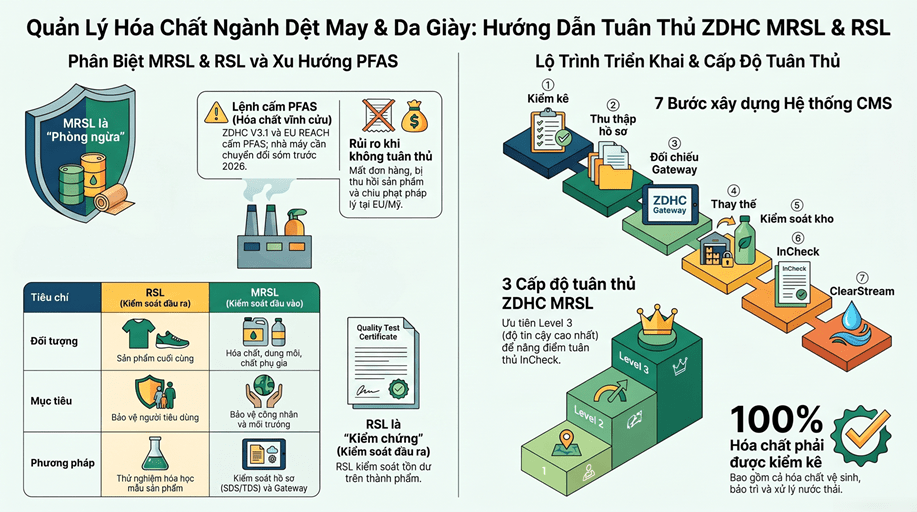
MRSL (Manufacturing Restricted Substances List) and RSL (Restricted Substances List) are two important standards in the manufacturing sector, especially for the textile, footwear, leather and global supply chain-related industries. Compliance with these standards not only helps businesses meet legal requirements, but also contributes to protecting the health of consumers as well as the living environment. 

MRSL focuses on chemicals that are prohibited or restricted for use in the manufacturing process, in order to ensure that no hazardous chemicals enter the environment or the product from the initial production stage. Meanwhile, RSL focuses on chemicals that are restricted or prohibited in finished products, in order to ensure that the final product is safe for users. 

Importance of MRSL and RSL Training Programs 

In the context of globalization and consumer trends that are increasingly focused on sustainability, MRSL and RSL training programs have become indispensable tools for businesses that want to maintain a long-term competitive position in the international market. In particular, big brands such as Nike, Adidas, H&M, Zara… all require their suppliers to strictly comply with these standards. 

Benefits of MRSL and RSL training include: 

  • Help businesses understand and control the risk of toxic chemicals in production as well as in the final product. 
  • Meet legal requirements and international standards for chemical safety such as REACH (Europe), CPSIA (USA), GB (China)… 
  • Protect the health of workers, consumers and the environment. 
  • Improve the reputation and image of the business in the global market. 
  • Reduce legal, branding and product recall risks due to chemical regulatory violations. 

Main content of MRSL and RSL training programs 

A comprehensive MRSL and RSL training program typically includes the following: 

1. Basic knowledge of chemicals in production 

  • Introduction to chemicals commonly used in the textile, footwear, leather, plastic, packaging, etc. 
  • Classify chemicals according to their physical, chemical and hazard properties. 
  • Chemical control process from input to finished product. 

2. Overview of MRSL and RSL 

  • Definition, roles, and differences between MRSL (applicable to manufacturing) and RSL (applicable to products). 
  • International organizations and associations promulgate and update MRSL and RSL (e.g. ZDHC, AFIRM Group, bluesign, etc.). 
  • How to approach and apply MRSL and RSL in business. 

3. Update the list of restricted chemicals 

  • The main chemical groups are often restricted such as: formaldehyde, phthalates, heavy metals (lead, mercury, cadmium…), azo dyes, nonylphenol ethoxylates (NPEOs), PFAS/PFOA/PFOS… 
  • Allowable limits and test analysis methods. 
  • Guide to read, understand, and keep up to date with the new MRSL and RSL standards. 

4. Chemical control in production and supply chain 

  • Develop chemical input control processes (chemicals purchased, inventoried, used, etc.). 
  • Chemical supplier management: selection, evaluation, testing of compounds and commitment to MRSL compliance. 
  • Chemical record management, MSDS document storage, safety warning labels. 
  • Training production staff on chemical safety and risk identification. 

5. Sample analysis and chemical testing 

  • The process of sampling products, wastewater samples, and exhaust gas samples to test chemicals according to MRSL and RSL. 
  • Common test methods: HPLC, GC-MS, ICP-MS, UV-Vis… 
  • Explain the test results and handle them when they exceed the permissible threshold. 

6. MRSL & RSL Compliance Management and Assessment System 

  • To build an internal chemical management system in accordance with international standards. 
  • Periodic assessment and inspection of MRSL and RSL compliance capacity throughout the entire production line and supply chain. 
  • Prepare documents and vouchers for the evaluation of customers and management agencies. 

7. Troubleshooting and continuous improvement 

  • Identify, respond to and handle situations arising from MRSL/RSL violations. 
  • Make remedial plans, improve chemical management processes and improve team capacity. 
  • Update the trend of clean technology, environmentally friendly alternative materials. 

Participants in MRSL and RSL training programs 

This program is suitable for many groups of people such as: 

  • Managers and technical staff at factories and factories producing textiles, footwear, plastics, packaging, chemicals, etc. 
  • Purchasing department, supplier management in the global supply chain. 
  • Laboratory staff, check product quality. 
  • Specialist in the Environment Department, Occupational Safety Department, Legal Department. 
  • Suppliers of chemicals and input materials. 

Challenges when implementing MRSL and RSL in Vietnamese enterprises 

Vietnam is increasingly deeply integrated with the international market, the application of MRSL and RSL still faces some difficulties: 

  • There is no consistency in awareness and knowledge of chemical management between managers and production staff. 
  • Lack of professional resources and modern chemical testing equipment. 
  • Difficulties in chemical traceability and comprehensive control of the supply chain. 
  • The initial investment cost for the chemical management and testing system is still high. 
  • Promptly update new regulations and standards on MRSL and RSL. 

However, with the support of international organizations, brand representative offices and the initiative of businesses, these challenges are gradually being overcome through training courses, team capacity building and the application of modern technology. 

MRSL and RSL training programs play a key role in ensuring the sustainable development of manufacturing enterprises, meeting the requirements of international customers and contributing to environmental protection and public health. Methodical investment in training, updating knowledge and building a modern chemical management system will help Vietnamese enterprises improve their competitiveness in the global market, towards long-term sustainable values. 

CONTACT FOR SERVICE SUPPORT:

Contact Vietnam representative: Duc Luong Services

Hotline: +84 933096426 – +84 868 591 260

Email: info.vietnam@iscglobal.asia – van.pham@iscglobal.asia – ducluongservices@gmail.com

REGISTER FOR SERVICE HERE: APPLICATION FORM!