Trong nhiều thập kỷ, vì những rào cản pháp lý ngăn cản người Việt Nam định cư ở nước ngoài sở hữu bất động sản trong nước, không ít kiều bào đã chọn giải pháp “nhờ người thân đứng tên hộ”. Đây vốn là một giao dịch dựa trên niềm tin tuyệt đối, nhưng khi giá đất tăng phi mã, lòng tin ấy thường trở thành “mồi lửa” thiêu rụi tình thâm, đẩy các gia đình vào những cuộc chiến pháp lý kéo dài. Liệu người thực tế bỏ tiền ra có nguy cơ “mất trắng” khi chỉ có lời hứa làm bằng chứng? Án lệ số 02/2016/AL đã ra đời như một bước ngoặt lịch sử, không chỉ là “cứu cánh” cho những người chi tiền mà còn thiết lập một quy chuẩn mới về sự công bằng, bảo vệ quyền tài sản chính đáng giữa lằn ranh mỏng manh của cái tình và cái lý.
Hơn cả một tờ giấy xanh: Khi “dòng tiền thực tế” và “lời nhân chứng” lên tiếng
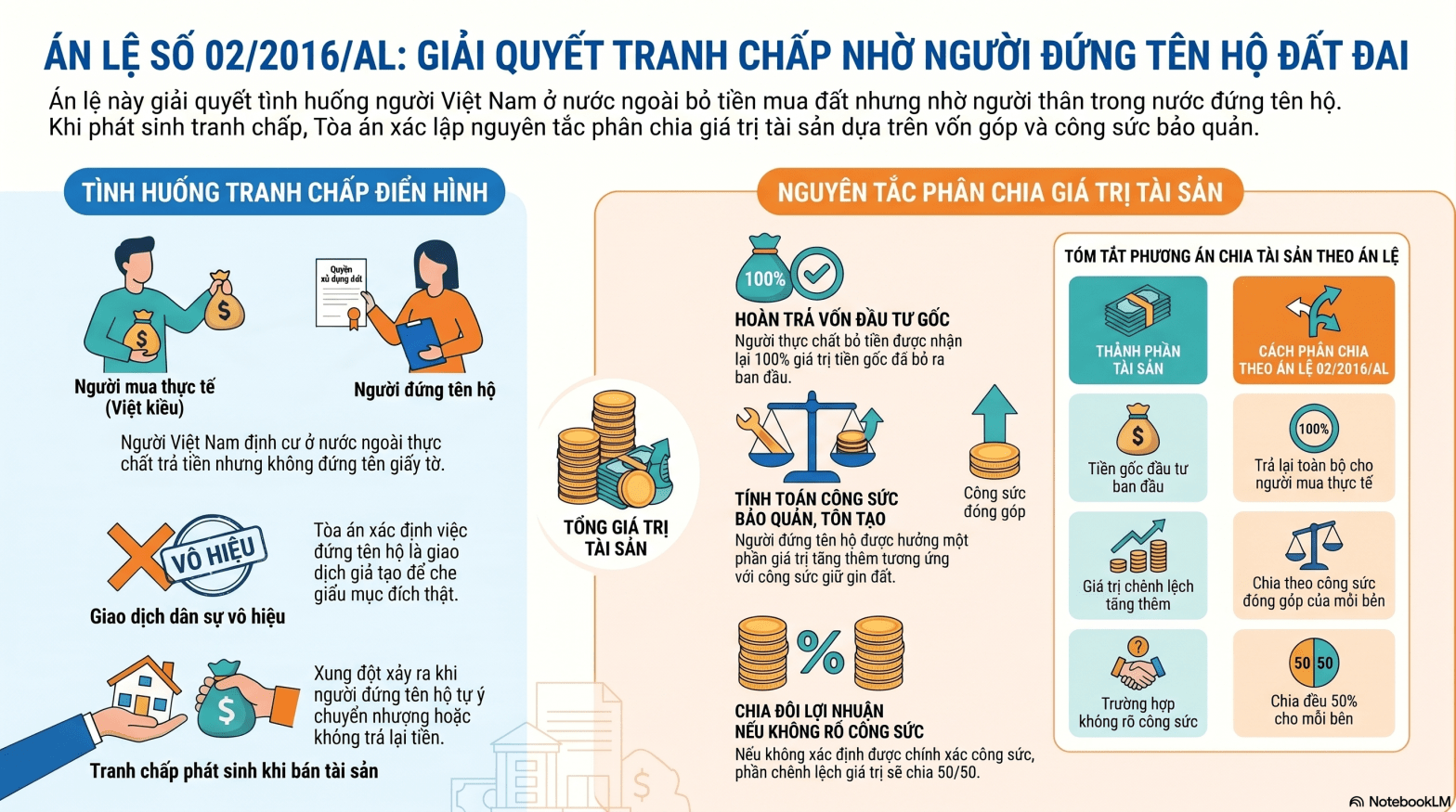
Án lệ số 02/2016/AL khởi nguồn từ vụ án giữa bà Nguyễn Thị Thảnh (Việt kiều Hà Lan) và em trai là ông Nguyễn Văn Tám. Năm 1993, bà Thảnh bỏ ra 21,99 chỉ vàng để mua hơn 7.500m2 đất tại Sóc Trăng và nhờ ông Tám đứng tên hộ. Bi kịch ập đến khi ông Tám tự ý bán mảnh đất này với giá 1,26 tỷ đồng mà không thông báo cho chị gái.
Dưới góc độ phân tích pháp lý, điểm “sắc sảo” nhất của án lệ này là Tòa án không còn máy móc bám vào “tờ giấy xanh” (Giấy chứng nhận quyền sử dụng đất). Thay vào đó, Hội đồng Thẩm phán đã truy quét đến tận cùng “dòng tiền thực tế”. Đặc biệt, sức nặng của bằng chứng không chỉ nằm ở con số, mà còn ở sự thật từ những người trong cuộc. Không chỉ vợ chồng người bán xác nhận bà Thảnh là người trả tiền, mà ngay cả mẹ ruột (cụ Thái Thị Ba) và các anh chị em khác trong gia đình (ông Hoàng, bà Chính Em) cũng đều đứng ra làm chứng, khẳng định ông Tám chỉ là người đứng tên giùm.
“Vợ chồng ông Hêng Tính, bà Lý Thị Sà Quênh (người chuyển nhượng đất) đều khẳng định bà Thảnh trực tiếp thỏa thuận chuyển nhượng, trực tiếp trả 21,99 chỉ vàng cho ông, bà và bà Thảnh để cho ông Tám đứng tên giùm trong tờ sang nhượng đất ruộng lập ngày 10-8-1993.”
Công sức bảo quản, giữ gìn: Cái “tình” và cái “lý” trong quản trị tài sản
Dù xác định bà Thảnh là chủ thực sự của nguồn tiền, nhưng Án lệ số 02 không biến người đứng tên hộ thành “kẻ trắng tay”. Đây chính là điểm nhân văn và thực tế. Hội đồng Thẩm phán thừa nhận rằng, trong suốt hơn 10 năm, ông Tám đã có công sức quản lý, canh tác và giữ gìn mảnh đất. Việc để một bên hưởng trọn giá trị thặng dư trong khi bên kia có công bảo quản là thiếu công bằng. Tuy nhiên, người đứng tên hộ cũng không được phép “nuốt trọn” tài sản không phải do mình tạo lập.
Để đảm bảo quyền lợi tối ưu cho các bên, Án lệ 02 đã đưa ra một định nghĩa pháp lý mẫu mực về việc phân chia lợi nhuận dựa trên công sức đóng góp:
“Tuy bà Thảnh là người bỏ 21,99 chỉ vàng để chuyển nhượng đất (tương đương khoảng 27.047.700 đồng). Nhưng giấy tờ chuyển nhượng đứng tên ông Tám và sau khi nhận chuyển nhượng ông Tám quản lý đất, sau đó chuyển nhượng cho người khác. Như vậy, lẽ ra phải xác định ông Tám có công sức trong việc bảo quản, giữ gìn, tôn tạo làm tăng giá trị đất nên phải xác định số tiền trên (sau khi trừ tiền gốc tương đương 21,99 chỉ vàng của bà Thảnh) là lợi nhuận chung của bà Thảnh và ông Tám. Đồng thời xác định công sức của ông Tám để chia cho ông Tám một phần tương ứng với công sức của ông mới đúng và đảm bảo quyền lợi của các đương sự (Trường hợp không xác định được chính xác công sức của ông Tám thì phải xác định bà Thảnh, ông Tám có công sức ngang nhau để chia).”
Khi cái lý khó phân bua: Con số 50/50 – “Điểm chạm” của sự công bằng
Trong thực tế, việc định lượng “công sức” bằng con số cụ thể thường dẫn đến bế tắc và cãi vã. Án lệ 02 đã “chốt” một công thức tính toán rất logic và quyết đoán để giải quyết các tranh chấp kéo dài:
Trả lại giá trị đầu tư gốc: Trả lại cho người chi tiền số tiền tương ứng với giá trị gốc ban đầu. Cần lưu ý, “gốc” ở đây phải được quy đổi ra giá trị hiện tại (ví dụ: giá trị của 21,99 chỉ vàng tại thời điểm giải quyết tranh chấp) chứ không chỉ là con số tiền mặt danh nghĩa từ hàng chục năm trước.
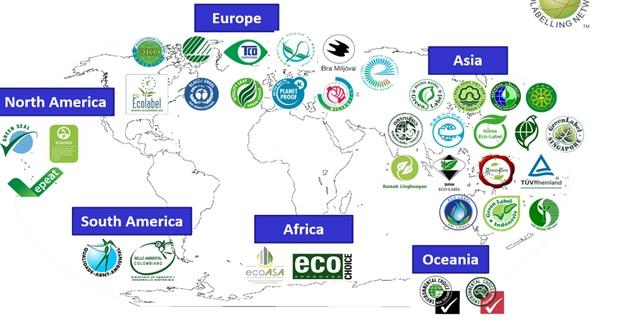
Xác định lợi nhuận (giá trị thặng dư): Lấy tổng số tiền bán tài sản trừ đi giá trị đầu tư gốc nêu trên.
Chia đôi phần chênh lệch: Nếu không thể chứng minh được tỷ lệ đóng góp cụ thể của người đứng tên hộ, phần lợi nhuận này sẽ được chia theo tỷ lệ 50/50.
Đây là giải pháp trung hòa nhất, vừa bảo toàn vốn cho người mua, vừa đền đáp xứng đáng cho người có công giữ đất, giúp chấm dứt những tranh cãi không hồi kết.
Từ “phạt” sang “bảo vệ”: Bước ngoặt bảo hiến cho quyền tài sản tư nhân
Một trong những chi tiết gây chấn động nhất của vụ án này là sự đối lập giữa phán quyết của Tòa phúc thẩm và Hội đồng Thẩm phán. Trước đó, Tòa phúc thẩm đã ra lệnh tịch thu sung công quỹ hơn 1,2 tỷ đồng (phần chênh lệch giá trị đất) vì cho rằng giao dịch nhờ đứng tên là hành vi “lách luật”.
Tuy nhiên, Hội đồng Thẩm phán Tòa án nhân dân tối cao đã đập tan tư duy “hình sự hóa” quan hệ dân sự này. Việc hủy bỏ quyết định sung công quỹ là một minh chứng cho sự tiến bộ vượt bậc của tư duy pháp lý Việt Nam: Ưu tiên bảo vệ quyền tài sản tư nhân thay vì tận thu cho Nhà nước. Đây là thông điệp mạnh mẽ rằng pháp luật bảo vệ lợi ích chính đáng của công dân trong các giao dịch dân sự, ngay cả khi giao dịch đó có những khiếm khuyết về hình thức do lịch sử để lại.
Kết luận và Suy ngẫm
Án lệ số 02/2016/AL không chỉ là một văn bản pháp luật, nó là một bài học về niềm tin và sự minh bạch. Nó mở ra cánh cửa hy vọng cho những người đang đứng trước nguy cơ “mất trắng” tài sản do nhờ người đứng tên, đồng thời nhắc nhở rằng mọi nỗ lực giữ gìn tài sản đều được ghi nhận.
Lời khuyên từ chuyên gia: Dù Án lệ 02 là một “tấm khiên” vững chắc, nhưng hãy nhớ rằng “án tại hồ sơ”. Bà Thảnh thắng kiện vì bà có bằng chứng về dòng tiền và có những nhân chứng trung thực (người bán và chính những người thân trong gia đình). Bài học xương máu ở đây là: Đừng bao giờ đặt cược tài sản vào lòng tin thuần túy. Để bảo vệ cả tài sản lẫn tình thân, hãy luôn xác lập văn bản rõ ràng, lưu giữ chứng từ chuyển tiền và tìm kiếm tư vấn pháp lý ngay từ khi bắt đầu giao dịch. Sự rõ ràng minh bạch không bao giờ làm giảm đi tình cảm, nó chỉ làm cho tình cảm đó trở nên an toàn hơn trước những biến động của cuộc đời.
Trong thực tế tư pháp, ranh giới giữa việc tước đoạt mạng sống và gây thương tích đôi khi chỉ cách nhau một nhát dao, nhưng về mặt pháp lý, nó lại là khoảng cách giữa án tù có thời hạn và bản án chung thân hay tử hình. Một mâu thuẫn nhỏ nơi công sở — xuất phát từ một bức ảnh chụp trộm — đã dẫn đến một kế hoạch trả thù đầy bi kịch. Tuy nhiên, khi hậu quả cuối cùng là cái chết của nạn nhân, liệu người chủ mưu có nghiễm nhiên phải chịu trách nhiệm về tội “Giết người” dù chỉ chỉ thị “đánh cho đau”? Câu hỏi hóc búa này đã được giải đáp một cách thấu đáo qua Án lệ số 01/2016/AL, một cột mốc quan trọng giúp định hình lại tư duy về ý thức chủ quan và trách nhiệm hình sự trong tố tụng Việt Nam.
2. Điểm cốt lõi 1: Ý thức chủ quan – “Chỉ thuê gây thương tích, không thuê lấy mạng”
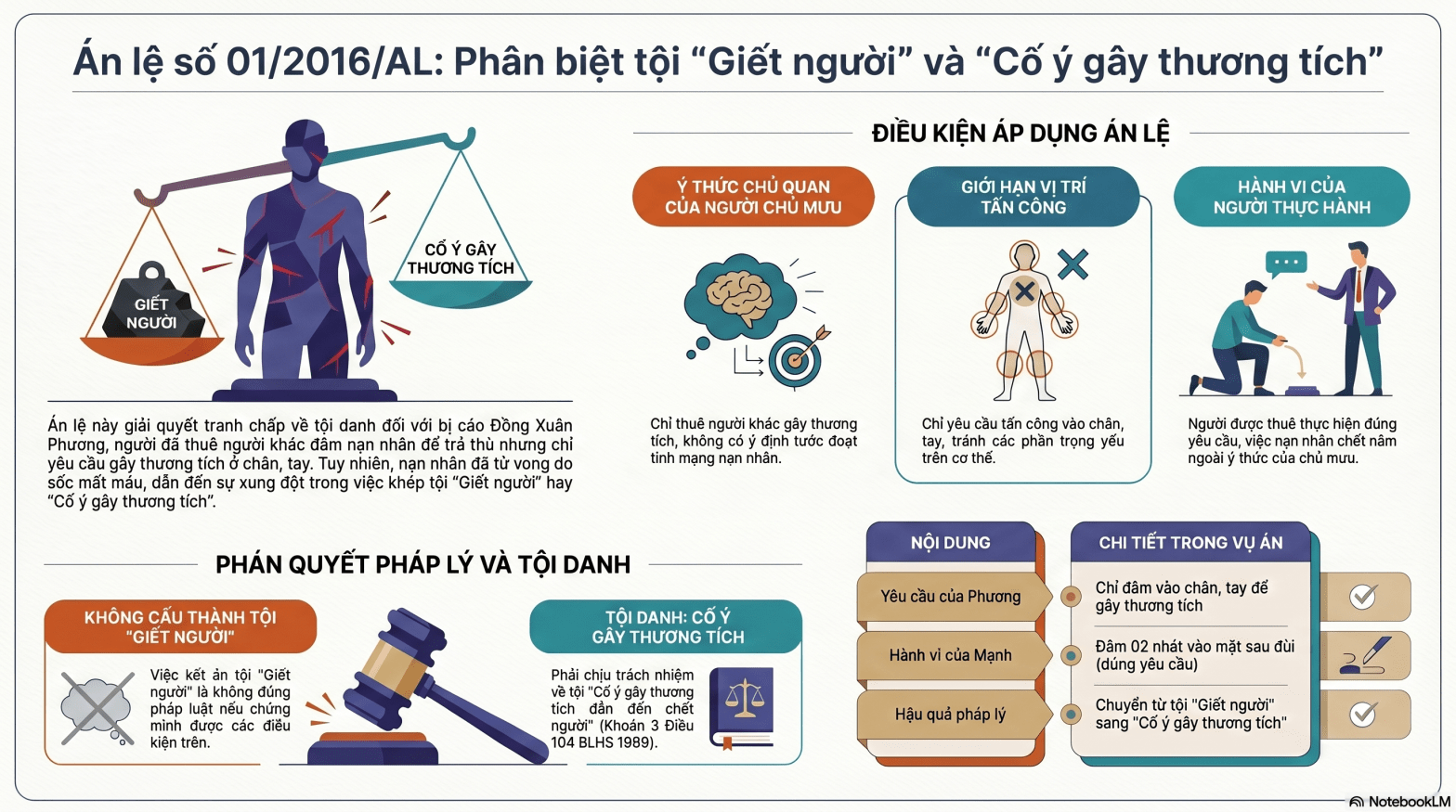
Vụ án bắt nguồn từ việc Đồng Xuân Phương bức xúc vì bị anh Nguyễn Văn Soi chụp ảnh khi đang uống rượu trong giờ làm việc để báo cáo lãnh đạo. Để trả thù, Phương đã thông qua Đoàn Đức Lân để thuê Hoàng Ngọc Mạnh thực hiện hành vi tấn công.
Điểm mấu chốt mà các chuyên gia pháp lý cần lưu tâm chính là phạm vi của “hợp đồng thuê mướn” này. Phương không chỉ đạo thực hiện một vụ ám sát bài bản hay yêu cầu “khử” nạn nhân. Thay vào đó, bị cáo xác định rất rõ vị trí tấn công và mức độ gây hấn. Giá trị giao dịch cũng phản ánh quy mô của hành vi: Phương đưa cho Mạnh 1.500.000 đồng tiền công và thêm 500.000 đồng để thuê chỗ ngủ — những con số cho thấy đây là một vụ “đánh dằn mặt” hơn là một vụ sát hại có tổ chức cao.
Dẫn chứng trực tiếp từ phần nội dung Án lệ số 01/2016/AL đã khẳng định:
“Theo các tài liệu có trong hồ sơ vụ án; có căn cứ xác định về mặt chủ quan, Phương chỉ muốn gây thương tích cho anh Soi mà không muốn tước đoạt tính mạng, cũng không muốn thuê Mạnh đâm bừa, đâm ẩu vào anh Soi để mặc mọi hậu quả xảy ra. Vì thế, bị cáo chỉ yêu cầu tấn công vào chân, tay mà không yêu cầu tấn công vào các phần trọng yếu của cơ thể, là những vị trí nếu bị tấn công thì sẽ có nhiều khả năng xâm hại đến tính mạng nạn nhân.”
Việc giới hạn vị trí tấn công vào vùng ngoại vi (tay, chân) chính là bằng chứng xác thực nhất cho ý chí chủ quan: bị cáo mong muốn gây thương tích nhưng không mong muốn, thậm chí đã cố gắng loại trừ khả năng dẫn đến cái chết.
3. Điểm cốt lõi 2: Khi hậu quả nằm ngoài dự tính của người chủ mưu
Chiều ngày 21-6-2007, hành vi thực thi diễn ra đúng như kịch bản đã thỏa thuận, nhưng với một biến số nhân sự: Mạnh thực hiện một mình vì đối tượng đi cùng (Nam) đã bỏ đi. Mạnh dùng dao nhọn đâm 02 nhát vào mặt sau đùi phải của anh Soi. Trớ trêu thay, một trong hai vết đâm đã cắt đứt động mạch và tĩnh mạch đùi sau, dẫn đến sốc mất máu cấp khiến nạn nhân tử vong.
Hội đồng Thẩm phán Tòa án nhân dân tối cao nhận định đây là trường hợp điển hình của việc hậu quả vượt quá ý chí, dựa trên các lập luận:
Tính tuân thủ của người thực hành: Mạnh đã thực hiện chính xác chỉ dẫn của Phương là đâm vào chân (vị trí không trọng yếu).
Tiêu chuẩn về khả năng nhận thức: Hội đồng Thẩm phán xác định hành vi đâm vào đùi như trên là trường hợp “khó thấy trước được hậu quả chết người có thể xảy ra”. Đây là điểm tựa pháp lý quan trọng để loại trừ lỗi cố ý gián tiếp đối với cái chết.
Sự cộng hưởng của các yếu tố ngẫu nhiên: Cái chết là hệ quả của một vết thương trùng hợp vào động mạch, nằm ngoài sự kiểm soát và tiên liệu của cả người thuê lẫn người thực hiện.
4. Điểm cốt lõi 3: Sai lầm của các cấp tòa sơ thẩm và phúc thẩm
Trước khi có phán quyết Giám đốc thẩm, vụ án này đã rơi vào cái bẫy của việc áp dụng “Trách nhiệm khách quan” (Objective Liability) — tức là chỉ nhìn vào hậu quả chết người để định tội mà xem nhẹ ý chí chủ quan của bị cáo.
Sai lầm mang tính hệ thống này được thể hiện qua bảng so sánh dưới đây:
Tiêu chí so sánh
Quan điểm của Tòa cấp dưới
Phán quyết của Án lệ 01
Tội danh áp dụng
Giết người (Theo điểm m, n Khoản 1 Điều 93 BLHS 1999)
Cố ý gây thương tích (Theo Khoản 3 Điều 104 BLHS 1999)
Hình phạt đã tuyên
Sơ thẩm: 17 năm tù. Phúc thẩm: Tù chung thân.
Hủy bản án phúc thẩm để xét xử lại theo đúng tội danh.
Lỗi trong lập luận
Đánh đồng hậu quả chết người với ý chí giết người (Trách nhiệm khách quan).
Phân định rạch ròi giữa ý chí gây thương tích và hậu quả chết người nằm ngoài dự tính.
Việc Tòa phúc thẩm áp dụng cả tình tiết định khung “có tính chất côn đồ” và “vì động cơ đê hèn” để nâng mức án lên Chung thân được coi là không đúng pháp luật, do đã xác định sai bản chất lỗi của bị cáo.
5. Bài học rút ra và Ý nghĩa của Án lệ
Án lệ số 01/2016/AL không đơn thuần là một quyết định về một vụ án cụ thể, mà là lời cảnh báo chống lại việc “áp dụng luật máy móc”. Nó ngăn chặn xu hướng cứ hễ có người chết trong các vụ đánh nhau là mặc nhiên khép vào tội “Giết người”.
Ý nghĩa sâu sắc của án lệ này nằm ở việc bảo vệ sự công bằng trong định tội danh:
Tôn trọng sự thật về ý chí: Công lý phải được thực thi dựa trên những gì bị cáo thực sự mong muốn và tiên liệu được, thay vì chỉ dựa trên kết quả đau lòng xảy ra ngoài ý muốn.
Định hướng xét xử đồng phạm: Làm rõ trách nhiệm của người chủ mưu trong trường hợp người thực hành đã làm đúng chỉ thị nhưng hậu quả lại đi quá xa.
Tính nhân văn của pháp luật: Trừng phạt đúng tội, đúng người, không làm oan sai về tội danh nhưng cũng không bỏ lọt hành vi gây nguy hiểm cho xã hội.
6. Kết luận và Suy ngẫm
Sự minh bạch pháp lý thể hiện qua Án lệ số 01 là minh chứng cho một nền tư pháp tiến bộ, nơi sự thật khách quan được bóc tách dưới lăng kính của lý trí và đạo luật. Phán quyết này nhắc nhở chúng ta rằng, trong sự phức tạp của các mối quan hệ xã hội, việc xác định đúng “ranh giới của ý chí” chính là chìa khóa để bảo vệ công lý.
Khép lại hồ sơ của Đồng Xuân Phương, mỗi người trong chúng ta cần tự hỏi: Khi hành động dựa trên sự nóng giận, liệu chúng ta có lường trước được rằng một mệnh lệnh tưởng chừng “giới hạn” lại có thể dẫn đến những hệ lụy không thể vãn hồi? Ranh giới giữa một kẻ gây thương tích và một kẻ giết người, đôi khi, lại nằm ở chính khả năng kiểm soát và tiên liệu của con người trước pháp luật.
1. Lời mở đầu: Sức nặng của chiếc áo choàng và cuộc chiến nội tâm
Trong tâm thức xã hội, hình ảnh Luật sư thường bị đóng khung trong những bộ suit lịch lãm, những màn tranh luận nảy lửa tại pháp đình hay những bản hợp đồng triệu đô. Thế nhưng, đằng sau vẻ hào nhoáng ấy là một thực tế khốc liệt và đầy suy tư. Nghề Luật sư không đơn thuần là việc vận dụng các điều khoản khô khan, mà là một cuộc chiến nội tâm dai dẳng—một chiến trường nơi người hành nghề phải cân bằng giữa đạo đức, sứ mệnh xã hội và áp lực kinh tế sát sườn. Để thấu hiểu bản chất của nghề, ta cần nhìn thấu “sức nặng của tấm thẻ” và những gánh nặng vô hình mà một người gác đền cho công lý phải mang trên vai.
2. Tính độc lập: “Giải mã” thực tiễn trong không gian pháp lý hữu hạn
Trong triết lý tư pháp, pháp luật luôn có tính chất “khái quát hóa” và tồn tại trong một không gian pháp lý hữu hạn. Những điều luật vốn trừu tượng và không thể bao quát toàn bộ sự biến thiên của cuộc đời. Chính vì vậy, sự độc lập của Luật sư không chỉ là quyền tự do hành nghề, mà còn là một “vũ khí pháp lý” để giải mã thực tiễn, bóc tách các tình tiết khách quan để đưa chúng trở lại đúng quỹ đạo của công lý.
Sự độc lập này phải được duy trì nghiêm ngặt trên 4 phương diện:
Với cơ quan nhà nước: Giữ vị trí độc lập tương đối, không để quyền lực tố tụng làm xáo trộn tư duy pháp lý độc lập.
Với khách hàng: Bảo vệ quyền lợi khách hàng nhưng không bị đồng hóa hay lệ thuộc vào ý chí chủ quan của họ.
Với đồng nghiệp và tổ chức: Độc lập về chuyên môn, không để các quan hệ đồng nghiệp hay áp lực tổ chức làm sai lệch phán đoán.
Với chính cái tôi của mình: Đây là thử thách lớn nhất—không để nhu cầu vật chất hay danh vọng cá nhân dẫn dắt hành vi.
Nếu mất đi tính độc lập, Luật sư chỉ còn là một người làm dịch vụ thông thường, đánh mất khả năng tạo ra “giá trị gia tăng” cho các phán quyết của Tòa án. Khi Luật sư độc lập, họ giúp Thẩm phán nhìn nhận vụ án một cách đa chiều, đảm bảo bản án cuối cùng không chỉ đúng luật mà còn “thấu tình đạt lý”.
“Sự độc lập của Luật sư là ‘vũ khí pháp lý’ sắc bén để tự bảo vệ bản thân, phòng ngừa và loại bỏ rủi ro, đồng thời là điểm tựa để bảo vệ lẽ phải, ngăn chặn sự lạm quyền trong thực thi công lý.”
3. “Cái tôi” Luật sư: Lý thuyết tảng băng trôi và nghệ thuật quản trị bản ngã
Nghề Luật sư đòi hỏi sự tự tin và cá tính mạnh, nhưng chính “cái tôi” ấy lại là con dao hai lưỡi. Áp dụng Lý thuyết tảng băng trôi, nếu sự chuyên nghiệp và kỹ năng là phần nổi, thì “cái tôi” (bao gồm bản chất, niềm tự hào và khát vọng) chính là phần chìm khổng lồ định hướng toàn bộ hành vi hành nghề.
Quản trị cái tôi (Ego management) không phải là triệt tiêu cá tính, mà là thước đo trí tuệ cảm xúc (EQ) đỉnh cao. Luật sư phải biết kiểm soát những đam mê bản ngã để đi đúng quỹ đạo đạo đức. Một cái tôi không được kiểm soát sẽ biến Luật sư thành kẻ kiêu ngạo, mất đi sự khách quan và dễ dàng sa ngã trước những cám dỗ vật chất. Ngược lại, quản trị tốt cái tôi sẽ tạo ra một “lá chắn” đạo đức vững chắc, giúp người hành nghề giữ vững sự chính trực ngay cả trong những tình huống khắc nghiệt nhất.
4. Sứ mệnh “Kép”: Khi thù lao không phải là thước đo duy nhất
Dưới lăng kính của một nhà phân tích nghề nghiệp, Luật sư là một loại hình “dịch vụ đặc thù”. Thứ mà Luật sư bán không phải hàng hóa thông thường, mà là chất xám—kết quả của tư duy trí tuệ đỉnh cao. Tuy nhiên, vì mang trong mình thiên chức bảo vệ công lý, Luật sư không được phép “phục vụ khách hàng bằng mọi giá”.
Sứ mệnh của Luật sư được thể hiện qua ba chức năng cốt lõi:
Hướng dẫn: Chỉ dẫn khách hàng hành xử đúng pháp luật, hiểu rõ quyền và nghĩa vụ để tiếp cận công lý một cách văn minh.
Phản biện: Cung cấp góc nhìn độc lập, bóc tách sự thật để tìm ra phương án tối ưu nhất trong khuôn khổ pháp luật.
Trợ giúp: Chia sẻ trách nhiệm với Nhà nước trong việc bảo vệ an ninh pháp lý và hỗ trợ những người yếu thế thông qua trợ giúp pháp lý miễn phí.
Trong giao tiếp nghề nghiệp, Luật sư thực thụ phải hóa thân thành một thực thể đa năng: vừa là Người soạn kịch bản (thiết kế phương án pháp lý), vừa là Đạo diễn (điều phối tiến trình vụ việc) và là Diễn viên (trình bày quan điểm tại pháp đình) với sự nhuần nhuyễn và chuẩn xác tuyệt đối.
5. Thách thức phi truyền thống: Từ “Lao động pháp lý” đến “Tư duy thiết kế pháp lý”
Sự trỗi dậy của AI và Legaltech đang tái cấu trúc lại nghề luật. Để tồn tại, Luật sư hiện đại phải áp dụng Mô hình năng lực KSA (Knowledge – Skill – Attitude) một cách linh hoạt:
Knowledge (Kiến thức): AI có thể thay thế Luật sư trong việc tra cứu và xử lý dữ liệu thô.
Skill (Kỹ năng) & Attitude (Thái độ): Đây là vùng đất “độc bản” của con người. Máy móc không thể có được linh cảm nghề nghiệp, sự thấu cảm nhân văn hay bản lĩnh chính trị để đưa ra những quyết định mang tính “trí tuệ đỉnh cao”.
Thách thức từ công nghệ buộc chúng ta phải chuyển dịch từ “Lao động pháp lý” thuần túy sang “Tư duy thiết kế pháp lý” (Legal Design). Luật sư phải tích hợp các kỹ năng thế kỷ 21 như tư duy phản biện, sáng tạo và văn hóa công nghệ để tạo ra các giá trị gia tăng mà trí tuệ nhân tạo không thể sao chép.
6. Từ “Thầy Kiện” đến “Chức danh tư pháp độc lập”: Một cuộc hồi sinh lịch sử
Nhìn lại lịch sử Việt Nam, địa vị của nghề Luật sư đã có sự chuyển dịch ngoạn mục. Dưới thời phong kiến, đặc biệt là sắc lệnh của Vua Lê Thánh Tông, những người làm nghề “xui nguyên giục bị” bị xếp ngang hàng với hạng người “bất hiếu”, không được đi thi nhằm bảo vệ quyền lực tuyệt đối của quan lại.
Trải qua thăng trầm, từ thân phận bị coi nhẹ, Luật sư ngày nay đã trở thành một Chức danh tư pháp độc lập. Sự thay đổi này không chỉ là sự thừa nhận về mặt pháp lý mà còn là sự tôn vinh về phẩm giá. Luật sư không còn là “thầy kiện” xúi giục tranh chấp, mà là người gác đền cho sự thượng tôn pháp luật.
“Luật sư chính là điểm tựa pháp luật và lẽ phải… mang lại sự bình an, hạnh phúc cho mỗi số phận con người.”
7. Tổng kết và Suy ngẫm: Một lối sống dựa trên trí tuệ và phẩm giá
Nghề Luật sư không đơn thuần là một công việc để mưu sinh; đó là một lối sống đòi hỏi sự dấn thân và giữ gìn phẩm giá bền bỉ. Thắng – thua trong một vụ án có thể chỉ là nhất thời, nhưng sự liêm chính và tinh thần độc lập mới là giá trị trường tồn tạo nên danh tiếng của một người Luật sư.
Đứng trước ngưỡng cửa của tương lai với đầy biến động, mỗi chúng ta cần tự vấn: Trong một thế giới mà AI có thể trả lời mọi câu hỏi về luật lệ, liệu chúng ta nên nhìn nhận Luật sư như một người làm dịch vụ thuần túy hay một “Vệ sĩ của Công lý” – người giữ lửa cho lương tri và đạo đức xã hội? Câu trả lời không nằm ở tấm thẻ trên tay, mà ở bản lĩnh trong trái tim mỗi người hành nghề.
Trong bối cảnh ngành du lịch toàn cầu đang chuyển mình mạnh mẽ theo hướng phát triển bền vững, tiêu chuẩn Travelife đã trở thành “kim chỉ nam” cho các doanh nghiệp lữ hành, khách sạn và cơ sở lưu trú muốn khẳng định cam kết với môi trường, xã hội và cộng đồng. Đây không chỉ là một chứng chỉ – mà là minh chứng cho năng lực vận hành chuyên nghiệp, đạo đức kinh doanh và trách nhiệm xã hội ở tầm quốc tế.
Bài viết này sẽ giúp bạn hiểu rõ Travelife là gì, hệ thống 3 cấp độ chứng nhận, các tiêu chí đánh giá, lợi ích thiết thực cho doanh nghiệp, và quy trình chi tiết để đạt được chứng nhận danh giá này tại Việt Nam.
1. Tiêu chuẩn Travelife là gì?
Travelife là một hệ thống đánh giá và chứng nhận quốc tế hàng đầu về phát triển bền vững, được thiết kế chuyên biệt cho các doanh nghiệp hoạt động trong lĩnh vực du lịch và lữ hành. Được thành lập từ năm 2007 với sự hỗ trợ của Ủy ban Châu Âu, Travelife cung cấp cho doanh nghiệp các mục tiêu, công cụ và giải pháp thực tế để triển khai những thay đổi tích cực hướng đến tương lai bền vững.
Tổ chức Travelife được vận hành bởi hai đơn vị độc lập nhưng phối hợp chặt chẽ:
Travelife for Accommodation (Travelife Ltd) – đặt trụ sở tại Vương quốc Anh, chuyên cấp chứng nhận bền vững cho khách sạn và cơ sở lưu trú.
Travelife for Tour Operators – đặt trụ sở tại Hà Lan, chuyên đào tạo, quản lý và cấp chứng nhận cho các nhà điều hành tour và đại lý du lịch.
Điểm nổi bật của Travelife là được Hội đồng Du lịch Bền vững Toàn cầu (GSTC) công nhận – đây là cơ quan tối cao về tiêu chí du lịch bền vững được Liên Hợp Quốc hậu thuẫn. Tiêu chuẩn Travelife tương đương với Bộ Tiêu chí Ngành GSTC (GSTC Industry Criteria), đảm bảo tính uy tín và đồng nhất ở quy mô toàn cầu.
Phạm vi bao phủ của tiêu chuẩn Travelife
Tiêu chuẩn Travelife được xây dựng dựa trên bốn trụ cột chính của GSTC:
Quản lý bền vững (Sustainable Management)
Tác động kinh tế – xã hội (Socioeconomic)
Tác động văn hóa (Cultural)
Tác động môi trường (Environmental)
Đồng thời, Travelife bao trùm các chủ đề trong ISO 26000 về Trách nhiệm Xã hội Doanh nghiệp, bao gồm: môi trường, đa dạng sinh học, quyền con người, lao động công bằng, an toàn cho trẻ em, phúc lợi động vật, phòng chống nô lệ hiện đại trong chuỗi cung ứng, quản lý phát thải khí nhà kính, và nhiều khía cạnh khác.
2. Ba cấp độ chứng nhận Travelife
Hệ thống Travelife dành cho nhà điều hành tour và đại lý du lịch được phân thành 3 cấp độ tiến triển, từ cam kết ban đầu đến chứng nhận quốc tế cao nhất:
2.1. Cấp độ 1 – Travelife Engaged (Tham gia Travelife)
Đây là bước khởi đầu trong hành trình bền vững của doanh nghiệp. Ở cấp độ này, doanh nghiệp:
Đăng ký thành viên và tiếp cận các công cụ đào tạo trực tuyến của Travelife
Cam kết bắt đầu hành trình phát triển bền vững
Hoàn thành các khóa đào tạo cơ bản về du lịch bền vững
Xây dựng hệ thống quản lý nội bộ ban đầu
2.2. Cấp độ 2 – Travelife Partner (Đối tác Travelife)
Đây là cấp độ trung cấp, đòi hỏi doanh nghiệp đáp ứng một bộ tiêu chí cụ thể hơn về:
Quản lý văn phòng bền vững (sử dụng năng lượng, nước, xử lý rác thải)
Quản lý sản phẩm du lịch theo hướng bền vững
Trách nhiệm tại các điểm đến (hỗ trợ cộng đồng địa phương, bảo vệ di sản)
Truyền thông minh bạch với các bên liên quan
2.3. Cấp độ 3 – Travelife Certified (Chứng nhận Travelife)
Đây là cấp độ cao nhất và uy tín nhất, dành cho doanh nghiệp đạt được sự xuất sắc toàn diện trong phát triển bền vững. Để đạt được chứng nhận này, doanh nghiệp phải:
Đáp ứng gần 250 tiêu chí khắt khe (đối với nhà điều hành tour) hoặc bộ tiêu chí toàn diện cho cơ sở lưu trú
Trải qua đánh giá độc lập tại chỗ bởi kiểm toán viên được Travelife phê duyệt
Tuân thủ đầy đủ các yêu cầu của GSTC
Tái đánh giá định kỳ mỗi 2 năm để duy trì chứng nhận
Lưu ý quan trọng: Đối với cơ sở lưu trú, Travelife yêu cầu 100% tuân thủ bộ tiêu chí chứng nhận, được kiểm chứng qua kiểm toán tại chỗ toàn diện do kiểm toán viên độc lập thực hiện 2 năm/lần.
3. Bộ tiêu chí đánh giá của Travelife
3.1. Đối với nhà điều hành tour và đại lý du lịch
Bộ tiêu chí dành cho lĩnh vực này gồm khoảng 146 – 250 tiêu chí (tùy cấp độ), tập trung vào 5 nhóm chủ đề chính:
Nhóm 1: Quản lý bền vững nội bộ
Chính sách phát triển bền vững được văn bản hóa
Hệ thống quản lý môi trường
Đào tạo nhân viên về du lịch bền vững
Báo cáo và minh bạch hóa thông tin
Nhóm 2: Đạo đức kinh doanh và nhân quyền
Phòng chống tham nhũng, hối lộ
Tôn trọng quyền con người
Phòng chống bóc lột tình dục trẻ em trong du lịch
Phòng chống nô lệ hiện đại và lao động cưỡng bức
Nhóm 3: Lao động công bằng
Hợp đồng lao động minh bạch
Mức lương công bằng, cao hơn lương tối thiểu
An toàn và sức khỏe nghề nghiệp
Cơ hội phát triển nghề nghiệp bình đẳng
Không phân biệt đối xử
Nhóm 4: Hợp tác trách nhiệm với đối tác
Lựa chọn nhà cung cấp địa phương
Yêu cầu tiêu chuẩn bền vững với đối tác chuỗi cung ứng
Hỗ trợ các doanh nghiệp nhỏ và vừa địa phương
Ưu tiên sản phẩm có chứng nhận bền vững
Nhóm 5: Truyền thông và nâng cao nhận thức khách hàng
Cung cấp thông tin về điểm đến văn hóa, môi trường
Hướng dẫn khách hàng ứng xử có trách nhiệm
Quảng bá du lịch bền vững qua các kênh tiếp thị
Thu thập phản hồi và cải tiến liên tục
3.2. Đối với khách sạn và cơ sở lưu trú
Bộ tiêu chí dành cho cơ sở lưu trú gồm khoảng 261 tiêu chí, bao gồm thêm các yêu cầu chuyên biệt như:
Quản lý phát thải khí nhà kính (GHG) – đo lường, theo dõi và giảm phát thải carbon
Quản lý chất thải rắn – phân loại, tái chế, giảm thiểu
Kiểm soát nhựa dùng một lần – loại bỏ ống hút, chai nhựa, bao bì không cần thiết
An toàn cho trẻ em (Child Safeguarding) – chính sách bảo vệ trẻ em
Phúc lợi động vật – đặc biệt với các hoạt động liên quan đến động vật hoang dã
Đa dạng sinh học – bảo vệ hệ sinh thái xung quanh cơ sở
Tiết kiệm năng lượng và nước – sử dụng nguồn năng lượng tái tạo
Hỗ trợ cộng đồng địa phương – tạo việc làm, mua hàng địa phương
4. Lợi ích khi doanh nghiệp đạt chứng nhận Travelife
Sở hữu chứng nhận Travelife mang lại giá trị toàn diện, vượt xa một “tấm bằng” trên tường:
4.1. Lợi thế cạnh tranh trên thị trường quốc tế
Chứng nhận Travelife được công nhận tại hơn 35 hiệp hội du lịch quốc gia trên thế giới, bao gồm Hiệp hội Du lịch Anh (ABTA), Hiệp hội Du lịch Châu Á – Thái Bình Dương (PATA), KATO (Kenya), TATO (Tanzania) và FTT (Nam Phi). Đây là “tấm vé thông hành” giúp doanh nghiệp tiếp cận thị trường khách quốc tế cao cấp.
4.2. Tăng niềm tin và sự an tâm của khách hàng
Du khách thế hệ mới – đặc biệt là khách châu Âu, Bắc Mỹ và Úc – ngày càng ưu tiên lựa chọn các đơn vị có chứng nhận bền vững. Travelife giúp doanh nghiệp khẳng định tính minh bạch và đáng tin cậy.
4.3. Tối ưu hóa chi phí vận hành
Việc áp dụng các tiêu chí Travelife giúp doanh nghiệp tiết kiệm điện, nước, giảm rác thải, từ đó giảm chi phí vận hành từ 10-30% trong dài hạn.
4.4. Thu hút nhân tài và nâng cao hiệu suất
Môi trường làm việc minh bạch, công bằng, có chính sách phúc lợi tốt giúp doanh nghiệp giữ chân và thu hút nhân tài chất lượng cao.
4.5. Tăng giá trị thương hiệu và doanh thu
Khách hàng có ý thức bền vững thường sẵn sàng chi trả mức giá cao hơn cho dịch vụ có chứng nhận. Đây là lợi thế đặc biệt cho các doanh nghiệp ở phân khúc cao cấp.
4.6. Đáp ứng yêu cầu của các đối tác B2B quốc tế
Nhiều tour operator châu Âu lớn yêu cầu bắt buộc đối tác phải có chứng nhận Travelife hoặc tương đương GSTC để hợp tác.
5. Quy trình đạt chứng nhận Travelife tại Việt Nam
Bước 1: Đăng ký thành viên Travelife Engaged
Doanh nghiệp truy cập website chính thức của Travelife và đăng ký thành viên ở cấp độ Engaged. Sau khi đăng ký, doanh nghiệp được cấp tài khoản truy cập:
Hệ thống quản lý sustainability online
Khóa đào tạo trực tuyến
Bộ công cụ lập kế hoạch hành động
Mẫu báo cáo, hướng dẫn và templates
Bước 2: Đào tạo và xây dựng hệ thống nội bộ
Doanh nghiệp cử nhân sự (thường là Sustainability Officer hoặc CSR Manager) tham gia đào tạo, đồng thời:
Xây dựng chính sách phát triển bền vững
Thiết lập quy trình đo lường, theo dõi các chỉ số (KPIs)
Triển khai các sáng kiến giảm phát thải, tiết kiệm năng lượng
Tổ chức đào tạo nội bộ cho toàn bộ nhân viên
Bước 3: Tự đánh giá và nâng cấp lên Travelife Partner
Sau 6-12 tháng triển khai, doanh nghiệp tự đánh giá theo bộ tiêu chí Partner. Khi đạt yêu cầu, nộp hồ sơ để được công nhận Travelife Partner.
Bước 4: Chuẩn bị cho kiểm toán Travelife Certified
Để đạt cấp độ cao nhất, doanh nghiệp cần:
Hoàn thiện toàn bộ ~250 tiêu chí
Lưu trữ đầy đủ tài liệu, hồ sơ, bằng chứng
Triển khai các chương trình hành động cụ thể với kết quả đo lường được
Bước 5: Kiểm toán độc lập tại chỗ
Một kiểm toán viên độc lập do Travelife chỉ định sẽ tiến hành đánh giá tại chỗ, kéo dài 1-3 ngày tùy quy mô doanh nghiệp. Kiểm toán viên kiểm tra:
Tài liệu và hồ sơ
Phỏng vấn nhân viên các cấp
Tham quan thực tế cơ sở vật chất
Đánh giá tương tác với cộng đồng và đối tác
Bước 6: Nhận chứng nhận và duy trì
Sau khi vượt qua kiểm toán, doanh nghiệp được cấp chứng nhận Travelife Certified có hiệu lực 2 năm. Doanh nghiệp phải duy trì cải tiến liên tục và tái kiểm toán định kỳ.
6. Travelife tại Việt Nam – Cơ hội và xu hướng
Việt Nam đang nổi lên như một điểm đến du lịch bền vững tiềm năng tại Đông Nam Á. Một số cột mốc đáng chú ý:
Năm 2024: Lữ hành Saigontourist trở thành doanh nghiệp nhà nước đầu tiên đạt Travelife Partner.
Năm 2025: Lux Travel DMC (LuxGroup) trở thành hãng lữ hành xa xỉ đầu tiên của Việt Nam đạt Travelife Certified – cấp độ cao nhất, được vinh danh tại ITB Berlin 2025.
Easia Travel đã đạt Travelife Certified tại 4 quốc gia: Việt Nam, Lào, Campuchia và Thái Lan.
Theo thống kê của Travelife, kể từ năm 2012 đã có hơn 1.500 công ty lữ hành tham gia đào tạo về du lịch bền vững, và hơn 500 công ty trên toàn cầu đạt chứng nhận Travelife Certified. Tại châu Á – Thái Bình Dương, làn sóng này đang lan tỏa mạnh mẽ và Việt Nam có cơ hội lớn để trở thành “ngôi sao mới” trong bản đồ du lịch bền vững khu vực.
7. Các cam kết cốt lõi của doanh nghiệp đạt Travelife Certified
Doanh nghiệp đạt chứng nhận Travelife Certified thường phải thực hiện đồng thời các cam kết cụ thể bao gồm: mở rộng các sáng kiến du lịch xanh, giảm thiểu rác thải kết hợp chính sách “không nhựa dùng một lần”, hỗ trợ cộng đồng địa phương song hành với chính sách lao động công bằng, khuyến khích trải nghiệm du lịch có trách nhiệm cho khách hàng, và hướng tới mục tiêu tác động “net positive” (tác động tích cực ròng) vào năm 2030.
8. So sánh Travelife với các chứng nhận du lịch bền vững khác
Tiêu chí
Travelife
Green Globe
EarthCheck
Biosphere
Phạm vi
Tour operators & cơ sở lưu trú
Cơ sở lưu trú & MICE
Cơ sở lưu trú & điểm đến
Đa lĩnh vực du lịch
GSTC công nhận
✅ Có
✅ Có
✅ Có
✅ Có
Số tiêu chí
146 – 261
~380
~360
~150+
Chu kỳ kiểm toán
2 năm
2 năm
Hàng năm
3 năm
Phổ biến tại châu Á
Cao
Trung bình
Cao
Thấp
Chi phí
Trung bình
Cao
Cao
Trung bình
9. Câu hỏi thường gặp về tiêu chuẩn Travelife (FAQ)
9.1. Chi phí đạt chứng nhận Travelife là bao nhiêu?
Chi phí phụ thuộc vào quy mô doanh nghiệp, cấp độ chứng nhận và quốc gia. Tổng đầu tư bao gồm phí thành viên hàng năm, phí đào tạo, chi phí cải tiến hệ thống và phí kiểm toán độc lập. Doanh nghiệp nên liên hệ trực tiếp với Travelife để nhận báo giá phù hợp.
9.2. Mất bao lâu để đạt được Travelife Certified?
Thông thường từ 2 – 4 năm, tính từ lúc đăng ký Travelife Engaged đến khi đạt cấp độ Certified. Lux Travel DMC mất 10 năm (từ 2015 đến 2025), trong khi một số doanh nghiệp có thể nhanh hơn nếu đã có nền tảng quản lý bền vững từ trước.
9.3. Doanh nghiệp nhỏ có thể đạt Travelife không?
Có. Travelife thiết kế tiêu chí linh hoạt phù hợp với mọi quy mô doanh nghiệp, từ công ty nhỏ đến tập đoàn lớn. Tuy nhiên, quy mô càng nhỏ thì việc đầu tư nguồn lực cũng cần được cân nhắc kỹ lưỡng.
9.4. Travelife và GSTC có gì khác nhau?
GSTC là cơ quan thiết lập tiêu chuẩn toàn cầu, còn Travelife là tổ chức cấp chứng nhận áp dụng các tiêu chí GSTC. Nói cách khác, GSTC định nghĩa “thế nào là du lịch bền vững”, còn Travelife là “người kiểm tra và xác nhận” doanh nghiệp đạt được điều đó.
9.5. Sau khi đạt chứng nhận, doanh nghiệp có cần làm gì thêm?
Có. Chứng nhận Travelife có thời hạn 2 năm và doanh nghiệp phải liên tục cải tiến, cập nhật hồ sơ, triển khai các sáng kiến mới và sẵn sàng cho kỳ tái kiểm toán định kỳ.
10. Kết luận – Travelife là khoản đầu tư chiến lược cho tương lai
Trong kỷ nguyên mà người tiêu dùng – đặc biệt là khách quốc tế – ngày càng đề cao trách nhiệm xã hội và môi trường, tiêu chuẩn Travelife không còn là lựa chọn, mà là yêu cầu tất yếu đối với doanh nghiệp du lịch muốn vươn ra thị trường toàn cầu.
Đầu tư vào chứng nhận Travelife không chỉ là cam kết với hành tinh và cộng đồng, mà còn là chiến lược kinh doanh thông minh giúp doanh nghiệp:
Tiết kiệm chi phí vận hành
Nâng cao giá trị thương hiệu
Mở rộng thị phần quốc tế
Thu hút khách hàng và nhân tài chất lượng cao
Khẳng định vị thế tiên phong trong xu hướng du lịch bền vững
Hành trình đạt chứng nhận Travelife đòi hỏi sự kiên trì, đầu tư bài bản và cam kết lâu dài. Tuy nhiên, với sự đồng hành của các đơn vị tư vấn chuyên nghiệp, doanh nghiệp Việt Nam hoàn toàn có thể chinh phục tiêu chuẩn quốc tế danh giá này và viết tiếp câu chuyện du lịch xanh – có trách nhiệm – bền vững cho ngành du lịch nước nhà.
Liên hệ tư vấn dịch vụ chứng nhận Travelife
Nếu doanh nghiệp của bạn đang quan tâm đến việc xây dựng hệ thống quản lý bền vững và đạt chứng nhận Travelife, hãy liên hệ với chúng tôi để được tư vấn chi tiết về:
✅ Đánh giá hiện trạng và lập lộ trình chứng nhận ✅ Đào tạo đội ngũ và xây dựng hệ thống quản lý bền vững ✅ Hỗ trợ chuẩn bị hồ sơ và kiểm toán ✅ Tư vấn duy trì và nâng cấp chứng nhận
Hãy liên hệ ngay với đội ngũ chuyên gia của chúng tôi để bắt đầu hành trình bền vững!
Bạn là nhà đầu tư nước ngoài muốn mở công ty tại Việt Nam? Hay bạn là doanh nghiệp đang băn khoăn không biết phải làm thủ tục đầu tư trước hay thành lập pháp nhân trước? Tin vui là Bộ Tài chính vừa ban hành Công văn số 5427/BTC-DNTN ngày 29/4/2026 hướng dẫn cực kỳ chi tiết. Bài viết này sẽ giải thích cho bạn theo cách dễ hiểu nhất, kèm những lưu ý quan trọng mà ít ai để ý.
1. Vì sao công văn này quan trọng với bạn?
Trước đây, nhiều nhà đầu tư nước ngoài rất bối rối khi muốn mở công ty tại Việt Nam: phải xin Giấy chứng nhận đăng ký đầu tư (IRC) trước hay đăng ký doanh nghiệp trước? Hồ sơ cần những gì? Cơ quan nào sẽ xem xét?
Công văn 5427/BTC-DNTN ra đời để giải quyết dứt điểm những thắc mắc này, dựa trên cơ sở pháp lý mới nhất là Luật Đầu tư số 143/2025/QH15 (Quốc hội khóa XV thông qua tại Kỳ họp thứ 10) và Nghị định số 96/2026/NĐ-CP ngày 31/3/2026.
Đây là tin vui cho cộng đồng FDI vì khung pháp lý rõ ràng giúp rút ngắn thời gian, giảm chi phí và tránh rủi ro pháp lý.
2. Hai con đường cho nhà đầu tư nước ngoài: Chọn cách nào?
Theo khoản 2 Điều 19 Luật Đầu tư 2025, nhà đầu tư nước ngoài được phép thành lập tổ chức kinh tế trước khi xin Giấy chứng nhận đăng ký đầu tư. Điều này tạo ra hai lựa chọn linh hoạt:
Cách 1: Thành lập doanh nghiệp/HTX trước, xin IRC sau
Bạn đăng ký thành lập doanh nghiệp hoặc hợp tác xã theo Luật Doanh nghiệp/Luật Hợp tác xã trước. Sau khi có pháp nhân, tổ chức kinh tế đó sẽ là chủ thể thực hiện thủ tục đầu tư.
Ưu điểm: Có pháp nhân nhanh, dễ ký hợp đồng thuê văn phòng, tuyển nhân sự, mở tài khoản ngân hàng.
Lưu ý quan trọng: Giấy đề nghị đăng ký doanh nghiệp phải có nội dung cam kết đáp ứng điều kiện tiếp cận thị trường (theo Điều 8 Luật Đầu tư).
Cách 2: Xin IRC trước, thành lập doanh nghiệp sau
Bạn xin Giấy chứng nhận đăng ký đầu tư trước, sau đó mới đăng ký thành lập doanh nghiệp. Khi đó, doanh nghiệp được lập sẽ chính thức là nhà đầu tư thực hiện dự án kể từ ngày được cấp Giấy chứng nhận đăng ký doanh nghiệp.
Ưu điểm: Quy trình truyền thống, ít rủi ro hơn vì điều kiện tiếp cận thị trường đã được cơ quan đầu tư xem xét trước.
3. Hồ sơ cụ thể: Khác nhau ở điểm nào?
3.1. Trường hợp đã có IRC trước
Hồ sơ đăng ký doanh nghiệp thực hiện theo Điều 20, 21, 22 Luật Doanh nghiệp số 59/2020/QH14 (đã được sửa đổi tại các khoản 7, 8, 9 Điều 1 Luật số 76/2025/QH15) và các khoản 2, 3, 4 Điều 24 Nghị định số 168/2025/NĐ-CP. Đặc biệt:
Phải kèm bản sao Giấy chứng nhận đăng ký đầu tư
Biểu mẫu sử dụng theo Phụ lục I Thông tư số 68/2025/TT-BTC ngày 01/7/2025
Đối với hợp tác xã, áp dụng khoản 2 Điều 42 Luật Hợp tác xã số 17/2023/QH15, biểu mẫu theo Phụ lục II Thông tư số 43/2025/TT-BTC ngày 17/6/2025.
3.2. Trường hợp thành lập trước, xin IRC sau
Đây là điểm mới hấp dẫn của khung pháp lý 2025-2026:
KHÔNG cần nộp bản sao Giấy chứng nhận đăng ký đầu tư (trừ trường hợp tại điểm e khoản 2 Điều 42 Luật Hợp tác xã)
Thay vào đó, giấy đề nghị đăng ký phải có nội dung cam kết của nhà đầu tư về việc đáp ứng điều kiện tiếp cận thị trường theo khoản 3 Điều 72 Nghị định 96/2026/NĐ-CP
4. Một điểm cực kỳ quan trọng mà ít ai biết
Bộ Tài chính khẳng định rõ trong công văn: Cơ quan đăng ký kinh doanh KHÔNG có chức năng xem xét nội dung cam kết của nhà đầu tư nước ngoài về điều kiện tiếp cận thị trường tại thời điểm đăng ký thành lập tổ chức kinh tế.
Điều này nghĩa là gì? Cơ quan đăng ký kinh doanh chỉ kiểm tra tính hợp lệ của hồ sơ trên giấy tờ, còn nội dung cam kết về điều kiện tiếp cận thị trường thuộc trách nhiệm của chính nhà đầu tư. Nếu nhà đầu tư cam kết sai, hậu quả sẽ phát sinh ở giai đoạn sau (cấp IRC, thanh kiểm tra hoạt động).
💡 Lời khuyên thực tế: Trước khi cam kết, bạn nên rà soát kỹ Danh mục ngành nghề hạn chế tiếp cận thị trường và cam kết WTO, FTA mà Việt Nam đã ký. Tự kê khai sai có thể dẫn tới rủi ro thu hồi giấy phép sau này.
5. Nguyên tắc tự kê khai – tự chịu trách nhiệm
Theo khoản 1 và khoản 3 Điều 4 Nghị định số 168/2025/NĐ-CP cùng Nghị định số 92/2024/NĐ-CP, người thành lập doanh nghiệp tự kê khai hồ sơ và chịu trách nhiệm trước pháp luật về tính hợp pháp, trung thực và chính xác của thông tin.
Cơ quan đăng ký kinh doanh chỉ chịu trách nhiệm về tính hợp lệ của hồ sơ, không chịu trách nhiệm về vi phạm pháp luật của doanh nghiệp hoặc người thành lập doanh nghiệp.
Đây là tinh thần cải cách hành chính rất rõ: nhà nước trao quyền chủ động cho nhà đầu tư, đồng thời gắn trách nhiệm pháp lý lên chính họ.
6. Những vướng mắc thực tế và cách Đức Lương Services hỗ trợ
Qua kinh nghiệm tư vấn cho nhiều nhà đầu tư nước ngoài, chúng tôi nhận thấy 4 vướng mắc phổ biến nhất:
Khó xác định ngành nghề kinh doanh có thuộc nhóm hạn chế tiếp cận thị trường hay không
Soạn thảo nội dung cam kết tiếp cận thị trường đúng chuẩn pháp lý
Lựa chọn loại hình tổ chức kinh tế phù hợp (TNHH, cổ phần, hợp tác xã…)
Phối hợp giữa các cơ quan: Sở Tài chính, Ban Quản lý KCN/KCX, Cục Đầu tư nước ngoài
Đức Lương Services cung cấp dịch vụ trọn gói từ tư vấn ngành nghề, soạn thảo cam kết, chuẩn bị hồ sơ đến nộp và theo dõi đến khi có giấy phép.
7. Tóm tắt nhanh: Bạn cần nhớ gì?
Công văn 5427/BTC-DNTN có hiệu lực từ 29/4/2026, hướng dẫn theo Luật Đầu tư 2025 và Nghị định 96/2026/NĐ-CP
Có 2 lựa chọn: thành lập doanh nghiệp trước hoặc xin IRC trước
Nếu thành lập trước, không cần nộp IRC nhưng phải có cam kết tiếp cận thị trường
Cơ quan đăng ký kinh doanh không thẩm định nội dung cam kết
Nhà đầu tư tự kê khai và chịu trách nhiệm pháp lý
📞 Liên hệ Đức Lương Services để được tư vấn miễn phí
Đức Lương Services cung cấp dịch vụ tư vấn – đánh giá – chứng nhận trọn gói 27 tiêu chuẩn quốc tế về Môi trường, Khí hậu & Phát triển bền vững. Từ ISO 14064 (kiểm kê KNK), ISO 14067 (dấu chân carbon), LCA/EPD đến GRI, CDP, EU Taxonomy, EUDR và EcoVadis – chúng tôi đồng hành cùng doanh nghiệp xây dựng lộ trình ESG – Net Zero phù hợp với ngành nghề và thị trường xuất khẩu.
1. Tổng quan – Vì sao môi trường & khí hậu trở thành “luật chơi” mới?
Trong khung ESG (Environment – Social – Governance), trụ cột Môi trường (E) đang chịu áp lực lớn nhất:
Cam kết Net Zero 2050 của Việt Nam tại COP26 đặt áp lực giảm phát thải lên mọi ngành sản xuất.
Cơ chế CBAM của EU đã chính thức áp dụng cho thép, xi măng, nhôm, phân bón, điện và hydro.
EUDR buộc các mặt hàng cà phê, cao su, gỗ, đậu nành, ca cao, dầu cọ, gia súc xuất khẩu vào EU phải truy xuất nguồn gốc không gây mất rừng.
Khách hàng và chuỗi cung ứng toàn cầu (Apple, Nike, IKEA, Walmart, Samsung…) yêu cầu nhà cung cấp công bố dấu chân carbon, báo cáo GRI, đánh giá EcoVadis.
Doanh nghiệp không chuẩn hóa theo các tiêu chuẩn này sẽ mất đơn hàng, mất tín dụng xanh và mất lợi thế cạnh tranh. Đức Lương Services đồng hành cùng bạn xử lý 27 tiêu chuẩn cốt lõi dưới đây.
2. Bảng tổng hợp 27 tiêu chuẩn – Dịch vụ Đức Lương Services cung cấp
STT
Tiêu chuẩn / Chương trình
Mô tả
Mã viết tắt
Loại dịch vụ
1
ISO 14006
Thiết kế sinh thái
Eco-Design
Guidance
2
ISO 14031
Đánh giá kết quả môi trường
EPE
Guidance
3
ISO 14040
Đánh giá vòng đời sản phẩm (LCA)
LCA
Standard
4
ISO 14044
Yêu cầu LCA
LCA Req.
Standard
5
ISO 14064-1
Kiểm kê phát thải KNK cấp tổ chức
GHG Org
Certification
6
ISO 14064-2
Dự án giảm phát thải KNK
GHG Project
Certification
7
ISO 14064-3
Thẩm tra KNK
GHG Verification
Certification
8
ISO 14067
Dấu chân carbon sản phẩm
PCF
Certification
9
ISO 14046
Dấu chân nước
Water Footprint
Certification
10
ISO 14055
Trung hòa suy thoái đất
LDN
Guidance
11
ISO 14080
Khung khí hậu
Climate Framework
Guidance
12
ISO 14020 / 14024 / 14025
Nhãn môi trường & EPD
Eco-Labels/EPD
Standard
13
ISO 37101
Phát triển bền vững cộng đồng
Sustainable Dev.
Guidance
14
ISO 20121
Quản lý sự kiện bền vững
Sustainable Events
Certification
15
ISO 20400
Mua sắm bền vững
Sustainable Procurement
Guidance
16
ISO 26000
Trách nhiệm xã hội
CSR/SR
Guidance
17
ISO 59020:2024
Đo lường kinh tế tuần hoàn
Circular Economy
Standard
18
PAS 2060
Trung hòa carbon
Carbon Neutrality
Certification
19
GRI Standard
Báo cáo phát triển bền vững
GRI
Verification
20
CDP Verification
Kiểm tra khai báo carbon & nước
CDP
Verification
21
EU Taxonomy
Phân loại tài chính xanh EU
EU Taxonomy
Compliance
22
EUDR
Quy định chống phá rừng EU
EUDR
Compliance
23
EU Timber Regulation
Quy định gỗ EU
EUTR
Compliance
24
Verified Carbon Standard
Tiêu chuẩn carbon tự nguyện
VCS / Verra
Certification
25
Gold Standard
Tiêu chuẩn vàng bù đắp carbon
Gold Standard
Certification
26
LCA / EPD
Đánh giá vòng đời / Công bố môi trường
LCA/EPD
Service
27
EcoVadis
Đánh giá ESG cho chuỗi cung ứng
EcoVadis
Assessment
3. Nhóm tiêu chuẩn ISO về quản lý môi trường & vòng đời sản phẩm
3.1. ISO 14006 – Thiết kế sinh thái (Eco-Design)
ISO 14006 hướng dẫn tích hợp tư duy thiết kế sinh thái vào hệ thống quản lý môi trường (ISO 14001), giúp giảm tác động môi trường ngay từ giai đoạn R&D – tiết kiệm 60–80% chi phí khắc phục về sau.
Phù hợp với: doanh nghiệp sản xuất, điện tử, bao bì, dệt may, đồ gỗ.
3.2. ISO 14031 – Đánh giá kết quả hoạt động môi trường (EPE)
Cung cấp khung chỉ số KPI môi trường (mức tiêu thụ năng lượng, nước, phát thải, chất thải) để doanh nghiệp đo lường hiệu quả thực tế thay vì chỉ tuân thủ thủ tục.
3.3. ISO 14040 & ISO 14044 – Đánh giá vòng đời sản phẩm (LCA)
LCA (Life Cycle Assessment) là phương pháp khoa học đánh giá toàn bộ tác động môi trường của sản phẩm từ “cradle to grave”.
ISO 14040: nguyên tắc và khung pháp lý.
ISO 14044: yêu cầu kỹ thuật chi tiết và hướng dẫn thực hiện.
LCA là nền tảng bắt buộc để công bố EPD, ISO 14067 và đáp ứng yêu cầu CBAM.
3.4. ISO 14020 / 14024 / 14025 – Nhãn môi trường & EPD
Bộ tiêu chuẩn về nhãn sinh thái và Công bố môi trường sản phẩm (EPD):
Type I (ISO 14024): nhãn sinh thái do bên thứ ba chứng nhận.
Type II (ISO 14021): tự công bố của nhà sản xuất.
Type III (ISO 14025): EPD – công bố định lượng dựa trên LCA, được khách hàng B2B và ngành xây dựng xanh (LEED, LOTUS) ưu tiên.
4. Nhóm tiêu chuẩn về Khí nhà kính, Carbon & Nước
4.1. ISO 14064 – Bộ ba tiêu chuẩn vàng về kiểm kê và thẩm tra KNK
Tiêu chuẩn
Phạm vi áp dụng
ISO 14064-1
Kiểm kê phát thải KNK cấp tổ chức (Scope 1, 2, 3)
ISO 14064-2
Định lượng và báo cáo dự án giảm phát thải / hấp thụ KNK
ISO 14064-3
Thẩm tra (verification) và xác nhận báo cáo KNK
Đây là xương sống của lộ trình Net Zero, bắt buộc với doanh nghiệp tham gia thị trường carbon Việt Nam và đáp ứng CBAM.
4.2. ISO 14067 – Dấu chân carbon sản phẩm (PCF)
Định lượng lượng CO₂ tương đương phát thải trong toàn vòng đời của một sản phẩm cụ thể. Đây là tài liệu bắt buộc khi xuất khẩu thép, xi măng, nhôm, phân bón vào EU theo CBAM.
4.3. ISO 14046 – Dấu chân nước (Water Footprint)
Đánh giá lượng nước tiêu thụ và mức độ tác động đến nguồn nước trong toàn vòng đời sản phẩm – đặc biệt quan trọng với dệt may, thủy sản, đồ uống, nông nghiệp.
4.4. PAS 2060 – Trung hòa carbon
Tiêu chuẩn của BSI Anh Quốc, hướng dẫn doanh nghiệp tuyên bố trung hòa carbon một cách có thể kiểm chứng, tránh “greenwashing”. Đang được thay thế dần bởi ISO 14068-1:2023.
4.5. ISO 14080 – Khung khí hậu
Khung phương pháp luận để xây dựng các tiêu chuẩn, hướng dẫn về quản trị khí hậu, hỗ trợ thực hiện cam kết Paris Agreement.
4.6. ISO 14055 – Quản lý suy thoái đất (LDN)
Hướng dẫn các thực hành tốt để chống sa mạc hóa, xói mòn và suy thoái đất – quan trọng với ngành nông – lâm nghiệp và các dự án tín chỉ carbon rừng.
5. Nhóm tiêu chuẩn Phát triển bền vững & Trách nhiệm xã hội
5.1. ISO 26000 – Trách nhiệm xã hội (CSR/SR)
Hướng dẫn 7 chủ đề cốt lõi: quản trị, nhân quyền, lao động, môi trường, kinh doanh công bằng, người tiêu dùng và phát triển cộng đồng.
5.2. ISO 37101 – Phát triển bền vững cộng đồng
Áp dụng cho đô thị thông minh, khu công nghiệp, khu kinh tế.
5.3. ISO 20121 – Quản lý sự kiện bền vững
Tiêu chuẩn cho MICE, lễ hội, hội nghị, sự kiện thể thao.
5.4. ISO 20400 – Mua sắm bền vững
Hướng dẫn lồng ghép tiêu chí ESG vào chính sách mua sắm và quản lý nhà cung cấp.
5.5. ISO 59020:2024 – Đo lường kinh tế tuần hoàn
Tiêu chuẩn mới nhất (2024), cung cấp phương pháp đo lường mức độ tuần hoàn: tỷ lệ tái chế, tái sử dụng, hiệu suất tài nguyên.
6. Báo cáo & Khung công bố ESG quốc tế
6.1. GRI Standards – Báo cáo phát triển bền vững
GRI là khung báo cáo phát triển bền vững được sử dụng phổ biến nhất thế giới. Tại Việt Nam, Thông tư 96/2020/TT-BTC đã yêu cầu công ty niêm yết công bố thông tin phát triển bền vững – GRI là chuẩn tham chiếu hàng đầu.
6.2. CDP Verification
Hệ thống công bố toàn cầu về Khí hậu, Nước và Rừng. Doanh nghiệp được chấm điểm A→D-, là chỉ số quan trọng đối với nhà đầu tư xanh và quỹ ESG.
7. Quy định bắt buộc của EU – Rào cản & cơ hội xuất khẩu
7.1. EU Taxonomy
Hệ thống phân loại các hoạt động kinh tế “bền vững về môi trường” của EU – điều kiện tiên quyết để tiếp cận tín dụng xanh, trái phiếu xanh.
7.2. EUDR – Quy định chống phá rừng EU
Hiệu lực đầy đủ từ 30/12/2025 (DN lớn) và 30/06/2026 (SME). Áp dụng cho 7 mặt hàng: cà phê, ca cao, cao su, dầu cọ, đậu nành, gỗ, gia súc. Yêu cầu:
Truy xuất nguồn gốc đến lô đất sản xuất (geolocation).
Chứng minh không gây mất rừng sau 31/12/2020.
Tuân thủ luật pháp nước sản xuất.
7.3. EUTR – Quy định gỗ EU
Hệ thống Due Diligence chứng minh nguồn gốc hợp pháp cho gỗ. Đang được tích hợp/thay thế bởi EUDR.
8. Tiêu chuẩn carbon tự nguyện & đánh giá ESG chuỗi cung ứng
8.1. Verified Carbon Standard (VCS / Verra)
Tiêu chuẩn carbon tự nguyện lớn nhất thế giới (>60% thị trường VCM). Áp dụng cho các dự án trồng rừng, REDD+, năng lượng tái tạo, thu hồi khí mê-tan để phát hành tín chỉ carbon (VCU).
8.2. Gold Standard (GS)
Sáng lập bởi WWF, là tiêu chuẩn carbon chất lượng cao nhất, yêu cầu các dự án phải có đồng lợi ích phát triển bền vững (SDGs). Tín chỉ Gold Standard có giá cao hơn VCS 30–50%.
8.3. EcoVadis – Đánh giá ESG cho chuỗi cung ứng
Nền tảng đánh giá ESG được hơn 100.000 doanh nghiệp toàn cầu sử dụng. Đánh giá 4 trụ cột: Môi trường, Lao động & Nhân quyền, Đạo đức kinh doanh, Mua sắm bền vững. Kết quả gồm huy hiệu Bronze, Silver, Gold, Platinum – ngày càng trở thành điều kiện ký hợp đồng với các tập đoàn đa quốc gia.
8.4. LCA / EPD – Dịch vụ trọn gói
Đức Lương Services cung cấp dịch vụ trọn gói: thu thập dữ liệu vòng đời → mô hình hóa LCA (theo ISO 14040/14044) → công bố EPD (theo ISO 14025) → xác minh bởi bên thứ ba.
9. Lộ trình triển khai cùng Đức Lương Services
Giai đoạn 1 – Đo lường nền (Baseline): Kiểm kê KNK theo ISO 14064-1, đánh giá nước theo ISO 14046, lập LCA cho sản phẩm chiến lược.
Giai đoạn 2 – Báo cáo & công bố: Lập báo cáo GRI, công bố CDP, xây dựng EPD/PCF cho sản phẩm xuất khẩu.
Giai đoạn 3 – Cải tiến & chứng nhận: Thiết kế lại sản phẩm theo ISO 14006, mua sắm xanh theo ISO 20400, áp dụng kinh tế tuần hoàn (ISO 59020).
Giai đoạn 4 – Trung hòa & dẫn dắt thị trường: Đăng ký PAS 2060 / ISO 14068, mua tín chỉ VCS/Gold Standard, đạt huy hiệu EcoVadis Gold/Platinum.
10. Câu hỏi thường gặp (FAQ)
Hỏi: Doanh nghiệp SME có bắt buộc làm ISO 14064 không? Trả lời: Hiện chưa bắt buộc với mọi SME, nhưng nếu nằm trong danh sách 1.912 cơ sở phát thải lớn theo Quyết định 13/2024/QĐ-TTg hoặc xuất khẩu sang EU/Mỹ/Nhật, doanh nghiệp bắt buộc kiểm kê KNK định kỳ.
Hỏi: Sự khác nhau giữa ISO 14067 và PAS 2060? Trả lời: ISO 14067 chỉ đo lường dấu chân carbon sản phẩm. PAS 2060 (và ISO 14068) đi xa hơn – yêu cầu giảm phát thải + bù đắp để đạt trung hòa carbon thực sự.
Hỏi: GRI và CDP có thay thế nhau được không? Trả lời: Không. GRI là khung báo cáo toàn diện; CDP là nền tảng công bố chuyên sâu về khí hậu, nước, rừng.
Hỏi: Chi phí dịch vụ tư vấn của Đức Lương Services là bao nhiêu? Trả lời: Phụ thuộc vào quy mô doanh nghiệp, ngành nghề và tiêu chuẩn áp dụng. Liên hệ Hotline để được báo giá miễn phí trong 24h.
11. Kết luận
27 tiêu chuẩn về Môi trường, Khí hậu & Phát triển bền vững không chỉ là yêu cầu kỹ thuật – mà là hộ chiếu xanh giúp doanh nghiệp Việt Nam tham gia chuỗi cung ứng toàn cầu, tiếp cận tài chính xanh và xây dựng thương hiệu bền vững. Đức Lương Services cam kết đồng hành với từng bước trong lộ trình – từ tư vấn ban đầu, triển khai, đào tạo đến hỗ trợ thẩm tra và chứng nhận.
📞 Liên hệ Đức Lương Services
Đức Lương Services – Đối tác tin cậy cho dịch vụ tư vấn ESG, kiểm kê khí nhà kính, LCA/EPD và chứng nhận quốc tế tại Việt Nam.
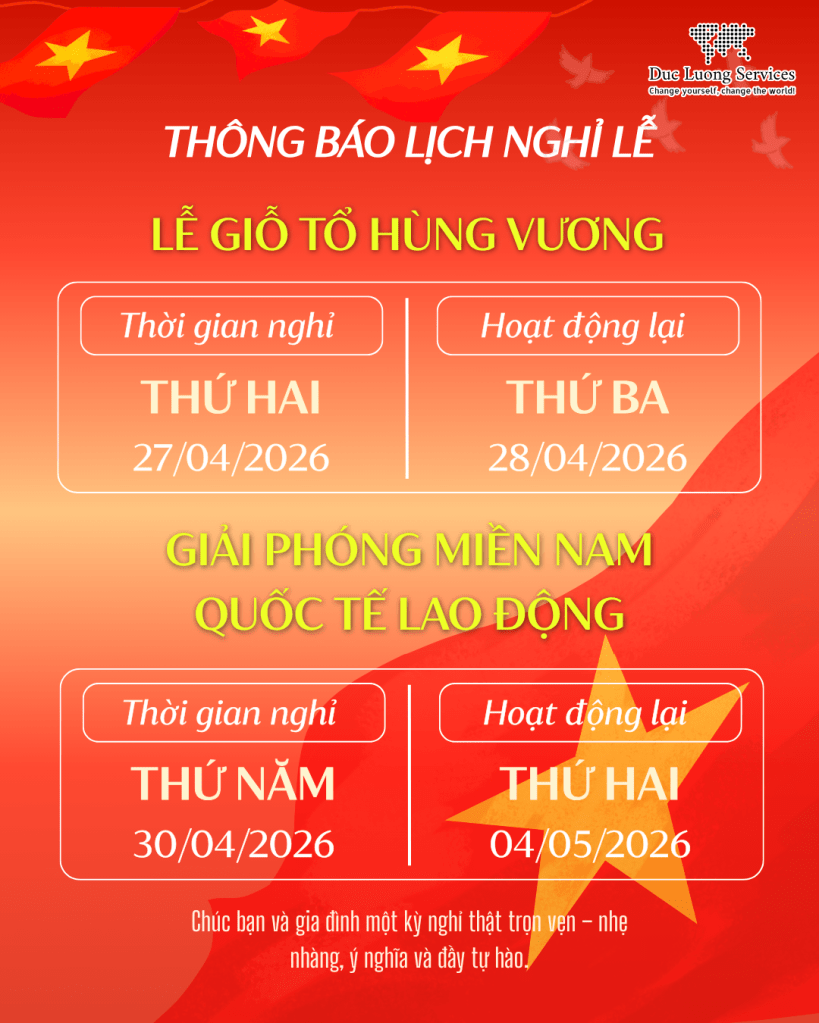
Đức Lương Services xin trân trọng thông báo đến Quý khách hàng và Quý đối tác lịch nghỉ lễ nhân dịp Giỗ Tổ Hùng Vương (10/3 Âm lịch), Ngày Giải phóng miền Nam 30/4 và Ngày Quốc tế Lao động 1/5.
Thời gian nghỉ lễ dịp Giỗ Tổ Hùng Vương vào ngày 27/4/2026, thời gian hoạt động lại vào ngày 28/4/2026.
Thời gian nghỉ lễ dịp Giải phóng miền Nam 30/4 và Quốc tế lao động 01/5 từ ngày 30/4/2026 đến hết ngày 01/5/2026 và thời gian làm việc trở lại là ngày 04/5/2026
(Quý khách hàng và đối tác vui lòng theo dõi thông tin chính thức để thuận tiện trong việc sắp xếp kế hoạch làm việc).
Đây là chuỗi ngày lễ mang ý nghĩa sâu sắc đối với người dân Việt Nam cũng như cộng đồng lao động trên toàn thế giới. Nếu Giỗ Tổ Hùng Vương là dịp để tưởng nhớ công lao dựng nước của các Vua Hùng, thì Ngày 30/4 là dấu mốc lịch sử quan trọng đánh dấu sự thống nhất đất nước, còn Ngày Quốc tế Lao động 1/5 là dịp tôn vinh những đóng góp của người lao động trong sự phát triển kinh tế – xã hội. Những giá trị này không chỉ nhắc nhớ về lịch sử mà còn góp phần củng cố tinh thần đoàn kết, trách nhiệm và niềm tự hào dân tộc.
Trong thời gian nghỉ lễ, các hoạt động hỗ trợ và tư vấn của công ty có thể bị gián đoạn, tuy nhiên mọi yêu cầu phát sinh sẽ được tiếp nhận và xử lý ngay khi chúng tôi làm việc trở lại. Để đảm bảo tiến độ công việc, Quý khách hàng và Quý đối tác vui lòng chủ động sắp xếp kế hoạch làm việc phù hợp trong giai đoạn này.
Kính chúc Quý khách hàng, Quý đối tác cùng toàn thể nhân viên một kỳ nghỉ lễ an toàn, vui vẻ và ý nghĩa bên gia đình và những người thân yêu.
Falling in love with a Vietnamese partner often means falling in love with their entire family — the Sunday lunches, the Tết celebrations, the grandmother who cooks your favorite phở, the uncle who wants to ask you a hundred questions. But if you don’t speak Vietnamese, every family gathering has an invisible wall you can’t quite cross. Every joke lands a beat late. Every heartfelt story from your mother-in-law arrives filtered through your partner’s quick translation.
Our Vietnamese lessons for foreign spouses, partners, and family members are designed for exactly this moment — when love, family, and belonging depend on finally speaking Vietnamese for yourself.
Why Family Vietnamese Is Different from Business Vietnamese
Language schools teach you to order coffee and introduce yourself at meetings. They don’t teach you:
How to address your partner’s grandmother with the right level of respect
What to say when visiting a Vietnamese family’s ancestral altar
How to joke with your brother-in-law without accidentally offending him
The proper way to give a Tết gift to your mother-in-law
How to comfort a Vietnamese relative during difficult times
What to say at your partner’s family wedding or funeral
How to talk to your Vietnamese children in their mother’s language
Family Vietnamese is about relationships, emotions, and cultural belonging — and it needs a completely different approach than business or academic Vietnamese.
Who Our Family Vietnamese Program Is For
This program is designed for:
Foreign spouses of Vietnamese partners integrating into family life
Long-term partners preparing for marriage and family commitments
Overseas Vietnamese (Việt Kiều) reconnecting with their roots and relatives
Parents raising bilingual children with Vietnamese heritage
Grandparents of mixed-heritage grandchildren wanting to communicate with them
Adoptive parents of Vietnamese children honoring their cultural background
In-laws and extended family members of Vietnamese spouses
If your motivation to learn Vietnamese is love, family, and cultural belonging — this program is built for you.
What Our Family Vietnamese Curriculum Covers
Stage 1: Family Basics (A1-A2)
The Vietnamese you need to show up, connect, and feel at home:
The complex system of Vietnamese family pronouns (this is crucial — Vietnamese has dozens of ways to say “you” depending on the relationship)
Greetings for different family members and elders
Food vocabulary for family meals and cooking together
Basic small talk with extended family
Expressing affection, gratitude, and respect
Essential phrases for family gatherings
Outcome: Address every family member correctly, participate in family meals, and show respect appropriately.
Stage 2: Family Life Vietnamese (B1-B2)
Move from polite greetings to real conversations:
Sharing stories about your life, work, and hometown
Asking meaningful questions about your partner’s family history
Participating in family discussions about children, health, and daily life
Understanding humor, teasing, and Vietnamese conversational style
Navigating sensitive topics with cultural awareness
Reading family messages, WhatsApp groups, and social media
Outcome: Hold real conversations with your in-laws, join family group chats, and participate meaningfully in family life.
Stage 3: Deep Family Connection (C1-C2)
For those building long-term Vietnamese family lives:
Understanding regional Vietnamese dialects your family speaks
Navigating complex family dynamics and generational differences
Cultural nuances around filial piety, family honor, and expectations
Supporting your partner during difficult family situations
Participating fully in weddings, funerals, and ancestral ceremonies
Raising bilingual children in both cultures
Outcome: Become a genuine member of the Vietnamese family — not “the foreign spouse who tries hard” but someone who truly belongs.
Cultural Integration Built Into Every Lesson
Vietnamese family culture is rich, layered, and deeply meaningful. Your teacher helps you understand:
Family Structure and Hierarchy
How Vietnamese families organize relationships across generations
The importance of birth order among siblings and cousins
Why certain family members have special authority or respect
How to navigate mother-in-law and daughter-in-law dynamics
Traditions and Celebrations
Tết (Lunar New Year) — the most important Vietnamese holiday, with its own vocabulary, foods, and customs
Ancestor worship — understanding the household altar and commemoration days
Weddings — Vietnamese wedding traditions and your role as a foreign spouse
Funerals — respectful participation during loss
Baby celebrations — customs around birth, the first month, the first year
Emotional Communication
Expressing love and affection in Vietnamese (which differs significantly from Western styles)
Showing care for elderly family members
Navigating conflict respectfully
Understanding what’s meant beyond what’s said
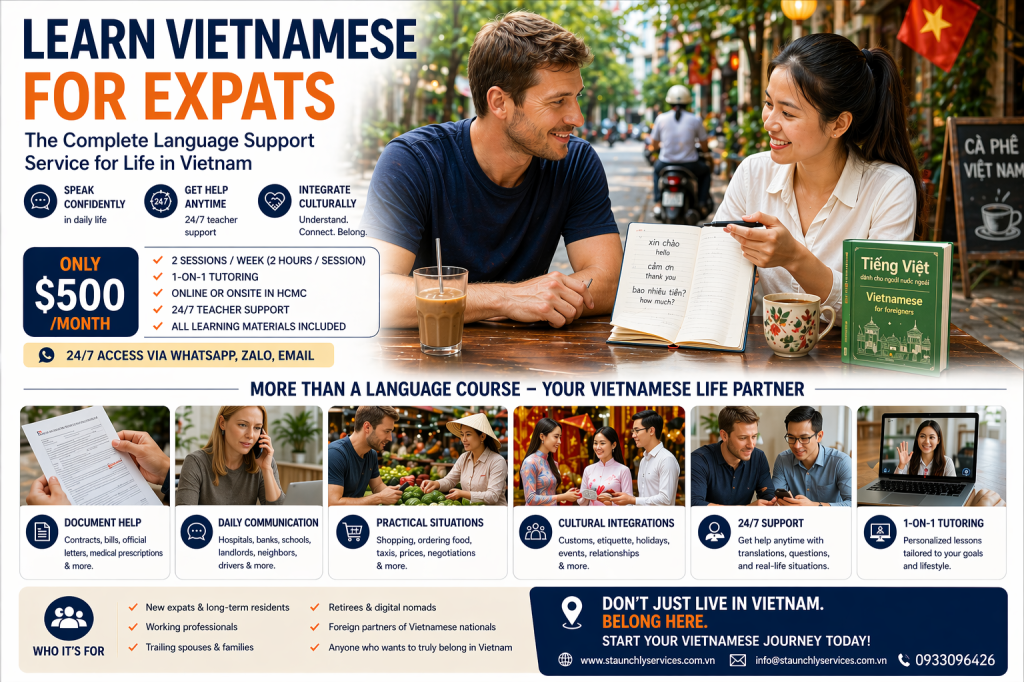
Premium 1-on-1 Vietnamese Lessons — Only $500/Month
Family Vietnamese requires patience, sensitivity, and personalization — which is why our program is built around 1-on-1 instruction:
2 sessions per week, 2 hours per session (16 hours monthly)
Online via Zoom/Google Meet, or on-site in Ho Chi Minh City
24/7 teacher support via WhatsApp, Zalo, or email
Female teachers available (many foreign spouses prefer this for family cultural discussions)
Matched regional dialect — if your family is from the North, Central, or South, we match you with a teacher from that region
At $31.25 per hour, this is exceptional value for instruction this personalized.
24/7 Teacher Support for Real Family Moments
Family life doesn’t happen on a lesson schedule. Our 24/7 support is there when you need it most.
Real situations your teacher can help with:
“My mother-in-law just messaged me this long paragraph in Vietnamese — what does it say and how should I respond?”
“We’re visiting my husband’s grandmother tomorrow. What should I bring and what should I say?”
“My Vietnamese wife is upset about something her sister said. Can you help me understand what happened culturally?”
“I want to write a letter to my father-in-law for his birthday — can you help me draft it in Vietnamese?”
“My partner’s family invited me to an ancestor commemoration ceremony. What do I need to know?”
“My Vietnamese is being laughed at by the kids — can we work on my accent?”
“I want to surprise my wife with a Vietnamese message for our anniversary.”
Your teacher becomes your cultural bridge, not just your language instructor.
For Overseas Vietnamese (Việt Kiều)
If you grew up abroad and want to reconnect with your Vietnamese heritage, our program is designed with your unique needs in mind:
Rebuilding lost childhood Vietnamese — often people understand more than they can speak
Rediscovering cultural identity through language
Preparing for visits to Vietnam to meet relatives
Connecting with elderly grandparents before it’s too late
Reading family letters and documents from older generations
Passing Vietnamese to your own children who have even less exposure
Your teacher understands the emotional weight of this journey — it’s not just learning a language, it’s reclaiming a part of yourself.
Flexible Lessons Around Family Life
Family life is unpredictable. Your lessons flex with it:
Online lessons if you’re abroad, traveling, or with young children at home
On-site lessons if you’re in Ho Chi Minh City and prefer face-to-face interaction
Switch anytime — take one lesson online, the next on-site
Reschedule easily with 24-hour notice — because family emergencies, children’s school events, and visits from relatives happen
Couple and family packages available — learn together with your partner, your children, or even with your in-laws joining from abroad.
Special Offers
2-hour trial lesson with cultural consultation
15% discount on 6-month commitments
10 bonus hours of family-specific conversation practice
Free lifetime access to learning materials
Complimentary Vietnamese family culture guidebook
Couple discount when you and your partner learn together
30-day money-back guarantee
Success Stories from Our Students
American husband of Vietnamese wife: After 4 months, he was able to hold his own at family dinners, joke with his brothers-in-law, and have his first real one-on-one conversation with his mother-in-law. Described it as life-changing for his marriage.
French wife of Vietnamese husband: Started learning during her pregnancy so she could speak Vietnamese to her child. Now two years in, she raises her bilingual son confidently and has a close relationship with her Vietnamese mother-in-law.
Second-generation Vietnamese-American: Grew up with parents who didn’t teach him Vietnamese. Reconnected with his 90-year-old grandmother in Vietnam through the program — described the first full conversation with her as one of the most meaningful moments of his life.
Frequently Asked Questions
My partner is Vietnamese but we live abroad. Can I still take lessons?
Yes — online lessons work globally. Many of our students are foreign spouses living overseas preparing for visits to Vietnam or communicating with in-laws remotely.
Can my partner join some lessons to help?
Absolutely. Couple sessions can be arranged, especially useful for cultural discussions and practical scenarios.
What if I want to learn specifically for our children?
We can focus your curriculum on children’s Vietnamese — vocabulary for parenting, songs, stories, and everyday interactions with your kids.
Can I learn the regional dialect my family speaks?
Yes. Tell us where your family is from (Hanoi, Hue, Saigon, Mekong Delta, etc.) and we’ll match you with a teacher from that region.
Do you help with writing letters and messages to family?
Yes — this is included in 24/7 teacher support. Draft it, send it to your teacher, get it polished.
Start Building Real Connection with Your Vietnamese Family
Every foreign spouse, every partner, every Việt Kiều reconnecting with their roots tells us the same thing: I wish I’d started earlier.
The dinners where you could have laughed with your mother-in-law. The conversations with your grandfather before he passed. The bedtime stories you could have told your children in their heritage language.
Don’t wait. The family connections you want are one conversation at a time — and that first conversation starts with one lesson.
Register for your free trial lesson today and receive:
Đầu tư thành công tại Việt Nam không chỉ nằm ở chiến lược pháp lý tốt trên giấy, mà còn ở năng lực triển khai thực tế — nộp đúng hồ sơ, đúng cơ quan, đúng thời điểm, xử lý nhanh các phát sinh và phối hợp hiệu quả với cán bộ địa phương. Đây chính là khoảng trống mà nhiều nhà đầu tư nước ngoài và doanh nghiệp Việt gặp phải khi làm việc với các công ty tư vấn chỉ mạnh ở khâu chiến lược.
Đức Lương Services là đối tác đại diện tại Việt Nam của ISC Global và Staunchly Vietnam. Chúng tôi đảm nhận vai trò triển khai thực địa — biến các giải pháp pháp lý và tư vấn đầu tư thành kết quả cụ thể: giấy phép được cấp, hồ sơ được chấp thuận, doanh nghiệp sẵn sàng vận hành.
1. Khi nào nhà đầu tư cần đơn vị triển khai thực tế?
Nhiều nhà đầu tư — đặc biệt là nhà đầu tư nước ngoài lần đầu vào Việt Nam — thường đối diện các tình huống sau:
Không có người đại diện tại Việt Nam: cần một đơn vị đáng tin cậy để nộp hồ sơ, nhận kết quả, làm việc với các sở ban ngành.
Hồ sơ bị trả về nhiều lần: do khác biệt trong diễn giải quy định giữa các địa phương, cần người thông thạo thực tiễn xử lý.
Cần phối hợp đa cơ quan: IRC, ERC, giấy phép con, đăng ký thuế, bảo hiểm xã hội, giấy phép lao động — nhiều thủ tục đồng thời.
Cần chuyên gia nhưng ở xa: cần cầu nối để kết nối với các chuyên gia pháp lý và ESG của ISC Global, Staunchly.
Đức Lương Services giải quyết chính xác các tình huống này — vừa là cánh tay triển khai, vừa là cầu nối đến đội ngũ chuyên gia chiến lược.
2. Dịch vụ hỗ trợ pháp lý cho nhà đầu tư tại Đức Lương Services
2.1. Hỗ trợ thủ tục cấp phép đầu tư
Xin Giấy chứng nhận đăng ký đầu tư (IRC) và Giấy chứng nhận đăng ký doanh nghiệp (ERC) cho nhà đầu tư nước ngoài tại các tỉnh thành trên toàn quốc.
Xin các giấy phép con: giấy phép kinh doanh (đối với ngành phân phối, bán lẻ), giấy phép thương mại điện tử, giấy phép hoạt động giáo dục, y tế, xây dựng, xuất nhập khẩu.
Thủ tục thay đổi sau cấp phép: điều chỉnh IRC, ERC, thay đổi vốn, ngành nghề, địa điểm, người đại diện pháp luật.
Đầu tư ra nước ngoài: hoàn tất hồ sơ tại Bộ Kế hoạch và Đầu tư và đăng ký ngoại hối tại Ngân hàng Nhà nước.
2.2. Hỗ trợ vận hành doanh nghiệp
Thủ tục thuế ban đầu: đăng ký thuế, đăng ký hóa đơn điện tử, khai thuế môn bài.
Bảo hiểm xã hội: đăng ký ban đầu, kê khai lao động, quản lý biến động.
Giấy phép lao động và thẻ tạm trú: cho lãnh đạo, chuyên gia và nhà đầu tư nước ngoài.
Con dấu, chữ ký số, tài khoản ngân hàng: hỗ trợ đăng ký và vận hành.
2.3. Đại diện pháp lý và dịch vụ thư ký
Dịch vụ địa chỉ đăng ký kinh doanh: hỗ trợ nhà đầu tư nước ngoài chưa có trụ sở chính thức.
Dịch vụ thư ký công ty: soạn thảo biên bản họp, nghị quyết, lưu trữ sổ sách pháp lý.
Tiếp nhận và chuyển tiếp công văn: từ các cơ quan nhà nước đến nhà đầu tư ở nước ngoài.
2.4. Kết nối chuyên gia pháp lý và ESG
Với vai trò đối tác Việt Nam của ISC Global và Staunchly Vietnam, Đức Lương Services giúp nhà đầu tư tiếp cận nhanh chóng:
Luật sư và chuyên gia M&A cho các giao dịch xuyên biên giới, Legal Due Diligence, soạn thảo SPA/SHA.
Chuyên gia ESG và ISO cho các dự án cần chứng nhận EcoVadis, Sedex SMETA, ISCC EU, ISO 14001, ISO 37001.
Chuyên gia thuế và tài chính cho các vấn đề chuyển giá, ưu đãi đầu tư, cấu trúc thuế.
3. Vì sao nhà đầu tư chọn Đức Lương Services?
3.1. Hiểu thực tiễn địa phương
Đức Lương Services am hiểu sâu sắc cách vận hành thực tế của các cơ quan nhà nước tại Việt Nam — từ cấp trung ương đến địa phương. Chúng tôi biết hồ sơ nào cần chuẩn bị thế nào, cán bộ nào thường yêu cầu bổ sung gì, thời điểm nào nộp là tối ưu. Kinh nghiệm thực tiễn này giúp rút ngắn thời gian và giảm tỷ lệ hồ sơ bị trả về.
3.2. Phản ứng nhanh, chi phí hợp lý
Mô hình vận hành gọn nhẹ cho phép chúng tôi phản ứng nhanh với mọi yêu cầu phát sinh và đưa ra mức phí hợp lý hơn so với các hãng luật lớn — phù hợp cho doanh nghiệp vừa và nhỏ, start-up và nhà đầu tư cá nhân.
3.3. Kết nối trực tiếp với chuyên gia quốc tế
Thông qua mối quan hệ đối tác chiến lược với ISC Global và Staunchly Vietnam, chúng tôi có thể huy động đội ngũ chuyên gia quốc tế về pháp lý đầu tư, M&A và ESG khi dự án yêu cầu chiều sâu chuyên môn — mang đến giải pháp vừa mạnh về chiến lược, vừa vững về triển khai.
4. Quy trình làm việc tại Đức Lương Services
Tiếp nhận yêu cầu — tư vấn sơ bộ miễn phí qua điện thoại, email hoặc gặp trực tiếp.
Đề xuất giải pháp và báo giá — minh bạch về danh mục hồ sơ, thời gian, chi phí.
Ký hợp đồng và nhận hồ sơ — hỗ trợ chuẩn bị hồ sơ đầu vào, dịch thuật, công chứng nếu cần.
Triển khai nộp hồ sơ — cập nhật tiến độ định kỳ qua email hoặc Zalo, xử lý bổ sung khi có yêu cầu.
Bàn giao kết quả và hỗ trợ sau cấp phép — giấy phép, con dấu, tài khoản và các thủ tục vận hành ban đầu.
5. Câu hỏi thường gặp
Đức Lương Services có thể hỗ trợ nhà đầu tư nước ngoài chưa có mặt tại Việt Nam không?
Có. Chúng tôi thường xuyên làm việc với các nhà đầu tư nước ngoài qua email, video call, Zalo và WhatsApp. Toàn bộ hồ sơ có thể chuẩn bị từ xa thông qua giấy ủy quyền hợp pháp hóa lãnh sự. Khi cần, chúng tôi cung cấp dịch vụ địa chỉ đăng ký kinh doanh tạm thời để nhà đầu tư hoàn tất thủ tục trước khi có trụ sở chính thức.
Thời gian trung bình để hoàn tất thủ tục thành lập công ty FDI là bao lâu?
Thông thường 30–45 ngày làm việc cho ngành nghề không điều kiện, 45–90 ngày cho ngành nghề có điều kiện. Đức Lương Services cam kết nộp hồ sơ đúng chuẩn ngay từ lần đầu để rút ngắn tối đa thời gian xử lý.
Chi phí dịch vụ của Đức Lương Services có minh bạch không?
Hoàn toàn minh bạch. Báo giá được chia rõ phí dịch vụ, phí nhà nước và các chi phí phát sinh có thể có (dịch thuật, công chứng, hợp pháp hóa lãnh sự). Không phát sinh chi phí ngoài báo giá nếu không có thay đổi phạm vi công việc từ phía khách hàng.
6. Liên hệ hỗ trợ ngay hôm nay
Bạn cần triển khai nhanh thủ tục cấp phép đầu tư, giải quyết một hồ sơ đang vướng mắc, hay tìm một đối tác đáng tin cậy để đại diện tại Việt Nam? Đức Lương Services sẵn sàng đồng hành ngay từ hôm nay.
Đức Lương Services | Đồng hành tin cậy. Triển khai hiệu quả.
Legal Support Services for Investors in Vietnam
Successful investment in Vietnam depends not only on sound legal strategy on paper but also on the ability to execute in practice — filing the right documents, at the right authority, at the right time, handling issues swiftly, and coordinating effectively with local officials. This is precisely the gap that many foreign investors and Vietnamese enterprises encounter when working with advisory firms that excel only at the strategic level.
Duc Luong Services is the Vietnam representative partner of ISC Global and Staunchly Vietnam. We serve as the on-the-ground execution arm — turning legal solutions and investment advisory into concrete outcomes: licenses granted, documentation approved, and businesses ready to operate.
1. When Do Investors Need an On-the-Ground Execution Partner?
Many investors — especially foreign investors entering Vietnam for the first time — often face the following challenges:
No representative in Vietnam: they need a trusted entity to file applications, receive results, and liaise with local authorities.
Applications rejected repeatedly: due to differences in regulatory interpretation between localities, requiring someone familiar with local practice.
Multi-agency coordination needed: IRC, ERC, sub-licenses, tax registration, social insurance, and work permits — many procedures running in parallel.
Need expert access but located abroad: requiring a bridge to legal and ESG experts at ISC Global and Staunchly.
Duc Luong Services addresses precisely these situations — acting as both the execution arm and the bridge to our strategic expert team.
2. Duc Luong Services’ Investor Legal Support Services
2.1. Investment Licensing Support
Investment Registration Certificate (IRC) and Enterprise Registration Certificate (ERC) applications for foreign investors in provinces and cities nationwide.
Sub-licenses: business licenses (for distribution and retail), e-commerce licenses, operating licenses for education, healthcare, construction, and import-export.
Post-licensing amendments: changes to IRC, ERC, capital, business lines, locations, and legal representatives.
Outbound investment: completing applications at the Ministry of Planning and Investment and foreign exchange registration at the State Bank of Vietnam.
2.2. Business Operations Support
Initial tax procedures: tax registration, e-invoice registration, and business license tax filing.
Social insurance: initial registration, labor declaration, and employee change management.
Work permits and temporary residence cards: for executives, experts, and foreign investors.
Company seals, digital signatures, and bank accounts: registration and operational setup support.
2.3. Legal Representation and Secretarial Services
Registered business address services: supporting foreign investors who do not yet have a permanent office.
Correspondence handling: receiving and forwarding official letters from government agencies to investors abroad.
2.4. Connection to Legal and ESG Experts
As the Vietnam partner of ISC Global and Staunchly Vietnam, Duc Luong Services enables investors to quickly access:
Lawyers and M&A specialists for cross-border transactions, Legal Due Diligence, and SPA/SHA drafting.
ESG and ISO experts for projects requiring EcoVadis, Sedex SMETA, ISCC EU, ISO 14001, and ISO 37001 certifications.
Tax and finance specialists for transfer pricing, investment incentives, and tax structuring matters.
3. Why Investors Choose Duc Luong Services
3.1. Deep Understanding of Local Practice
Duc Luong Services has an in-depth understanding of how Vietnamese government agencies operate in practice — from central to local levels. We know which documents must be prepared and how, what supplementary information officers typically request, and the optimal timing for filing. This practical experience shortens processing times and minimizes application rejections.
3.2. Fast Response, Reasonable Fees
Our agile operating model enables fast response to every emerging requirement and more competitive fees than large law firms — ideal for SMEs, startups, and individual investors.
3.3. Direct Connection to International Experts
Through our strategic partnership with ISC Global and Staunchly Vietnam, we mobilize international expert teams in investment law, M&A, and ESG whenever projects require deep specialization — delivering solutions that are both strategically robust and practically executed.
4. Our Working Process
Request intake — complimentary initial consultation via phone, email, or in-person meeting.
Solution proposal and quotation — transparent on documentation list, timeline, and fees.
Engagement and document collection — input documentation preparation, translation, and notarization support where needed.
Filing and processing — regular progress updates via email or Zalo, handling supplementary requests as they arise.
Delivery and post-licensing support — licenses, seals, accounts, and initial operational procedures.
5. Frequently Asked Questions
Can Duc Luong Services support foreign investors not yet present in Vietnam?
Yes. We regularly work with foreign investors via email, video calls, Zalo, and WhatsApp. Full documentation can be prepared remotely through consular-legalized powers of attorney. When needed, we also provide temporary registered business address services to allow investors to complete procedures before securing a permanent office.
How long does it typically take to establish an FDI company?
Typically 30–45 working days for unconditional sectors and 45–90 days for conditional sectors. Duc Luong Services commits to submitting fully-compliant applications on the first attempt, minimizing processing time to the greatest extent possible.
Are Duc Luong Services’ fees transparent?
Fully transparent. Our quotations clearly separate service fees, government fees, and potential incidental costs (translation, notarization, consular legalization). No charges arise outside the quotation unless the scope of work changes at the client’s request.
6. Contact Us Today
Need to fast-track investment licensing, resolve a stalled application, or find a reliable partner to represent you in Vietnam? Duc Luong Services is ready to assist from day one.
Bảo vệ quyền lợi doanh nghiệp – Đảm bảo pháp lý vững chắc
Trong bối cảnh kinh doanh ngày càng cạnh tranh và phức tạp, việc sở hữu những bản hợp đồng thương mại chặt chẽ, minh bạch là yếu tố sống còn đối với mọi doanh nghiệp. Chúng tôi cung cấp dịch vụ Soạn thảo & Rà soát Hợp đồng toàn diện, giúp doanh nghiệp yên tâm phát triển, hạn chế tối đa rủi ro pháp lý.
Soạn thảo hợp đồng thương mại
Chúng tôi chuyên soạn thảo các loại hợp đồng thương mại như hợp đồng mua bán, dịch vụ, phân phối… với từng điều khoản rõ ràng, phù hợp với nhu cầu riêng của từng doanh nghiệp. Mỗi hợp đồng đều được xây dựng dựa trên cơ sở pháp lý vững chắc, đảm bảo quyền lợi tối đa cho khách hàng.
Rà soát, đánh giá rủi ro hợp đồng
Đội ngũ luật sư giàu kinh nghiệm sẽ rà soát chi tiết từng điều khoản, phát hiện và cảnh báo những rủi ro tiềm ẩn có thể phát sinh trong suốt quá trình thực hiện hợp đồng. Chúng tôi giúp doanh nghiệp “liệu cơm gắp mắm”, tránh được những “điểm mù” pháp lý thường gặp trên thương trường.
Xây dựng mẫu hợp đồng chuẩn cho doanh nghiệp
Chúng tôi hỗ trợ xây dựng hệ thống mẫu hợp đồng chuẩn hóa phù hợp với từng lĩnh vực hoạt động. Việc này không chỉ tiết kiệm thời gian, chi phí mà còn góp phần nâng cao tính chuyên nghiệp trong vận hành doanh nghiệp, giúp quý khách “vững tay chèo” trên con đường phát triển.
Tư vấn đàm phán hợp đồng
Đàm phán hợp đồng là “cửa ải” quan trọng quyết định thành bại của một thương vụ. Chúng tôi đồng hành cùng doanh nghiệp trong từng vòng đàm phán, đưa ra giải pháp chiến lược, bảo vệ lợi ích tối đa và giữ gìn mối quan hệ hợp tác lâu dài với đối tác.
Với phương châm “Tận tâm – Chuyên nghiệp – Hiệu quả”, dịch vụ của chúng tôi cam kết mang lại sự an tâm và giá trị bền vững cho doanh nghiệp. Hãy để chúng tôi trở thành người bạn đồng hành tin cậy của bạn trên hành trình kinh doanh đầy thử thách!
Môi Trường, Khí Hậu & Phát Triển Bền Vững: Chìa Khóa Nâng Tầm Doanh Nghiệp Toàn Cầu
Trong bối cảnh biến đổi khí hậu diễn biến phức tạp và các quy định nghiêm ngặt từ thị trường quốc tế (như EUDR, CBAM), Môi trường, Khí hậu & Phát triển bền vững không còn là lựa chọn, mà là điều kiện tiên quyết để doanh nghiệp tồn tại và phát triển.
Hiểu được thách thức đó, chúng tôi cung cấp giải pháp toàn diện từ đào tạo, tư vấn đến hỗ trợ chứng nhận cho các tiêu chuẩn quốc tế thuộc Trụ cột 02, giúp doanh nghiệp xanh hóa chuỗi cung ứng và tối ưu hóa lợi thế cạnh tranh.
1. Kiểm kê Khí nhà kính & Trung hòa Carbon (Decarbonization)
Việc kiểm soát phát thải là bước đi đầu tiên trong lộ trình Net Zero. chúng tôi hỗ trợ doanh nghiệp thực hiện các tiêu chuẩn hàng đầu:
ISO 14064 (Phần 1, 2, 3): Kiểm kê phát thải khí nhà kính (GHG) cấp tổ chức và dự án, thiết lập hệ thống thẩm tra minh bạch.
ISO 14067 (PCF): Xác định dấu chân Carbon trên từng đơn vị sản phẩm.
PAS 2060: Chứng nhận lộ trình đạt trạng thái trung hòa Carbon.
VCS (Verra) & Gold Standard (GS): Tư vấn các tiêu chuẩn carbon tự nguyện và bù đắp tín chỉ carbon chất lượng cao.
2. Đánh giá Vòng đời sản phẩm (LCA) & Kinh tế tuần hoàn
Chuyển đổi từ mô hình kinh tế tuyến tính sang tuần hoàn để tối ưu hóa tài nguyên:
ISO 14040 / ISO 14044: Đánh giá vòng đời sản phẩm (LCA) giúp định lượng tác động môi trường từ khâu khai thác nguyên liệu đến khi thải bỏ.
ISO 14020 / 14024 / 14025: Hỗ trợ công bố môi trường (EPD) và dán nhãn sinh thái.
ISO 59020:2024: Tiêu chuẩn mới nhất về đo lường và đánh giá hiệu quả kinh tế tuần hoàn.
ISO 14006: Hướng dẫn thiết kế sinh thái (Eco-design) để giảm thiểu tác động ngay từ khâu ý tưởng.
3. Tuân thủ Quy định Quốc tế & Rào cản Kỹ thuật (Compliance)
Để xuất khẩu vào các thị trường khó tính như Châu Âu, doanh nghiệp cần đáp ứng các quy định pháp lý mới nhất:
EUDR (Quy định chống phá rừng): Đảm bảo sản phẩm (gỗ, cà phê, cao su…) không có nguồn gốc từ đất phá rừng.
EUTR (Quy định gỗ EU): Kiểm soát tính hợp pháp của nguồn gốc gỗ.
EU Taxonomy: Phân loại tài chính xanh theo tiêu chuẩn Liên minh Châu Âu.
4. Quản lý Tài nguyên & Trách nhiệm Xã hội
ISO 14046: Quản lý và đánh giá dấu chân nước (Water Footprint).
ISO 14055: Chiến lược trung hòa suy thoái đất.
ISO 26000 & EcoVadis: Đánh giá trách nhiệm xã hội (CSR) và xếp hạng ESG cho chuỗi cung ứng, giúp doanh nghiệp ghi điểm với các nhà đầu tư quốc tế.
ISO 20400: Thiết lập hệ thống mua sắm bền vững.
Danh mục Dịch vụ Đào tạo & Tư vấn tại chúng tôi
Chúng tôi đồng hành cùng doanh nghiệp qua 3 giai đoạn then chốt:
Loại dịch vụ
Nội dung hỗ trợ
Đào tạo (Training)
Đào tạo nhận thức, chuyên gia đánh giá nội bộ về ISO 14064, LCA, ESG, GRI…
Tư vấn (Consultancy)
Khảo sát hiện trạng, xây dựng hệ thống quản lý, tính toán phát thải, lập báo cáo bền vững.
Hỗ trợ Chứng nhận
Kết nối tổ chức chứng nhận quốc tế, hỗ trợ khắc phục sau đánh giá để đạt chứng chỉ.
Tại sao nên chọn dịch vụ của chúng tôi?
Chuyên gia hàng đầu: Đội ngũ tư vấn có kinh nghiệm sâu rộng trong lĩnh vực môi trường và các quy định quốc tế.
Giải pháp may đo: Quy trình tư vấn được thiết kế riêng phù hợp với quy mô và đặc thù ngành nghề của từng doanh nghiệp.
Hỗ trợ toàn diện: Từ khâu đào tạo nhân sự đến khi doanh nghiệp nhận được chứng chỉ quốc tế và vận hành hệ thống ổn định.
Cập nhật liên tục: Luôn tiên phong trong các tiêu chuẩn mới như ISO 59020 hay các quy định EUDR, CBAM.
Doanh nghiệp của bạn đã sẵn sàng cho lộ trình Phát triển Bền vững?
Liên hệ ngay với chúng tôi để nhận tư vấn chuyên sâu về các tiêu chuẩn Môi trường & Khí hậu!
Hãy liên hệ ngay hôm nay để nhận được sự tư vấn tận tình và giải pháp phù hợp nhất cho doanh nghiệp của bạn!